Deep sea mining reduces ocean life by 37%: Study
The world’s oceans are facing a new and significant threat: deep-sea mining. This practice, which involves the extraction of minerals and metals from the ocean floor, has been found to have a devastating impact on marine life. According to a recent study, deep-sea mining reduces ocean life by a staggering 37%. This alarming finding has sparked widespread concern among scientists and conservationists, who are warning about the long-term consequences of this destructive practice.
Deep-sea mining involves the use of large machines that scrape away the top five centimeters of fragile seabed sediment, where most macrofauna live. These machines are designed to extract valuable minerals and metals, such as copper, zinc, and gold, which are found in abundance on the ocean floor. However, in the process of extracting these resources, the machines are causing irreparable harm to the delicate ecosystem of the deep sea.
The study, which was conducted by a team of scientists, found that the areas of the seabed that were disturbed by mining operations had significantly fewer animals and less species diversity than undisturbed areas. In fact, the study found that animal numbers were reduced by 37% and species diversity was reduced by 32% in the disturbed areas. This is a staggering decline, and one that has significant implications for the health of the world’s oceans.
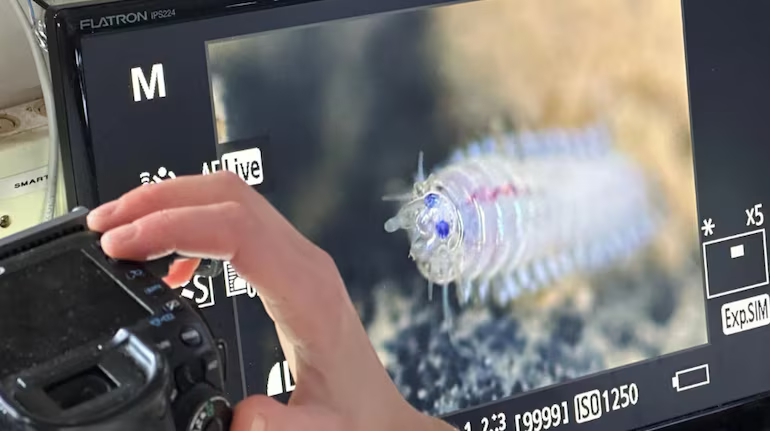
One of the main concerns about deep-sea mining is the impact it has on the fragile ecosystem of the deep sea. The deep sea is a unique and largely unexplored environment, home to a vast array of strange and exotic creatures. Many of these creatures are found nowhere else on Earth, and are adapted to the extreme conditions of the deep sea, where the pressure is immense and the light is scarce.
When mining machines disturb the seabed, they are not only destroying the habitats of these creatures, but also releasing clouds of sediment and pollutants into the water. This can have a devastating impact on the surrounding ecosystem, causing harm to animals and plants that are not adapted to these conditions. In some cases, the pollution from mining operations may gradually kill less resilient species, leading to a decline in biodiversity and ecosystem health.
The impact of deep-sea mining is not limited to the immediate area surrounding the mining operation. The pollution and sediment released by mining machines can travel long distances, affecting ecosystems and marine life far beyond the mining site. This can have a ripple effect, causing harm to entire ecosystems and potentially even affecting the global ocean food chain.
The study’s findings have significant implications for the future of deep-sea mining. As the demand for minerals and metals continues to grow, there is increasing pressure to exploit the resources of the deep sea. However, the study’s findings suggest that this practice is not sustainable, and that the costs to the environment and ecosystem are too high.
In light of these findings, scientists and conservationists are calling for a moratorium on deep-sea mining until further research can be conducted on the impact of this practice on the ocean ecosystem. They argue that the potential benefits of deep-sea mining do not outweigh the significant risks and costs to the environment, and that alternative methods of extraction should be explored.
The study’s lead author noted that the findings are a “wake-up call” for policymakers and industry leaders, and that urgent action is needed to protect the world’s oceans from the devastating impacts of deep-sea mining. The author emphasized that the deep sea is a unique and fragile ecosystem that requires careful management and protection, and that the consequences of failing to do so could be catastrophic.
In conclusion, the study’s findings are a stark warning about the dangers of deep-sea mining. The practice of extracting minerals and metals from the ocean floor is having a devastating impact on marine life, reducing animal numbers and species diversity by significant amounts. The pollution and sediment released by mining machines are causing harm to entire ecosystems, and the long-term consequences of this practice are still not fully understood.
As the world continues to grapple with the challenges of sustainability and environmental protection, it is clear that deep-sea mining is a practice that must be carefully reconsidered. The potential benefits of this practice do not outweigh the significant risks and costs to the environment, and alternative methods of extraction must be explored.
About the Author