Deep Sea Mining Reduces Ocean Life by 37%: Study
The world’s oceans are facing a multitude of threats, from climate change to pollution, and now, a new study has revealed that deep-sea mining is having a devastating impact on ocean life. Scientists have warned that deep-sea mining drastically harms ocean life, reducing their population significantly. The study found that mining machines scrape away the top five centimeters of fragile seabed sediment, where most macrofauna live, resulting in a significant decline in animal numbers and species diversity.
The deep sea is a vast and largely unexplored ecosystem, home to a diverse array of species that are found nowhere else on Earth. The seabed is a complex environment, with unique features such as hydrothermal vents, coral reefs, and sea mounts, which support a wide range of marine life. However, the deep sea is also a target for mining companies, who are eager to exploit its rich mineral resources, including copper, zinc, and gold.
The study, which was conducted by a team of scientists, used a combination of observations and experiments to investigate the impact of deep-sea mining on ocean life. They found that the mining process, which involves scraping away the top layer of sediment, has a profound impact on the animals that live in the affected areas. The study revealed that animal numbers were reduced by 37% in areas where mining had taken place, while species diversity was reduced by 32%.
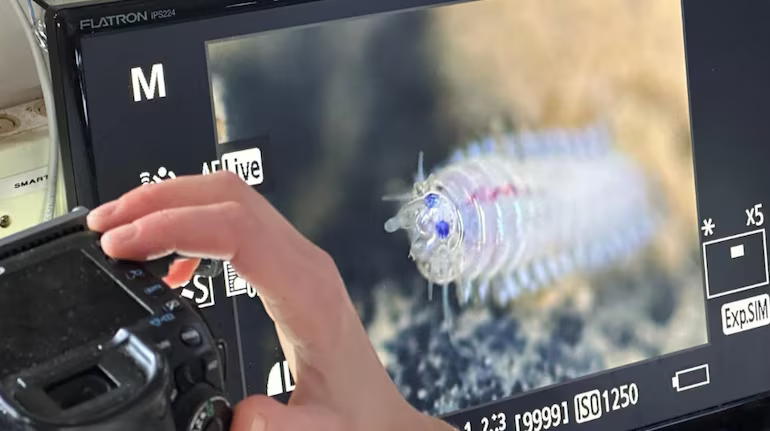
The mining process is particularly damaging because it targets the top layer of sediment, where most macrofauna live. Macrofauna are animals that are large enough to be seen with the naked eye, and they play a crucial role in the ecosystem, serving as both predators and prey for other species. By scraping away the top layer of sediment, mining machines are essentially destroying the habitat of these animals, leaving them without a home or a source of food.
The study also found that pollution from mining operations may gradually kill less resilient species. Deep-sea mining involves the use of heavy machinery and equipment, which can stir up sediment and release toxic chemicals into the water. These chemicals can have a devastating impact on marine life, causing harm to animals that are not adapted to survive in polluted environments.
The impact of deep-sea mining on ocean life is not limited to the immediate area where mining takes place. The study found that the effects of mining can be felt far beyond the mining site, with changes to the ecosystem having a ripple effect throughout the entire food chain. This means that the impact of deep-sea mining is not just limited to the animals that live in the affected areas, but also to the animals that depend on them for food.
The study’s findings are a stark warning about the dangers of deep-sea mining. The deep sea is a fragile and largely unexplored ecosystem, and it is imperative that we take steps to protect it. The study’s authors are calling for greater regulation of deep-sea mining, to ensure that mining operations are carried out in a way that minimizes harm to the environment.
The study’s findings are also a reminder of the importance of preserving the world’s oceans. The oceans are a vital component of the Earth’s ecosystem, providing half of the oxygen we breathe and serving as a source of food for billions of people. However, the oceans are facing a multitude of threats, from climate change to pollution, and it is imperative that we take steps to protect them.
In conclusion, the study’s findings are a wake-up call about the dangers of deep-sea mining. The impact of mining on ocean life is significant, with animal numbers and species diversity being reduced by 37% and 32%, respectively. The study’s authors are calling for greater regulation of deep-sea mining, to ensure that mining operations are carried out in a way that minimizes harm to the environment. It is imperative that we take steps to protect the world’s oceans, and to preserve the delicate balance of the ecosystem.
The study’s findings are a reminder of the importance of responsible and sustainable practices, particularly when it comes to the exploitation of natural resources. The deep sea is a unique and fragile ecosystem, and it is our responsibility to protect it. We must take steps to ensure that deep-sea mining is carried out in a way that minimizes harm to the environment, and that the world’s oceans are preserved for future generations.
About the Author