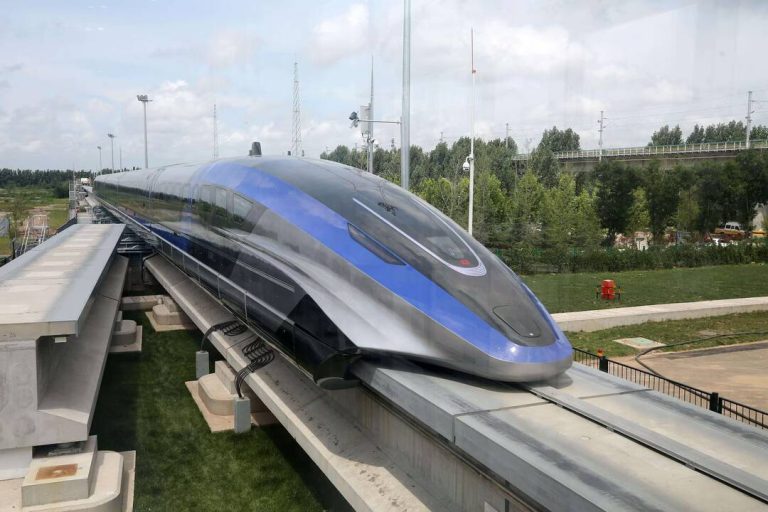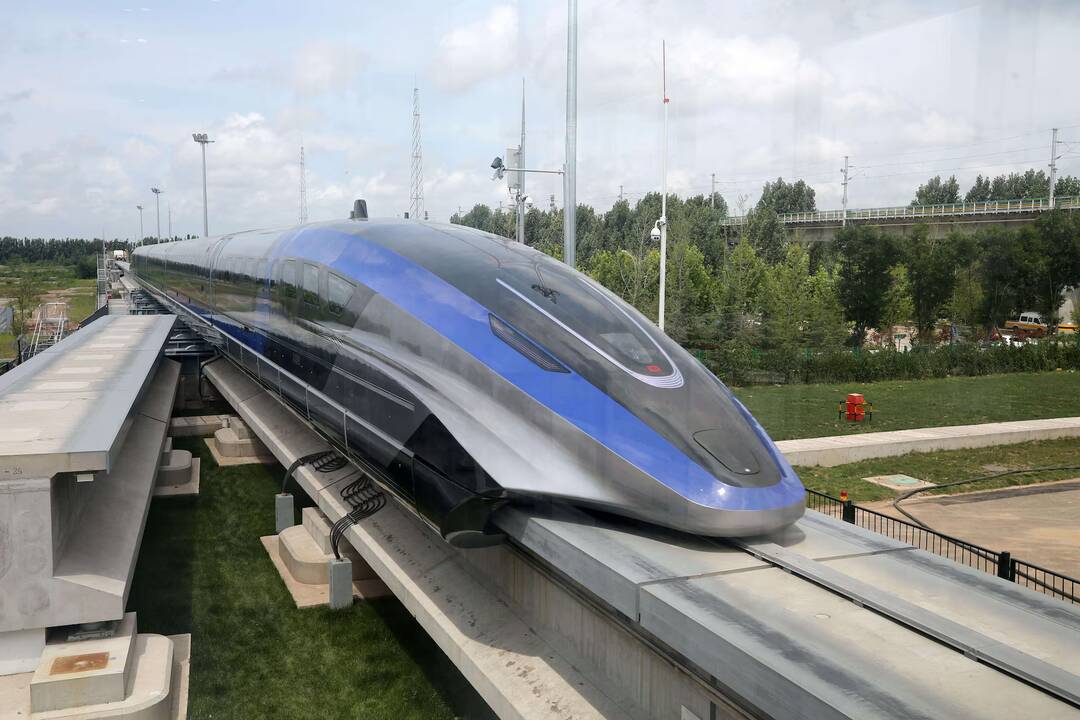
China accelerates vehicle to 700 km/h in 2 secs in magnetic levitation test
In a groundbreaking achievement, researchers in China have successfully accelerated a tonne-class vehicle to a speed of 700 km/h within two seconds on a magnetic levitation (maglev) test line. This remarkable feat makes it the fastest superconductive electric maglev system in the world, according to state broadcaster China Central Television. The test was conducted by China’s National University of Defense Technology using a 1,310-foot track, showcasing the country’s advancements in transportation technology.
The magnetic levitation technology, also known as maglev, uses magnetic forces to lift and propel vehicles at high speeds, reducing friction and allowing for smoother and more efficient travel. The system uses electromagnets to create an upward force that counteracts the weight of the vehicle, allowing it to float above the track. This technology has been gaining attention in recent years due to its potential to revolutionize transportation, particularly for high-speed travel.
The test conducted by China’s National University of Defense Technology is a significant milestone in the development of maglev technology. The vehicle, which weighs around a tonne, was accelerated from 0 to 700 km/h in just two seconds, demonstrating the incredible power and efficiency of the system. This achievement not only showcases China’s capabilities in transportation technology but also highlights the potential for maglev systems to transform the way we travel.
The maglev test line used in the experiment is approximately 1,310 feet long, which is relatively short compared to other test tracks. However, the results demonstrate the system’s ability to accelerate vehicles to high speeds in a short distance, making it an attractive option for urban transportation systems. The test also highlights the potential for maglev technology to be used in a variety of applications, including high-speed rail, urban transportation, and even space exploration.
The use of superconductive materials in the maglev system is a key factor in its high-speed capabilities. Superconductors are materials that can conduct electricity with zero resistance, allowing for the efficient transfer of energy. In the case of the maglev system, the superconductors are used to create the magnetic fields that propel the vehicle. The use of superconductors enables the system to achieve higher speeds and efficiency, making it an attractive option for high-speed transportation.
China’s achievement in maglev technology is a significant step forward in the development of high-speed transportation systems. The country has been investing heavily in transportation infrastructure, including high-speed rail and maglev systems. The development of maglev technology is seen as a key component of China’s transportation strategy, with the potential to reduce travel times, increase efficiency, and promote economic growth.
The implications of this achievement are far-reaching, with potential applications in a variety of fields. The use of maglev technology could revolutionize urban transportation, providing a fast, efficient, and environmentally friendly way to travel. The technology could also be used in high-speed rail systems, allowing for faster travel times and increased connectivity between cities.
In addition to its potential applications, the development of maglev technology also highlights the importance of investment in research and development. China’s achievement is a testament to the country’s commitment to innovation and its willingness to invest in cutting-edge technology. The development of maglev technology is a complex and challenging process, requiring significant resources and expertise.
The test conducted by China’s National University of Defense Technology is a significant milestone in the development of maglev technology. The achievement demonstrates the potential for maglev systems to achieve high speeds and efficiency, making it an attractive option for transportation applications. As the technology continues to evolve, we can expect to see further advancements and innovations in the field.
In conclusion, China’s achievement in accelerating a vehicle to 700 km/h in 2 seconds on a magnetic levitation test line is a significant milestone in the development of maglev technology. The use of superconductive materials and the efficient transfer of energy enable the system to achieve high speeds and efficiency, making it an attractive option for transportation applications. As the technology continues to evolve, we can expect to see further advancements and innovations in the field, with potential applications in a variety of fields, including urban transportation, high-speed rail, and space exploration.
News source: https://www.newsbytesapp.com/news/science/china-s-high-speed-maglev-reaches-700-km-h-in-2-seconds/story
About the Author