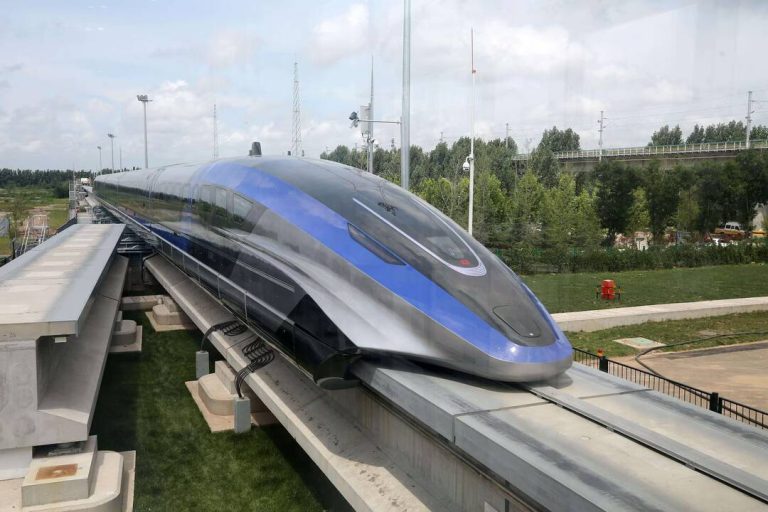
China accelerates vehicle to 700 km/h in 2 secs in magnetic levitation test
In a groundbreaking achievement, researchers in China have successfully accelerated a tonne-class vehicle to a staggering speed of 700 km/h within just two seconds. This remarkable feat was accomplished using a magnetic levitation (maglev) test line, making it the fastest superconductive electric maglev system in the world, according to state broadcaster China Central Television. The test was conducted by China’s National University of Defense Technology, utilizing a 1,310-foot track to push the boundaries of speed and innovation.
The maglev system, which uses magnetic forces to levitate and propel the vehicle, has been under development for several years. The technology has shown tremendous potential for revolutionizing transportation, offering a cleaner, faster, and more efficient alternative to traditional rail systems. By eliminating the need for physical contact between the vehicle and the track, maglev systems can achieve higher speeds and reduce maintenance costs.
The recent test in China demonstrates the significant progress made in developing this technology. The vehicle, weighing around a tonne, was accelerated from 0 to 700 km/h in a mere two seconds, showcasing the incredible power and speed of the maglev system. To put this into perspective, the fastest commercial maglev train in operation, the Shanghai Maglev Train, has a top speed of 431 km/h. The Chinese researchers have nearly doubled this speed, achieving an unprecedented level of acceleration.
The test was conducted on a specially designed track, measuring 1,310 feet in length. The track is equipped with advanced magnetic levitation technology, allowing the vehicle to float above the track and move at incredible speeds. The vehicle itself is designed to withstand the intense forces generated during acceleration, ensuring a safe and stable ride.
The implications of this breakthrough are far-reaching. With the ability to achieve speeds of over 700 km/h, maglev systems could revolutionize transportation networks, connecting cities and regions like never before. The technology could also be applied to other areas, such as logistics and transportation of goods, offering a faster and more efficient way to move cargo.
China has been at the forefront of maglev technology, investing heavily in research and development. The country has already launched several maglev projects, including the Shanghai Maglev Train, which has been in operation since 2004. The recent test demonstrates China’s commitment to pushing the boundaries of innovation and technology, with a focus on developing sustainable and efficient transportation solutions.
The success of the test has sparked excitement and interest in the scientific community, with many experts hailing it as a major breakthrough. As researchers continue to refine and develop the technology, we can expect to see even more impressive achievements in the future. With its potential to transform transportation networks and revolutionize the way we travel, the maglev system is an exciting and promising area of research.
In conclusion, the recent test in China, where a vehicle was accelerated to 700 km/h in just two seconds using a magnetic levitation system, marks a significant milestone in the development of maglev technology. The achievement demonstrates the incredible potential of this technology, offering a faster, cleaner, and more efficient alternative to traditional transportation systems. As researchers continue to push the boundaries of innovation, we can expect to see even more impressive breakthroughs in the future.
News Source: https://www.newsbytesapp.com/news/science/china-s-high-speed-maglev-reaches-700-km-h-in-2-seconds/story
About the Author