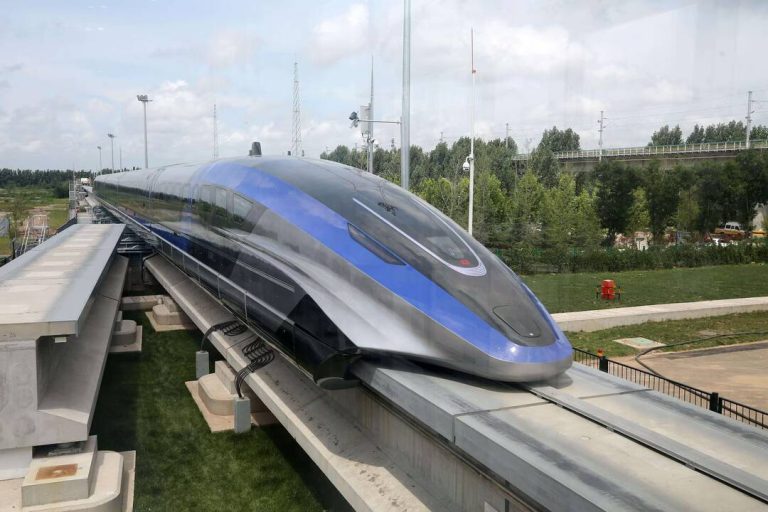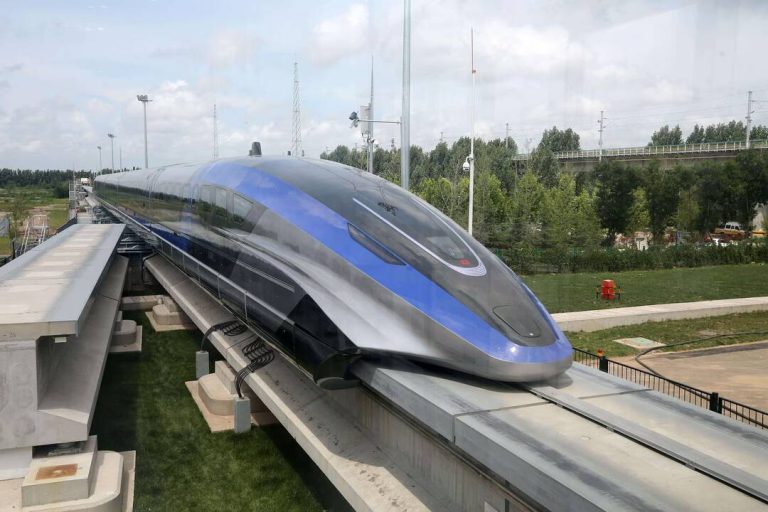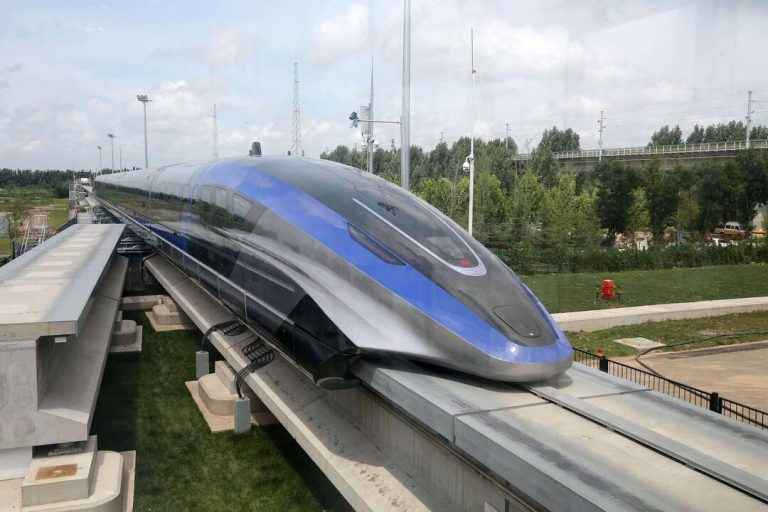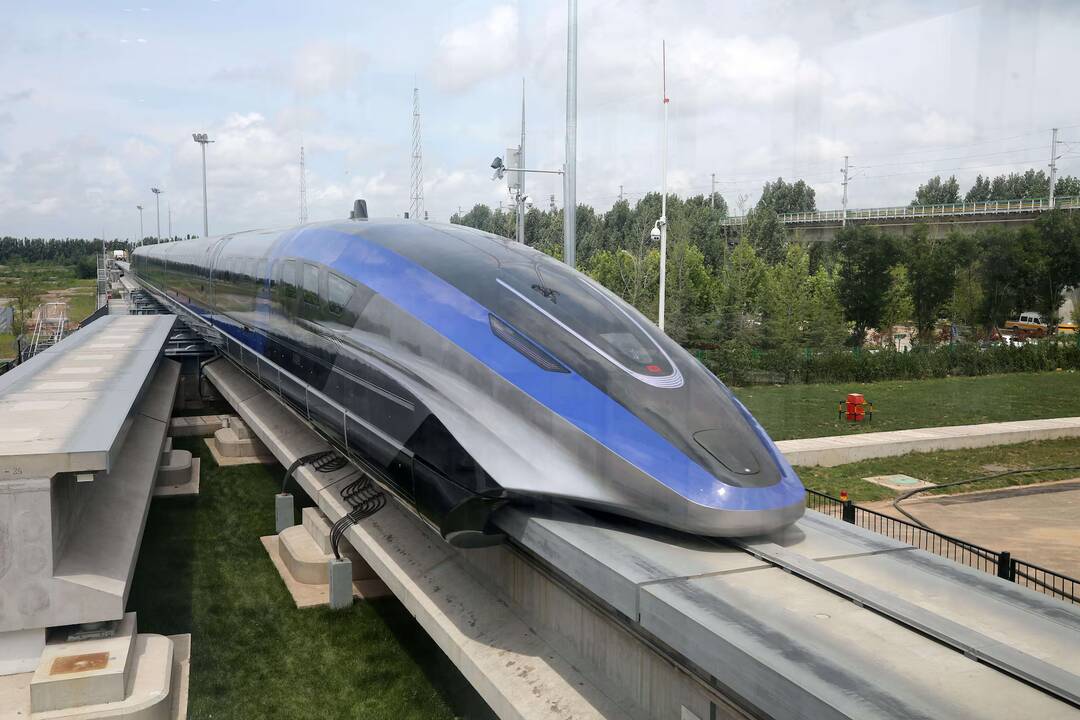
China Accelerates Vehicle to 700 km/h in 2 Secs in Magnetic Levitation Test
In a groundbreaking feat, researchers in China have successfully accelerated a tonne-class vehicle to a staggering speed of 700 km/h within a mere two seconds. This remarkable achievement was made possible using a magnetic levitation (maglev) test line, which has propelled China to the forefront of high-speed transportation technology. According to state broadcaster China Central Television, this feat makes the Chinese maglev system the fastest superconductive electric maglev system in the world.
The test was conducted by China’s National University of Defense Technology, which utilized a 1,310-foot track to push the vehicle to unprecedented speeds. The use of magnetic levitation technology allows the vehicle to float above the track, eliminating the need for wheels and reducing friction to almost zero. This, in turn, enables the vehicle to accelerate at an incredible rate, making it possible to reach speeds of over 700 km/h in a remarkably short period.
The implications of this breakthrough are significant, as it paves the way for the development of high-speed transportation systems that can revolutionize the way people travel. With the ability to reach speeds of over 700 km/h, magnetic levitation technology has the potential to reduce travel times between cities and countries, making it an attractive option for both domestic and international travel.
The Chinese maglev system uses superconductive materials to create a powerful magnetic field, which allows the vehicle to levitate above the track. This field also enables the vehicle to propel itself forward, using electromagnetic forces to accelerate it to high speeds. The use of superconductive materials is crucial in achieving such high speeds, as it enables the creation of a powerful and efficient magnetic field.
The test conducted by China’s National University of Defense Technology is a significant milestone in the development of magnetic levitation technology. The ability to accelerate a vehicle to 700 km/h in just two seconds demonstrates the potential of this technology to transform the transportation sector. As researchers continue to refine and improve the technology, we can expect to see even faster and more efficient maglev systems in the future.
The development of high-speed maglev systems has been an area of intense research and development in recent years, with several countries investing heavily in this technology. China, in particular, has been at the forefront of maglev research, with several companies and research institutions working on the development of high-speed maglev systems.
The potential applications of magnetic levitation technology extend far beyond transportation. The technology has the potential to be used in a variety of fields, including energy, medicine, and manufacturing. For example, maglev systems could be used to create highly efficient and compact power generation systems, or to develop advanced medical devices such as magnetic resonance imaging (MRI) machines.
In addition to its potential applications, the development of high-speed maglev systems also has significant economic implications. The ability to transport people and goods at high speeds could revolutionize the logistics and transportation industries, enabling companies to move goods more quickly and efficiently. This, in turn, could have a significant impact on the economy, enabling businesses to operate more efficiently and effectively.
In conclusion, the achievement of accelerating a vehicle to 700 km/h in just two seconds using magnetic levitation technology is a significant milestone in the development of high-speed transportation systems. The potential implications of this breakthrough are far-reaching, with the potential to transform the transportation sector and have a significant impact on the economy. As researchers continue to refine and improve the technology, we can expect to see even faster and more efficient maglev systems in the future.
The development of high-speed maglev systems is an exciting and rapidly evolving field, with significant potential for growth and innovation. As China continues to push the boundaries of what is possible with magnetic levitation technology, we can expect to see significant advancements in the years to come. Whether it’s the development of faster and more efficient transportation systems, or the application of maglev technology in other fields, the potential of this technology is vast and exciting.
For now, the achievement of accelerating a vehicle to 700 km/h in just two seconds is a testament to the power and potential of magnetic levitation technology. As we look to the future, it will be exciting to see how this technology continues to evolve and improve, and the significant impact it is likely to have on our daily lives.
News Source: https://www.newsbytesapp.com/news/science/china-s-high-speed-maglev-reaches-700-km-h-in-2-seconds/story
About the Author