China Accelerates Vehicle to 700 km/h in 2 Secs in Magnetic Levitation Test
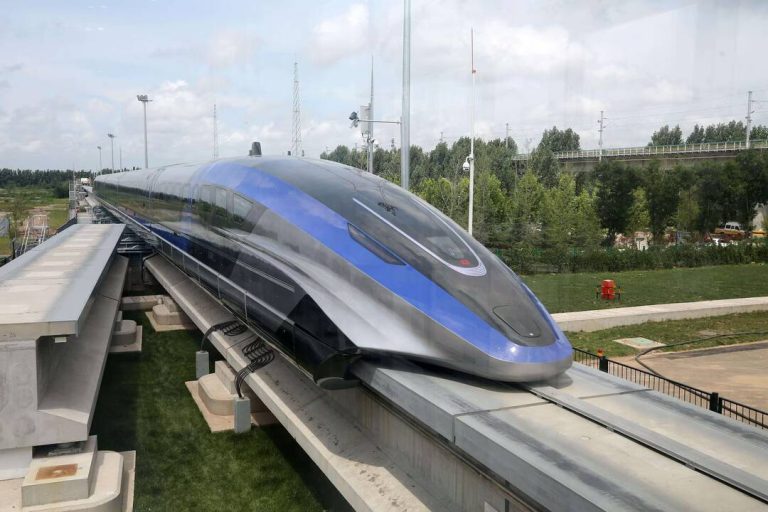
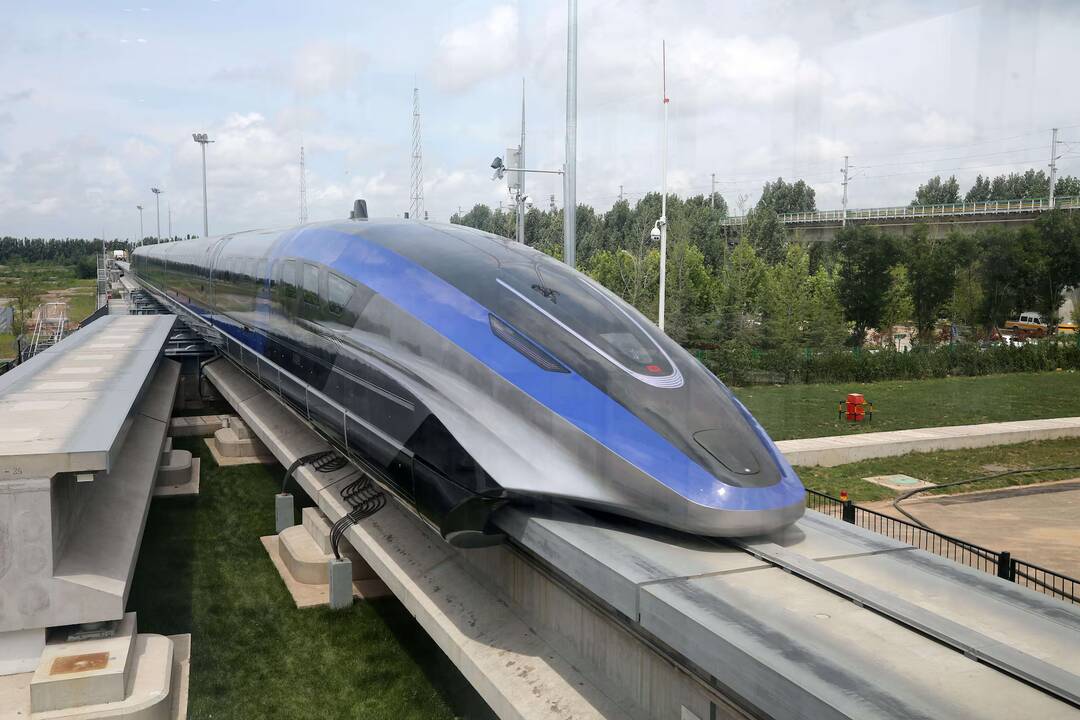
In a groundbreaking achievement, researchers in China have successfully accelerated a tonne-class vehicle to a speed of 700 km/h within a mere two seconds on a magnetic levitation (maglev) test line. This remarkable feat makes it the fastest superconductive electric maglev system in the world, according to state broadcaster China Central Television. The test was conducted by China’s National University of Defense Technology using a 1,310-foot track, pushing the boundaries of transportation technology and setting a new benchmark for high-speed travel.
The concept of magnetic levitation, or maglev, has been around for several decades. It involves using magnetic forces to lift and propel vehicles at high speeds, reducing friction and increasing efficiency. Maglev systems have been used in various applications, including transportation, but the achievement in China is a significant milestone in the development of this technology. The ability to accelerate a vehicle to 700 km/h in just two seconds is a testament to the power and potential of maglev systems.
The test conducted by China’s National University of Defense Technology is a notable example of the country’s commitment to investing in cutting-edge technology and innovation. China has been at the forefront of developing high-speed transportation systems, including maglev trains, which are designed to revolutionize the way people travel. The country’s emphasis on research and development has enabled it to make significant strides in this field, with the latest achievement being a prime example.
So, how does the maglev system work? In simple terms, it uses magnetic forces to lift the vehicle above the track, eliminating the need for wheels and reducing friction. This allows the vehicle to move at high speeds with minimal resistance, making it an efficient and effective mode of transportation. The maglev system used in the test in China employs superconductive materials to create a magnetic field, which is then used to propel the vehicle forward.
The implications of this achievement are far-reaching and exciting. With the ability to accelerate vehicles to high speeds in a short amount of time, maglev systems could potentially transform the way we travel. Imagine being able to travel from one city to another at speeds of over 700 km/h, reducing travel times significantly and increasing productivity. The potential applications of this technology are vast, ranging from high-speed transportation to advanced logistics and supply chain management.
The test conducted in China is not just a significant achievement in terms of technology; it also highlights the country’s commitment to innovation and progress. China has been investing heavily in research and development, with a focus on emerging technologies such as artificial intelligence, renewable energy, and advanced materials. The country’s emphasis on innovation has enabled it to become a global leader in various fields, including transportation, energy, and telecommunications.
As the world continues to urbanize and populations grow, the need for efficient and sustainable transportation systems becomes increasingly important. Maglev systems, like the one tested in China, offer a promising solution to this challenge. With their ability to reduce friction and increase efficiency, maglev systems could play a significant role in reducing carbon emissions and promoting sustainable transportation.
In conclusion, the achievement in China is a significant milestone in the development of maglev technology. The ability to accelerate a vehicle to 700 km/h in just two seconds is a testament to the power and potential of this technology. As the world continues to evolve and innovate, it will be exciting to see how maglev systems are used to transform the way we travel and transport goods. With its commitment to innovation and progress, China is likely to remain at the forefront of this technology, pushing the boundaries of what is possible and paving the way for a more efficient and sustainable future.
News Source: https://www.newsbytesapp.com/news/science/china-s-high-speed-maglev-reaches-700-km-h-in-2-seconds/story
About the Author