China accelerates vehicle to 700 km/h in 2 secs in magnetic levitation test
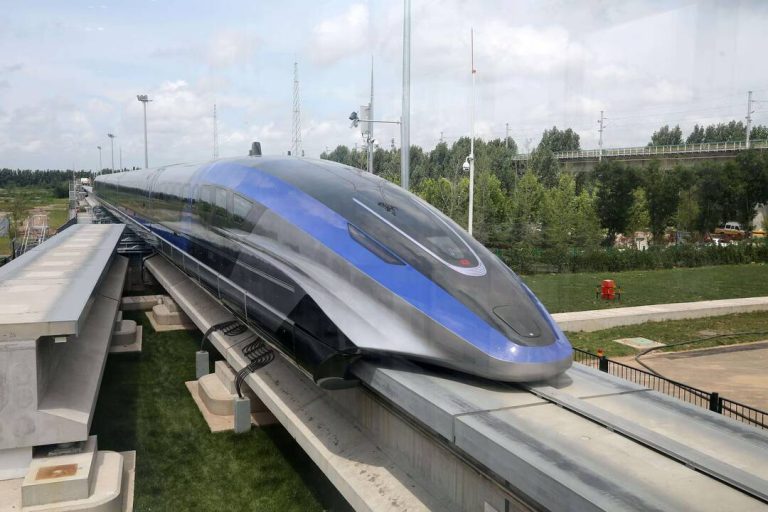
In a groundbreaking achievement, researchers in China have successfully accelerated a tonne-class vehicle to a speed of 700 km/h within a mere two seconds on a magnetic levitation (maglev) test line. This remarkable feat makes it the fastest superconductive electric maglev system in the world, according to state broadcaster China Central Television. The test was conducted by China’s National University of Defense Technology using a 1,310-foot track, marking a significant milestone in the country’s pursuit of advanced transportation technology.
Magnetic levitation, or maglev, is a technology that uses magnetic forces to lift and propel vehicles at high speeds, eliminating the need for traditional wheels and tracks. This allows for smoother, quieter, and more efficient travel, with the potential to revolutionize the way we move people and goods. China has been at the forefront of maglev research and development, with several high-profile projects underway, including the Shanghai Maglev Train, which has been in operation since 2004.
The recent test, however, takes the technology to a whole new level. By accelerating a vehicle to 700 km/h in just two seconds, the researchers have demonstrated the incredible potential of maglev systems. To put this in perspective, the fastest commercial maglev train in operation today, the Shanghai Maglev Train, has a top speed of 431 km/h. The new test shows that it is possible to more than double this speed, paving the way for future transportation systems that could transform the way we travel.
The test was conducted on a specially designed track, which uses superconducting magnets to create a magnetic field that lifts and propels the vehicle. The vehicle itself is designed to be highly efficient, with advanced aerodynamics and a lightweight structure that minimizes energy consumption. The combination of these technologies allows the vehicle to achieve incredible speeds, making it an exciting prospect for future transportation systems.
One of the key advantages of maglev technology is its potential to reduce energy consumption and greenhouse gas emissions. Traditional transportation systems, such as fossil fuel-powered cars and trains, are significant contributors to climate change, with the transportation sector accounting for around 23% of global greenhouse gas emissions. Maglev systems, on the other hand, use electric propulsion, which can be powered by renewable energy sources, making them a much more sustainable option.
The implications of this breakthrough are significant, with potential applications in a range of fields, from transportation to logistics and even space exploration. For example, maglev systems could be used to transport goods and people over long distances, reducing the need for fossil fuels and minimizing carbon emissions. They could also be used to launch spacecraft, providing a more efficient and sustainable alternative to traditional launch systems.
China’s National University of Defense Technology has been at the forefront of maglev research and development, with a team of researchers and engineers working on the project. The university has a strong reputation for innovation and has made significant contributions to the development of advanced technologies, including maglev systems.
The success of the test is a significant milestone for China’s transportation sector, which is undergoing rapid modernization. The country has invested heavily in high-speed rail and other advanced transportation systems, with the goal of creating a more efficient, sustainable, and connected transportation network. The development of maglev technology is a key part of this strategy, with the potential to revolutionize the way people and goods move around the country.
In conclusion, the recent test of China’s maglev system is a groundbreaking achievement that demonstrates the incredible potential of this technology. By accelerating a vehicle to 700 km/h in just two seconds, the researchers have shown that it is possible to create transportation systems that are faster, more efficient, and more sustainable than ever before. As the world continues to urbanize and the demand for transportation grows, the development of maglev technology is an exciting prospect that could transform the way we live and work.
News source: https://www.newsbytesapp.com/news/science/china-s-high-speed-maglev-reaches-700-km-h-in-2-seconds/story
About the Author