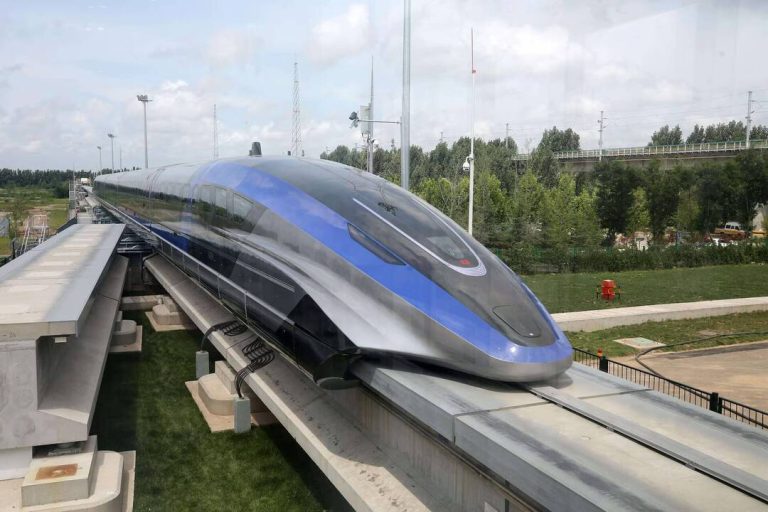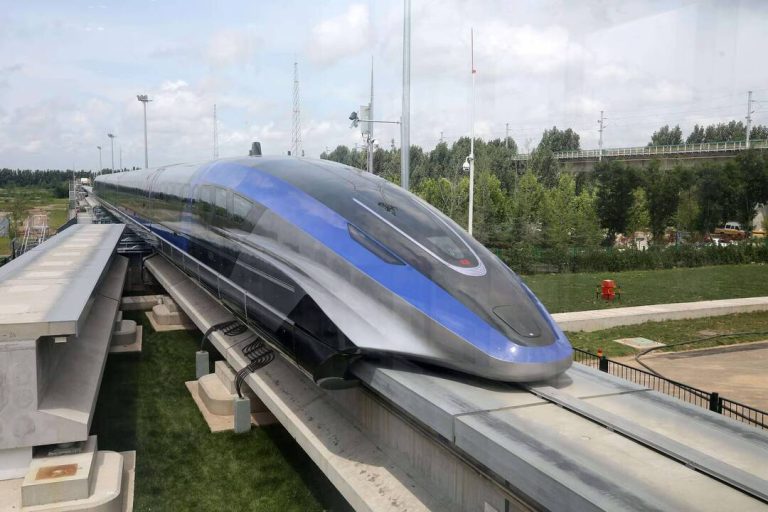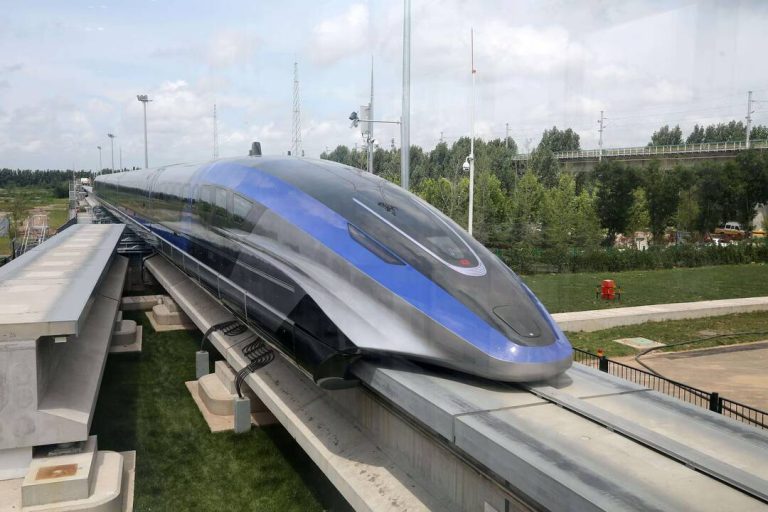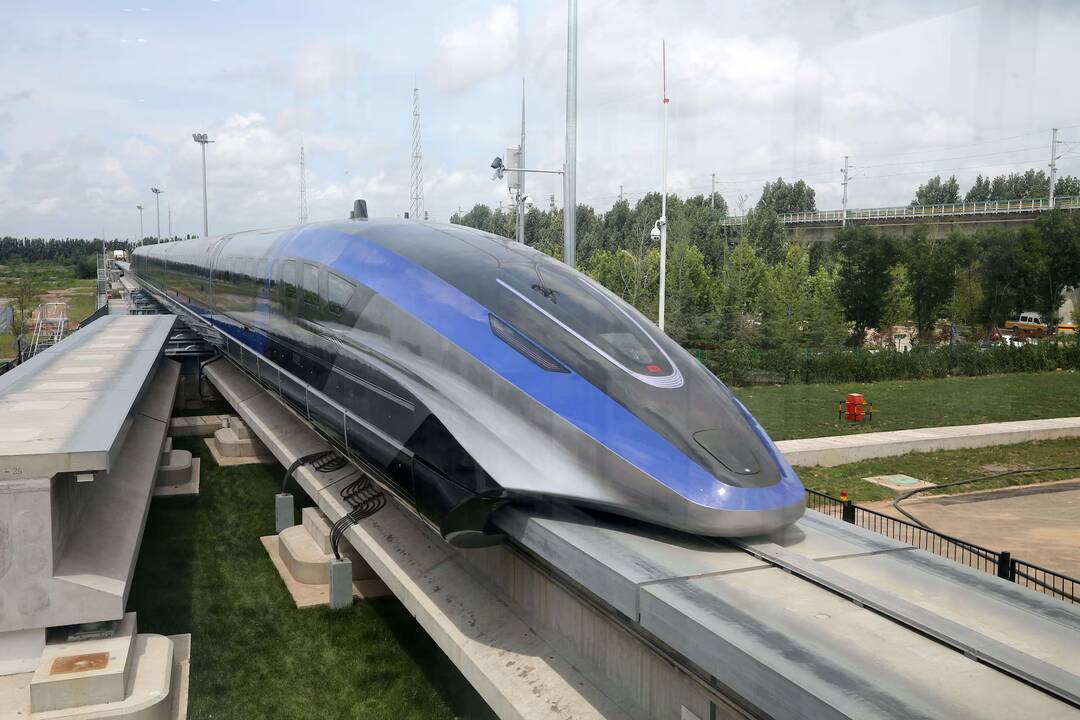
China Accelerates Vehicle to 700 km/h in 2 Secs in Magnetic Levitation Test
In a groundbreaking achievement, researchers in China have successfully accelerated a tonne-class vehicle to a staggering speed of 700 km/h within a mere two seconds on a magnetic levitation (maglev) test line. This remarkable feat makes it the fastest superconductive electric maglev system in the world, according to state broadcaster China Central Television. The test was conducted by China’s National University of Defense Technology using a 1,310-foot track, marking a significant milestone in the development of high-speed transportation technology.
The maglev system, which uses magnetic forces to lift and propel the vehicle, has been under development for several years. The technology has the potential to revolutionize the way we travel, offering faster, cleaner, and more efficient transportation options. The recent test demonstrates the vast potential of maglev technology, showcasing its ability to accelerate vehicles to incredible speeds in a remarkably short period.
The test was conducted on a specially designed track, which was built to accommodate the high-speed requirements of the maglev system. The track is approximately 1,310 feet long, providing a sufficient distance for the vehicle to reach its top speed. The vehicle itself is a tonne-class machine, weighing around 2,200 pounds, which is a significant load to accelerate to such high speeds.
The acceleration of the vehicle was made possible by the use of advanced superconducting materials, which enable the creation of powerful magnetic fields. These fields interact with the magnetic levitation system, generating the thrust needed to propel the vehicle forward. The superconducting materials used in the test are capable of operating at extremely low temperatures, which is essential for achieving the high magnetic field strengths required for maglev propulsion.
The implications of this breakthrough are significant, with potential applications in various fields, including transportation, defense, and even space exploration. The development of high-speed maglev systems could revolutionize the way we travel, enabling faster and more efficient transportation of people and goods. For instance, a maglev system could potentially connect major cities, reducing travel times and increasing productivity.
The achievement is also a testament to China’s growing presence in the field of advanced technology and innovation. The country has been investing heavily in research and development, with a focus on emerging technologies such as artificial intelligence, quantum computing, and advanced materials. The success of the maglev test demonstrates China’s capabilities in developing cutting-edge technologies, which could have far-reaching implications for the global economy and society.
The test also highlights the potential for maglev technology to be used in other applications, such as defense and space exploration. The ability to accelerate vehicles to high speeds using magnetic levitation could be used to develop advanced missile systems or even launch vehicles for space missions. The technology could also be used to develop high-speed transportation systems for military personnel and equipment, enabling rapid deployment and response times.
While the test is a significant achievement, there are still several challenges that need to be addressed before maglev technology can be widely adopted. One of the main challenges is the development of more efficient and cost-effective superconducting materials, which are essential for the operation of maglev systems. Additionally, the technology requires significant infrastructure investments, including the construction of specialized tracks and maintenance facilities.
Despite these challenges, the recent test demonstrates the vast potential of maglev technology, and the Chinese researchers are already planning to push the boundaries even further. The team is aiming to develop a maglev system that can reach speeds of over 1,000 km/h, which would be a major breakthrough in the field of transportation technology.
In conclusion, the successful test of the maglev system in China is a significant achievement that demonstrates the potential of magnetic levitation technology to revolutionize the way we travel. The ability to accelerate a tonne-class vehicle to 700 km/h in just two seconds is a testament to the power and efficiency of maglev systems, and the implications of this breakthrough are far-reaching. As researchers continue to develop and refine this technology, we can expect to see significant advancements in the field of transportation, defense, and space exploration.
News Source: https://www.newsbytesapp.com/news/science/china-s-high-speed-maglev-reaches-700-km-h-in-2-seconds/story
About the Author