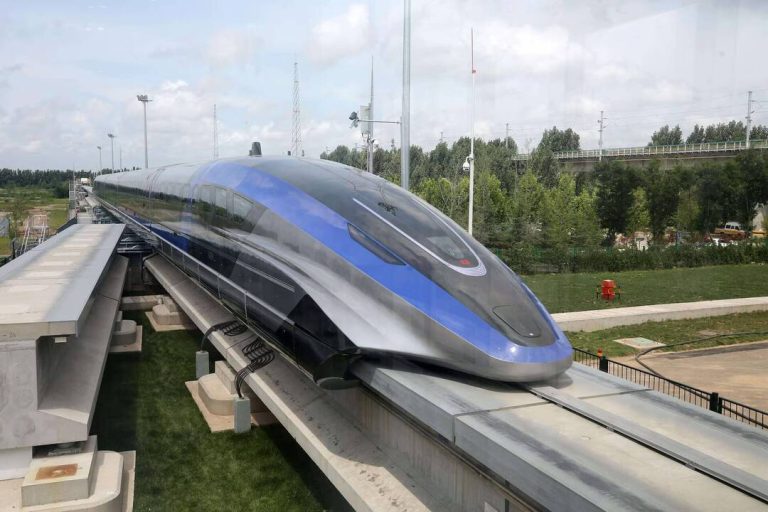
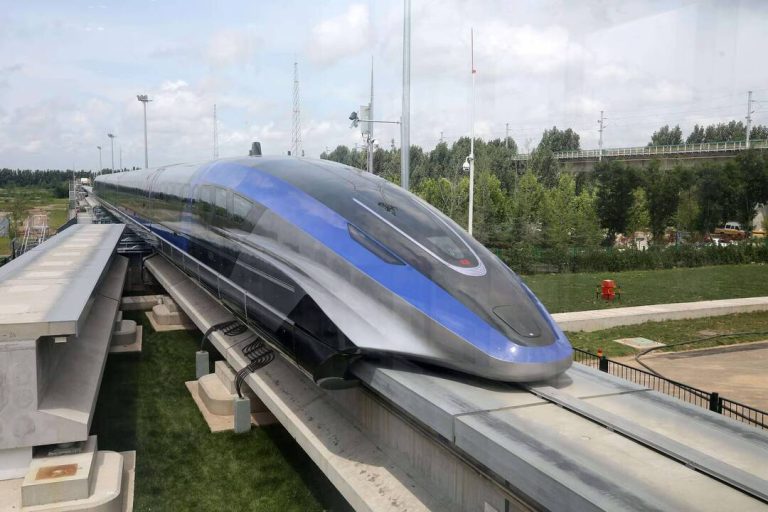
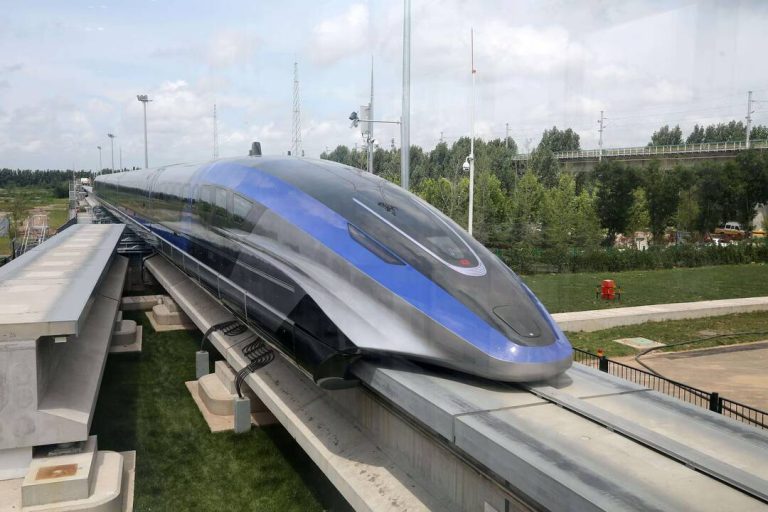
China accelerates vehicle to 700 km/h in 2 secs in magnetic levitation test
The world of transportation is on the cusp of a revolution, and China is at the forefront of this revolution. In a groundbreaking test, researchers in China have successfully accelerated a tonne-class vehicle to a speed of 700 km/h within a mere two seconds on a magnetic levitation (maglev) test line. This feat makes it the fastest superconductive electric maglev system in the world, according to state broadcaster China Central Television. The test was conducted by China’s National University of Defense Technology using a 1,310-foot track, marking a significant milestone in the development of high-speed transportation.
The concept of magnetic levitation, or maglev, has been around for decades. It involves using magnetic forces to lift and propel vehicles, eliminating the need for traditional wheels and tracks. This technology has the potential to revolutionize the way we travel, enabling us to reach destinations at unprecedented speeds while reducing energy consumption and increasing safety. China has been actively pursuing the development of maglev technology, with the goal of creating a high-speed transportation network that can connect its major cities.
The recent test, which achieved a speed of 700 km/h in just two seconds, demonstrates the incredible potential of maglev technology. To put this speed into perspective, it is equivalent to traveling from Beijing to Shanghai, a distance of over 1,200 kilometers, in just under two hours. This is faster than any commercial airliner and comparable to the speeds achieved by some of the world’s fastest military aircraft.
The test was conducted on a specially designed track, which used superconductive magnets to levitate and propel the vehicle. The vehicle itself was a tonne-class prototype, designed to simulate the weight and size of a commercial passenger vehicle. The track, which measured 1,310 feet in length, was equipped with advanced sensors and monitoring systems to track the vehicle’s speed, acceleration, and other performance parameters.
The results of the test were nothing short of astonishing. The vehicle accelerated from 0 to 700 km/h in just two seconds, reaching a speed that is comparable to that of a bullet train. The test also demonstrated the vehicle’s ability to decelerate rapidly, coming to a complete stop in just a few seconds. This is a critical aspect of maglev technology, as it enables the vehicle to stop quickly and safely in the event of an emergency.
The implications of this test are far-reaching and significant. If China can successfully develop and deploy maglev technology on a commercial scale, it could revolutionize the country’s transportation network. Imagine being able to travel from one city to another in a fraction of the time it takes today, without the need for airports, security checks, or lengthy layovers. Maglev technology has the potential to transform the way we live, work, and travel, enabling us to connect with each other and with the world in ways that were previously unimaginable.
China’s National University of Defense Technology, which conducted the test, is a leading research institution in the field of maglev technology. The university has been working on the development of maglev systems for several years, with a focus on creating high-speed transportation networks that can connect China’s major cities. The recent test is a significant milestone in this effort, demonstrating the university’s expertise and capabilities in this field.
As China continues to push the boundaries of maglev technology, it is likely that other countries will take notice. The United States, Japan, and Europe are all actively pursuing the development of maglev systems, with several test tracks and commercial projects already underway. However, China’s recent achievement is a significant milestone, demonstrating the country’s commitment to innovation and its ability to drive technological advancements.
In conclusion, the recent test of China’s maglev system, which achieved a speed of 700 km/h in just two seconds, is a groundbreaking achievement that has the potential to revolutionize the world of transportation. With its ability to levitate and propel vehicles at incredible speeds, maglev technology has the potential to transform the way we travel, enabling us to connect with each other and with the world in ways that were previously unimaginable. As China continues to push the boundaries of this technology, it is likely that other countries will follow, leading to a new era of high-speed transportation that will change the world forever.
News Source: https://www.newsbytesapp.com/news/science/china-s-high-speed-maglev-reaches-700-km-h-in-2-seconds/story
About the Author