China Accelerates Vehicle to 700 km/h in 2 Secs in Magnetic Levitation Test
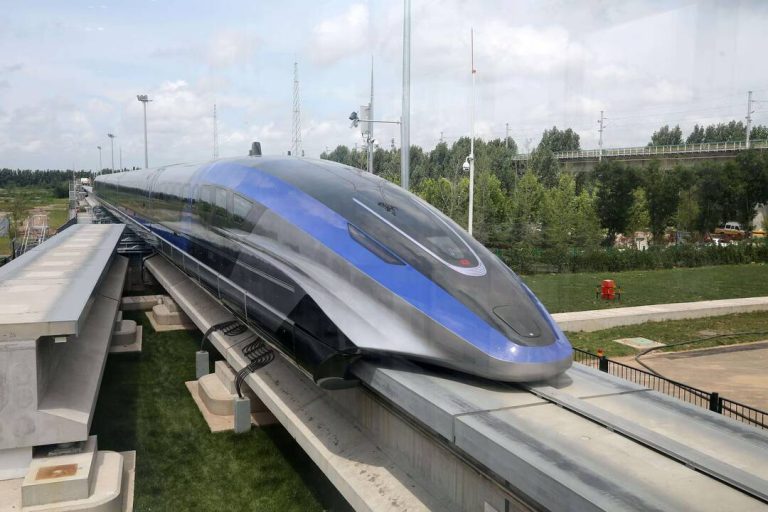
In a groundbreaking achievement, researchers in China have successfully accelerated a tonne-class vehicle to a staggering speed of 700 km/h within a mere two seconds. This remarkable feat was accomplished using a magnetic levitation (maglev) test line, making it the fastest superconductive electric maglev system in the world. According to state broadcaster China Central Television, the test was conducted by China’s National University of Defense Technology on a 1,310-foot track.
The concept of magnetic levitation (maglev) technology has been around for several decades, but its application in high-speed transportation has been gaining significant attention in recent years. Maglev systems use electromagnetic forces to levitate and propel vehicles at incredibly high speeds, eliminating the need for traditional wheels and tracks. This technology has the potential to revolutionize the way we travel, offering faster, cleaner, and more efficient transportation solutions.
The test conducted by China’s National University of Defense Technology is a significant milestone in the development of maglev technology. The vehicle used in the test was a tonne-class vehicle, weighing around 1,000 kg, which is a substantial weight to accelerate to such high speeds in a short time. The fact that the vehicle was able to reach 700 km/h in just two seconds is a testament to the power and efficiency of the maglev system.
The test track used in the experiment was approximately 1,310 feet long, which is a relatively short distance to achieve such high speeds. The track was equipped with a superconductive electric maglev system, which uses superconducting materials to generate the electromagnetic forces needed to levitate and propel the vehicle. The use of superconducting materials allows for more efficient and powerful magnetic fields, enabling the vehicle to reach higher speeds.
The implications of this technology are vast and far-reaching. If successfully implemented, maglev transportation systems could revolutionize the way we travel, offering faster and more efficient transportation solutions. For example, a maglev train could potentially travel from Beijing to Shanghai, a distance of over 1,300 km, in under an hour. This could significantly reduce travel times, increase productivity, and boost economic growth.
Furthermore, maglev technology has the potential to reduce our carbon footprint and contribute to a more sustainable future. Traditional transportation systems, such as cars and trains, rely on fossil fuels and produce significant amounts of greenhouse gas emissions. In contrast, maglev systems are powered by electricity, which can be generated from renewable sources, making them a cleaner and more environmentally friendly option.
The development of maglev technology is not limited to China, with several countries around the world investing in research and development. Japan, for example, has been at the forefront of maglev technology, with several test tracks and commercial lines already in operation. The United States and Europe are also exploring the potential of maglev technology, with several projects and initiatives underway.
However, there are still significant technical and engineering challenges that need to be overcome before maglev technology can be widely adopted. For example, the cost of building and maintaining maglev tracks is currently prohibitively expensive, making it difficult to justify the investment. Additionally, there are concerns about safety, as maglev vehicles travel at extremely high speeds and require sophisticated control systems to ensure safe operation.
In conclusion, the successful test of the maglev vehicle in China is a significant achievement and a major step forward in the development of this technology. The potential benefits of maglev transportation are vast, offering faster, cleaner, and more efficient travel solutions. While there are still challenges to be overcome, the progress made so far is promising, and it will be exciting to see how this technology continues to evolve in the coming years.
About the Author