China accelerates vehicle to 700 km/h in 2 secs in magnetic levitation test
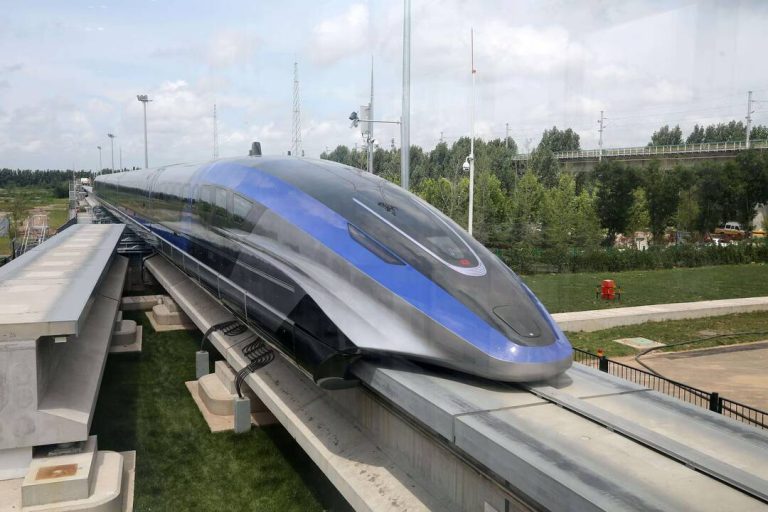
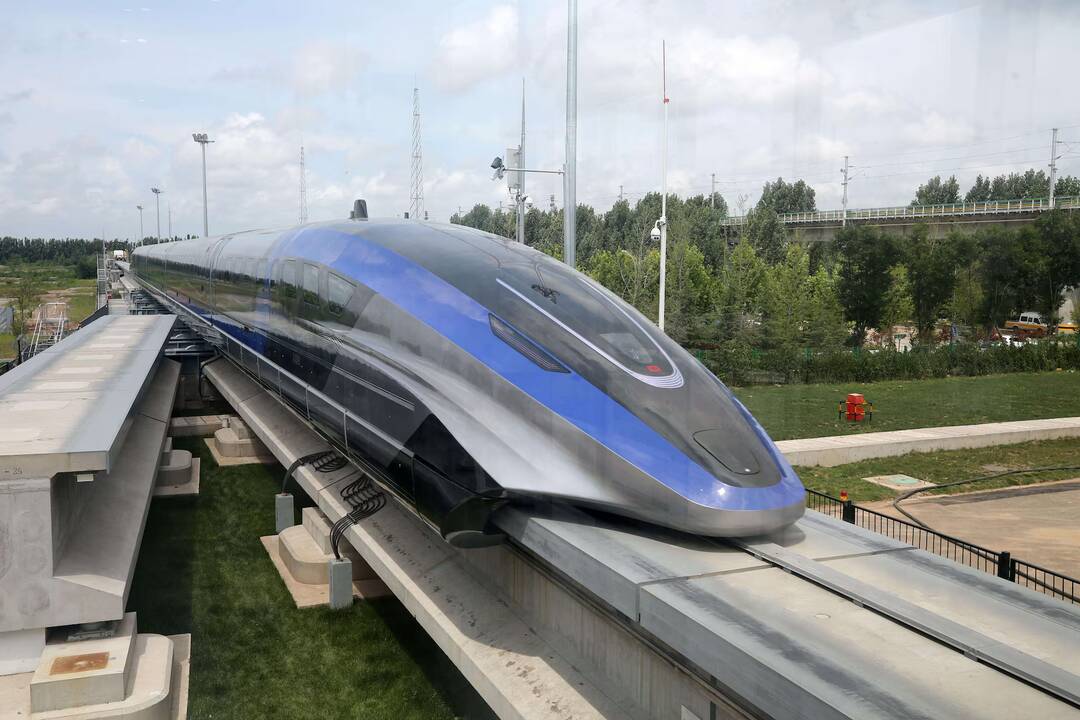
In a groundbreaking achievement, researchers in China have successfully accelerated a tonne-class vehicle to a staggering speed of 700 km/h within a mere two seconds. This feat was accomplished using a magnetic levitation (maglev) test line, making it the fastest superconductive electric maglev system in the world, according to state broadcaster China Central Television. The test was conducted by China’s National University of Defense Technology, utilizing a 1,310-foot track to achieve this remarkable speed.
The concept of magnetic levitation (maglev) is not new, but the speed achieved in this test is unprecedented. Maglev technology uses electromagnetic forces to lift and propel vehicles at high speeds, eliminating the need for traditional wheels and tracks. This allows for smoother, quieter, and more efficient transportation, with the potential to revolutionize the way we travel.
The test conducted by China’s National University of Defense Technology is a significant milestone in the development of maglev technology. The vehicle used in the test was a tonne-class vehicle, which is a substantial weight to accelerate to such high speeds in such a short time frame. The fact that the researchers were able to achieve this feat in just two seconds is a testament to the advancements made in maglev technology.
The 1,310-foot track used in the test is a relatively short distance, but it is still a significant achievement to accelerate a vehicle to 700 km/h in such a short space. The track is likely to be extended in the future to allow for even higher speeds and longer distances to be achieved. The potential applications of this technology are vast, ranging from high-speed transportation to advanced military systems.
The use of superconductive materials in the maglev system is a key factor in achieving such high speeds. Superconductors are materials that can conduct electricity with zero resistance, allowing for the efficient transfer of energy and the creation of powerful magnetic fields. The combination of superconductive materials and advanced maglev technology has enabled the researchers to achieve speeds that were previously thought to be impossible.
China has been at the forefront of maglev technology development in recent years, with several high-profile projects underway. The country has already developed several maglev lines, including the Shanghai Maglev Train, which can reach speeds of up to 431 km/h. However, the latest achievement is a significant step forward, demonstrating the potential for even higher speeds and more advanced technology.
The implications of this achievement are far-reaching, with potential applications in a variety of fields. High-speed transportation is an obvious area where maglev technology could have a significant impact, allowing for faster and more efficient travel over long distances. The technology could also be used in advanced military systems, such as high-speed missiles and unmanned aerial vehicles.
In addition to the potential applications, the achievement is also a significant milestone in the development of Chinese technology. China has been investing heavily in research and development in recent years, with a focus on emerging technologies such as artificial intelligence, renewable energy, and advanced materials. The success of the maglev test is a testament to the country’s commitment to innovation and its ability to develop cutting-edge technology.
The test has also sparked interest and excitement in the scientific community, with many experts hailing it as a major breakthrough. The achievement demonstrates the potential for maglev technology to revolutionize transportation and other fields, and it is likely to inspire further research and development in the area.
In conclusion, the achievement of accelerating a vehicle to 700 km/h in just two seconds using magnetic levitation technology is a significant milestone in the development of advanced transportation systems. The use of superconductive materials and advanced maglev technology has enabled the researchers to achieve speeds that were previously thought to be impossible. The potential applications of this technology are vast, ranging from high-speed transportation to advanced military systems. As China continues to invest in research and development, it is likely that we will see even more exciting advancements in the field of maglev technology.
News Source: https://www.newsbytesapp.com/news/science/china-s-high-speed-maglev-reaches-700-km-h-in-2-seconds/story
About the Author