China accelerates vehicle to 700 km/h in 2 secs in magnetic levitation test
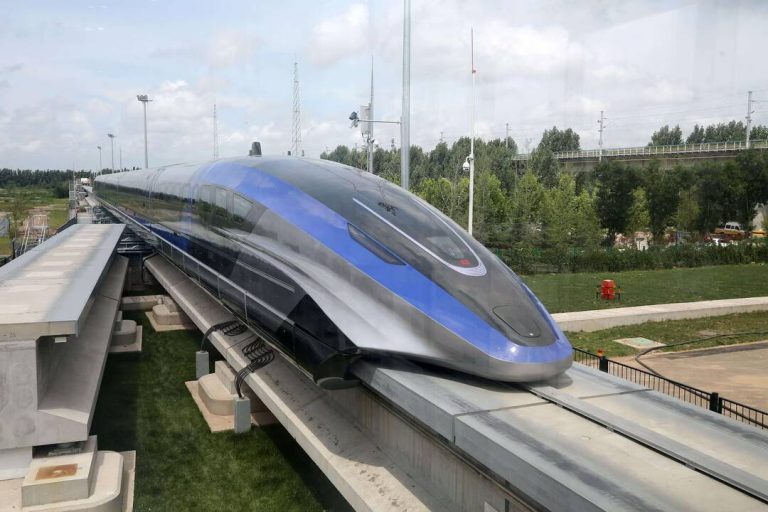
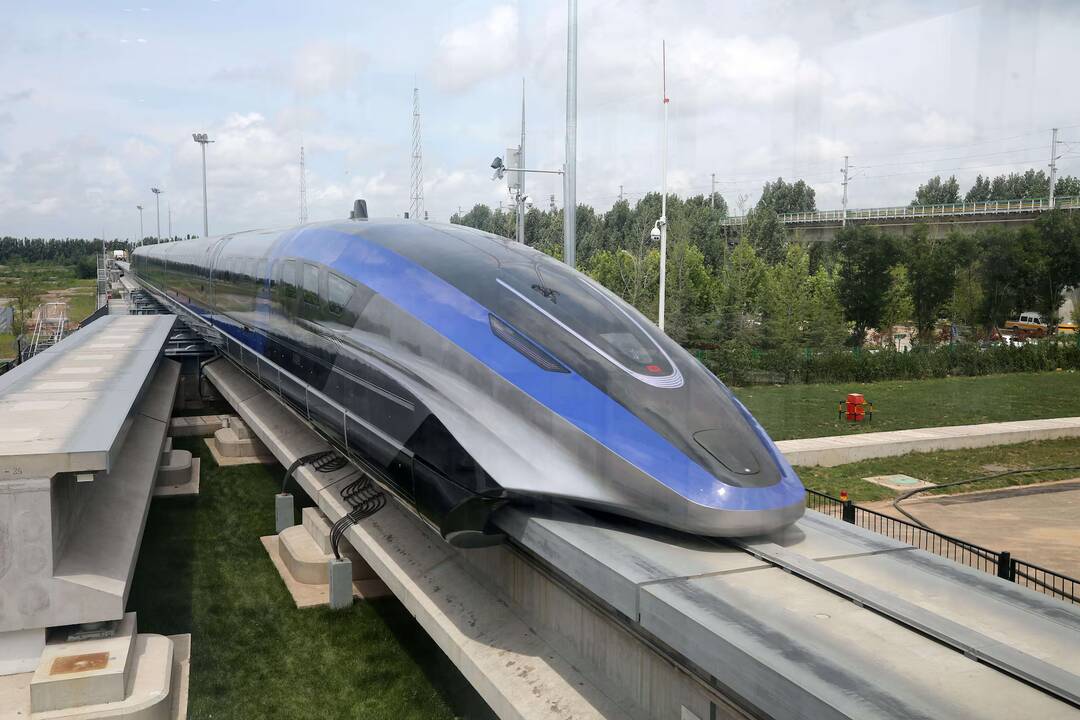
In a groundbreaking achievement, researchers in China have successfully accelerated a tonne-class vehicle to a staggering speed of 700 km/h within a mere two seconds on a magnetic levitation (maglev) test line. This remarkable feat makes it the fastest superconductive electric maglev system in the world, according to state broadcaster China Central Television. The test was conducted by China’s National University of Defense Technology using a 1,310-foot track, marking a significant milestone in the development of high-speed transportation technology.
The concept of magnetic levitation, or maglev, has been around for several decades. It involves the use of magnetic forces to suspend and propel vehicles at high speeds, eliminating the need for traditional wheels and tracks. Maglev systems have the potential to revolutionize the way we travel, offering faster, cleaner, and more efficient modes of transportation. China, in particular, has been at the forefront of maglev technology, investing heavily in research and development to create high-speed transportation systems that can transform its economy and society.
The recent test conducted by China’s National University of Defense Technology is a testament to the country’s commitment to innovation and progress. The test line, which measures 1,310 feet in length, is a significant improvement over previous maglev systems, which were limited by their size and capacity. The use of a tonne-class vehicle, which is equivalent to the weight of a small car, demonstrates the potential of maglev technology to transport heavy loads at high speeds, making it an attractive option for freight and passenger transportation.
The acceleration of the vehicle to 700 km/h in just two seconds is a remarkable achievement, showcasing the power and efficiency of maglev technology. To put this in perspective, the fastest commercial airliner, the Boeing 787 Dreamliner, has a cruising speed of around 915 km/h, but it takes several minutes to reach that speed. The maglev system, on the other hand, can accelerate to nearly 80% of that speed in a fraction of the time, demonstrating its potential to revolutionize the way we travel.
The implications of this technology are far-reaching and exciting. Imagine being able to travel from one city to another at speeds of over 700 km/h, reducing travel times and increasing productivity. The potential for maglev technology to transform the transportation sector is vast, and China’s achievement is a significant step towards making that vision a reality.
The use of superconductive electric maglev systems is also noteworthy. Superconductors are materials that can conduct electricity with zero resistance, making them ideal for high-speed applications. The integration of superconductors into maglev systems enables the creation of more efficient and powerful propulsion systems, which are capable of achieving higher speeds and accelerating faster.
China’s achievement is not only a testament to its own technological prowess but also a challenge to other countries to invest in maglev research and development. As the world becomes increasingly interconnected, the need for fast, efficient, and sustainable transportation systems will only continue to grow. The development of maglev technology has the potential to play a significant role in meeting that need, and China’s breakthrough is an important step towards making that vision a reality.
In conclusion, the successful acceleration of a tonne-class vehicle to 700 km/h in just two seconds on a magnetic levitation test line is a remarkable achievement that showcases the potential of maglev technology to transform the transportation sector. China’s commitment to innovation and progress is evident in its investment in research and development, and its achievement is a challenge to other countries to follow suit. As the world continues to evolve and grow, the need for fast, efficient, and sustainable transportation systems will only continue to increase, and maglev technology is poised to play a significant role in meeting that need.
News Source: https://www.newsbytesapp.com/news/science/china-s-high-speed-maglev-reaches-700-km-h-in-2-seconds/story
About the Author