Cassini finds fresh organic molecules on Saturn’s Moon
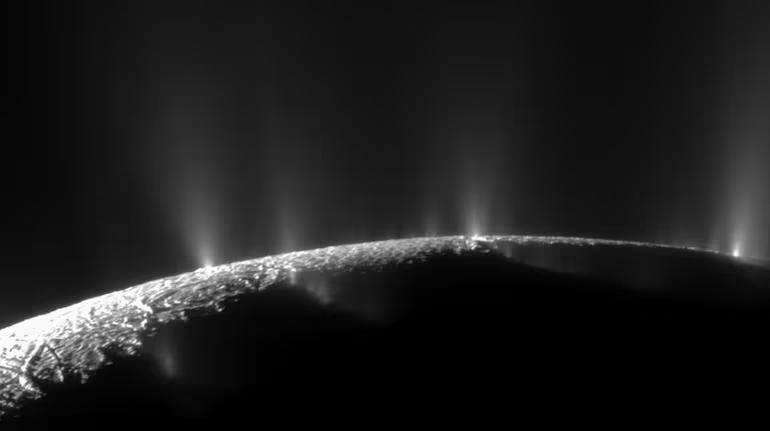
In a groundbreaking discovery, NASA’s Cassini mission has detected fresh, complex organic molecules erupting from the subsurface ocean of Saturn’s moon Enceladus. This finding has significant implications for the search for life beyond Earth and provides strong evidence that Enceladus could be habitable. The Cassini spacecraft, which flew just 13 miles above the surface of Enceladus, sampled ice grains in active plumes and found a diverse range of organic compounds, including aliphatic, cyclic, nitrogen- and oxygen-bearing compounds, as well as double-bonded molecules.
The discovery was made possible by Cassini’s Cosmic Dust Analyzer (CDA) and Ion and Neutral Mass Spectrometer (INMS) instruments, which were designed to study the composition of the plumes emanating from Enceladus’s subsurface ocean. The plumes, which are thought to be driven by hydrothermal activity, are rich in water vapor, ice particles, and organic compounds. By analyzing the composition of these plumes, scientists can gain insights into the chemical processes that are occurring within Enceladus’s subsurface ocean and the potential for life to exist there.
The organic molecules detected by Cassini are of particular interest because they are the building blocks of life. These molecules, which include carbon, hydrogen, oxygen, and nitrogen, are the raw materials that are necessary for the creation of more complex biological molecules, such as amino acids and sugars. The presence of these molecules in the plumes suggests that the subsurface ocean of Enceladus has the necessary chemical ingredients for life to exist.
One of the most significant aspects of this discovery is the complexity of the organic molecules that were detected. The molecules found by Cassini are not simple, single-bonded compounds, but rather complex, double-bonded molecules that are similar to those found in living organisms on Earth. This suggests that the chemical processes that are occurring within Enceladus’s subsurface ocean are capable of creating complex organic molecules, which is a key step in the creation of life.
The discovery of fresh organic molecules on Enceladus also provides strong evidence that the moon’s subsurface ocean is in contact with rock, which is a necessary condition for life to exist. The presence of rock provides a source of energy and nutrients that are necessary for life to thrive. Additionally, the interaction between the ocean and rock can create a stable and habitable environment, which is necessary for life to exist over long periods of time.
The implications of this discovery are significant and far-reaching. The detection of fresh organic molecules on Enceladus suggests that the moon’s subsurface ocean is a habitable environment, and that the conditions necessary for life to exist are present. This finding has significant implications for the search for life beyond Earth and provides a new target for future missions to explore.
In the coming years, NASA and other space agencies are planning to send new missions to Enceladus to further explore its subsurface ocean and search for signs of life. The upcoming Dragonfly mission, which is scheduled to launch in 2027, will send a rotorcraft-lander to Saturn’s moon Titan, but will also fly by Enceladus and study its subsurface ocean. The European Space Agency’s JUICE mission, which is scheduled to launch in 2022, will also study the subsurface ocean of Enceladus and search for signs of life.
In conclusion, the discovery of fresh organic molecules on Enceladus is a significant finding that has major implications for the search for life beyond Earth. The detection of complex, double-bonded molecules in the plumes emanating from Enceladus’s subsurface ocean suggests that the moon’s subsurface ocean is a habitable environment, and that the conditions necessary for life to exist are present. As we continue to explore Enceladus and other celestial bodies in our solar system, we may eventually find evidence of life beyond Earth, which would be one of the most significant discoveries in the history of science.
About the Author