Cassini Finds Fresh Organic Molecules on Saturn’s Moon
In a groundbreaking discovery, NASA’s Cassini mission has detected fresh, complex organic molecules erupting from the subsurface ocean of Saturn’s moon Enceladus. The findings, which were obtained when the spacecraft flew just 13 miles above the surface, provide significant evidence that Enceladus could be habitable. The discovery of organic molecules, which are the building blocks of life, is a major breakthrough in the search for life beyond Earth.
The Cassini spacecraft, which was launched in 1997, has been orbiting Saturn since 2004. During its mission, the spacecraft has made numerous discoveries about the Saturnian system, including the detection of geysers of water vapor and organic compounds on Enceladus. However, the latest discovery is the most significant one yet, as it provides conclusive evidence of the presence of fresh, complex organic molecules on the moon.
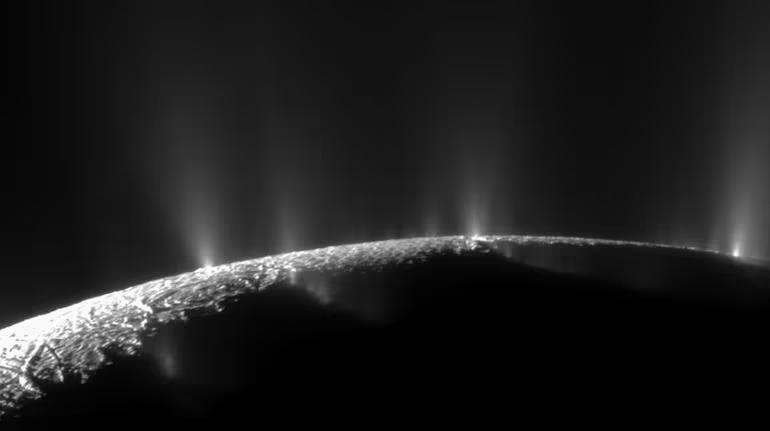
The organic molecules were detected when the Cassini spacecraft flew through the plumes of water vapor and ice grains that erupt from Enceladus’s subsurface ocean. The spacecraft’s Cosmic Dust Analyzer and Ion and Neutral Mass Spectrometer instruments were used to analyze the composition of the plumes, and they found a wide range of organic compounds, including aliphatic, cyclic, nitrogen- and oxygen-bearing compounds, and even double-bonded molecules.
The discovery of these complex organic molecules is significant because they are the building blocks of life. Organic molecules are the foundation of all life on Earth, and their presence on Enceladus suggests that the moon may have the necessary ingredients for life to exist. The fact that the molecules are fresh and complex suggests that they are being produced by some kind of biological or chemical process on the moon.
The findings also provide evidence that Enceladus’s subsurface ocean is in contact with rock, which is a necessary condition for life to exist. The presence of rock and water is thought to be essential for the emergence of life, as it provides a source of energy and nutrients. The fact that Enceladus’s subsurface ocean is in contact with rock suggests that the moon may have a suitable environment for life to exist.
The discovery of organic molecules on Enceladus is not the only evidence that suggests the moon may be habitable. Previous studies have shown that the moon’s subsurface ocean is warm enough to support life, and that it has a stable energy source. The presence of water and organic molecules on the moon also suggests that it may have a suitable environment for life to exist.
The Cassini mission has been a major success, and the discovery of organic molecules on Enceladus is one of its most significant findings. The mission has provided a wealth of information about the Saturnian system, and it has helped scientists to better understand the formation and evolution of our solar system. The discovery of organic molecules on Enceladus is a major breakthrough in the search for life beyond Earth, and it provides significant evidence that the moon may be habitable.
The implications of this discovery are profound. If Enceladus is found to be habitable, it would be a major breakthrough in the search for life beyond Earth. It would also provide significant evidence that life is not unique to our planet, and that it may exist elsewhere in the universe. The discovery of organic molecules on Enceladus is a significant step towards understanding the origins of life, and it provides a new target in the search for life beyond Earth.
In conclusion, the discovery of fresh, complex organic molecules on Enceladus is a major breakthrough in the search for life beyond Earth. The findings provide significant evidence that the moon may be habitable, and they suggest that it may have a suitable environment for life to exist. The Cassini mission has been a major success, and the discovery of organic molecules on Enceladus is one of its most significant findings. As scientists continue to study the Saturnian system, they may uncover even more evidence that suggests Enceladus is habitable, and that it may be home to life beyond Earth.
The search for life beyond Earth is an ongoing effort, and it is driven by our desire to understand the origins of life and the possibility of life existing elsewhere in the universe. The discovery of organic molecules on Enceladus is a significant step towards achieving this goal, and it provides new hope that we may one day find evidence of life beyond our planet.
As we continue to explore our solar system and beyond, we may uncover even more evidence that suggests life exists elsewhere in the universe. The discovery of organic molecules on Enceladus is a major breakthrough, and it provides significant evidence that the search for life beyond Earth is not in vain. We may one day find that we are not alone in the universe, and that life exists on other planets and moons.
For now, the discovery of organic molecules on Enceladus is a significant step towards understanding the possibility of life existing elsewhere in the universe. It provides new hope that we may one day find evidence of life beyond Earth, and it suggests that the search for life beyond our planet is not in vain.
About the Author