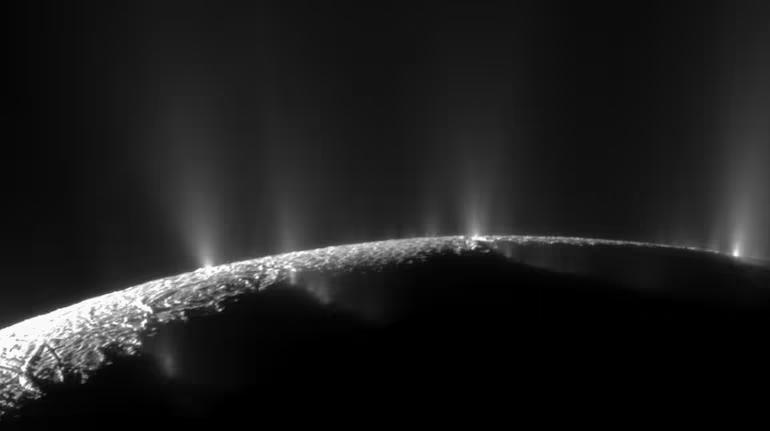
Cassini Finds Fresh Organic Molecules on Saturn’s Moon
In a groundbreaking discovery, NASA’s Cassini mission has detected fresh, complex organic molecules erupting from the subsurface ocean of Saturn’s moon Enceladus. The spacecraft, flying just 13 miles above the surface, sampled ice grains in active plumes and found aliphatic, cyclic, nitrogen- and oxygen-bearing compounds, including double-bonded molecules. This finding has significant implications for the search for life beyond Earth and supports evidence that Enceladus could be habitable.
The Cassini mission, which was launched in 1997 and concluded in 2017, was designed to explore Saturn and its moons. During its 13-year orbit around Saturn, Cassini made numerous groundbreaking discoveries, including the detection of water vapor and organic compounds in the plumes of Enceladus. However, the latest discovery is perhaps the most significant, as it provides evidence of the presence of complex organic molecules, which are the building blocks of life.
The discovery was made possible by Cassini’s Cosmic Dust Analyzer (CDA) instrument, which was designed to study the composition of dust particles in the Saturn system. During a flyby of Enceladus in 2015, the CDA instrument sampled ice grains in the plumes erupting from the moon’s subsurface ocean. The analysis of these samples revealed the presence of complex organic molecules, including aliphatic and cyclic compounds, as well as nitrogen- and oxygen-bearing molecules.
The presence of these molecules is significant because they are the raw materials for life. On Earth, similar molecules are found in living organisms and are thought to have played a crucial role in the origins of life. The discovery of these molecules on Enceladus suggests that the moon may have the necessary ingredients for life to exist.
The findings also provide evidence that Enceladus’s subsurface ocean is in contact with rock, which is a key ingredient for life. The interaction between the ocean and rock could provide the necessary energy and nutrients for life to thrive. The presence of complex organic molecules in the plumes suggests that this interaction is occurring, and that the moon’s subsurface ocean may be a habitable environment.
The discovery has significant implications for the search for life beyond Earth. Enceladus is now considered one of the most promising places in the solar system to search for life, and the discovery of complex organic molecules makes it an even more compelling target. Future missions to Enceladus, such as the NASA’s Dragonfly mission, which is scheduled to launch in 2027, will focus on searching for signs of life in the moon’s subsurface ocean.
The Cassini mission has been a groundbreaking success, and its discoveries have revolutionized our understanding of the Saturn system. The detection of complex organic molecules on Enceladus is a testament to the mission’s achievements and provides a new direction for the search for life beyond Earth.
In conclusion, the discovery of fresh organic molecules on Saturn’s moon Enceladus is a significant finding that supports evidence that the moon could be habitable. The presence of complex organic molecules, including aliphatic, cyclic, nitrogen- and oxygen-bearing compounds, suggests that the moon’s subsurface ocean may have the necessary ingredients for life to exist. The findings have significant implications for the search for life beyond Earth and make Enceladus an even more compelling target for future missions.
About the Author