Cassini Finds Fresh Organic Molecules on Saturn’s Moon
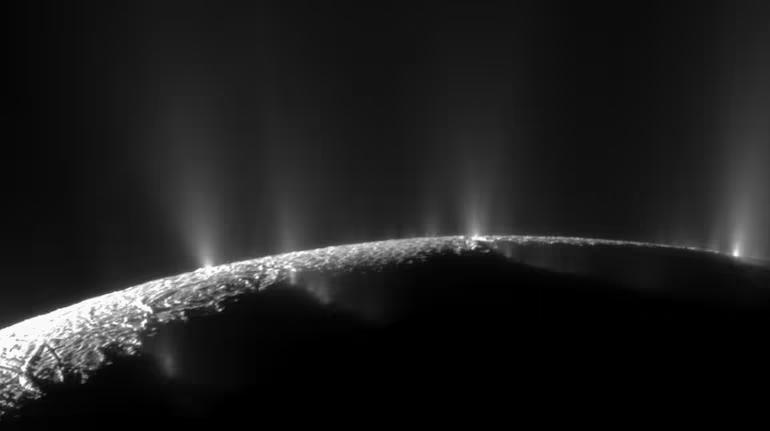
In a groundbreaking discovery, NASA’s Cassini mission has detected fresh, complex organic molecules erupting from the subsurface ocean of Saturn’s moon Enceladus. The findings, which were obtained by the spacecraft flying just 13 miles above the surface, provide significant evidence that Enceladus could be habitable. The discovery of organic molecules, which are the building blocks of life, has sparked excitement among scientists and raises hopes of finding life beyond Earth.
The Cassini spacecraft, which was launched in 1997, has been exploring the Saturn system since 2004. During its mission, the spacecraft has made several flybys of Enceladus, a small, icy moon that orbits Saturn. On one of these flybys, the spacecraft flew just 13 miles above the surface of Enceladus, sampling ice grains in the active plumes that erupt from the moon’s subsurface ocean. The analysis of these ice grains revealed the presence of complex organic molecules, including aliphatic, cyclic, nitrogen- and oxygen-bearing compounds, as well as double-bonded molecules.
The discovery of these organic molecules is significant because they are the building blocks of life. Organic molecules are carbon-based compounds that are found in all living organisms, and they play a crucial role in the formation of life. The fact that these molecules are found on Enceladus, a moon that has a subsurface ocean and a possible energy source, raises the possibility that life could exist on this moon.
The subsurface ocean of Enceladus is thought to be in contact with rock, which provides a possible energy source for life. The moon’s core is also thought to be heated by tidal forces, which could provide the necessary energy for life to exist. The presence of organic molecules in the plumes of Enceladus suggests that the moon’s subsurface ocean could be a habitable environment, with the necessary ingredients for life to exist.
The Cassini spacecraft’s discovery of organic molecules on Enceladus is not the first time that these molecules have been found in our solar system. Organic molecules have been found on comets, asteroids, and in the interstellar medium. However, the discovery of these molecules on Enceladus is significant because it suggests that the moon’s subsurface ocean could be a habitable environment.
The discovery of organic molecules on Enceladus also raises questions about the origin of life on Earth. If life can exist on a moon like Enceladus, which has a subsurface ocean and a possible energy source, it is possible that life could have originated on Earth in a similar environment. The discovery of organic molecules on Enceladus suggests that the ingredients for life are widespread in our solar system, and that the possibility of finding life beyond Earth is greater than previously thought.
The Cassini mission’s discovery of organic molecules on Enceladus is a significant finding that has implications for the search for life beyond Earth. The discovery suggests that Enceladus, a small, icy moon that orbits Saturn, could be a habitable environment, with the necessary ingredients for life to exist. The finding also raises questions about the origin of life on Earth and the possibility of finding life on other moons and planets in our solar system.
In conclusion, the Cassini spacecraft’s discovery of fresh, complex organic molecules on Enceladus is a significant finding that has implications for the search for life beyond Earth. The discovery suggests that Enceladus, a small, icy moon that orbits Saturn, could be a habitable environment, with the necessary ingredients for life to exist. The finding also raises questions about the origin of life on Earth and the possibility of finding life on other moons and planets in our solar system.
About the Author