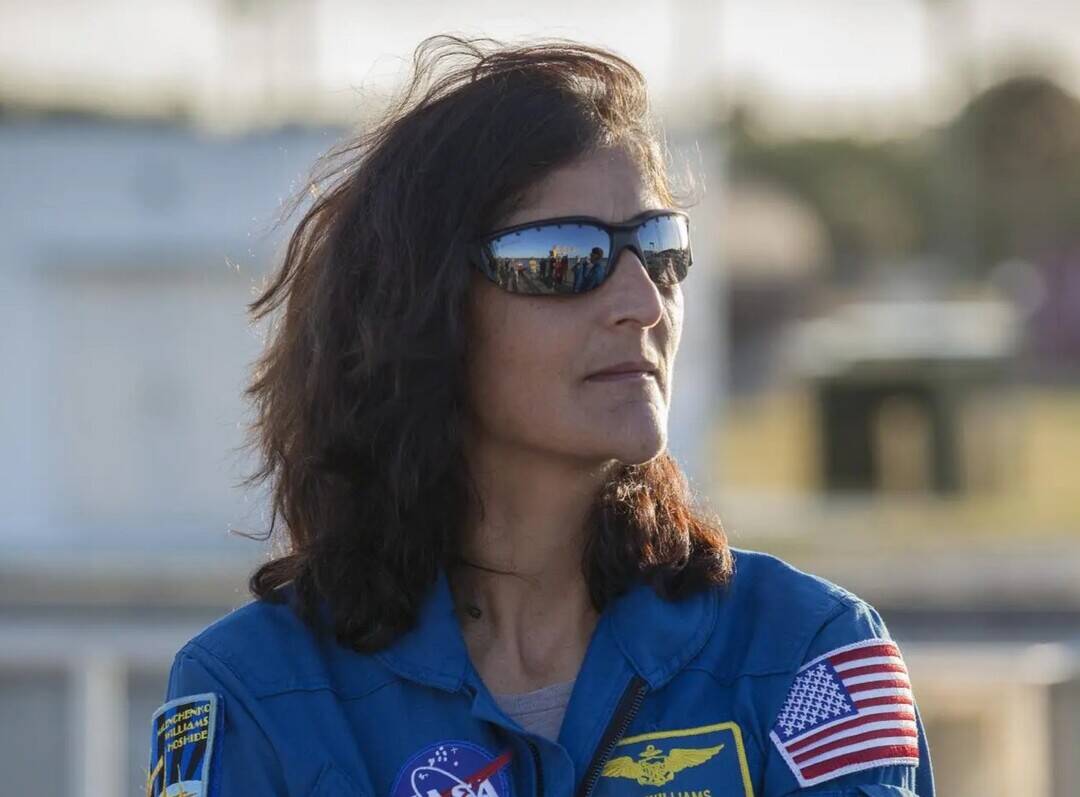
Astronaut Sunita Williams, who was stuck in space for 9 months, retires
After an illustrious career spanning 27 years, NASA astronaut Sunita Williams has retired from the agency, effective December 27, 2025. Williams, a veteran of three missions aboard the International Space Station, has logged an impressive 608 days in space, making her one of the most experienced astronauts in the history of space exploration. Her retirement marks the end of an era, as she leaves behind a legacy of dedication, hard work, and a passion for space travel.
Williams’ journey to becoming a NASA astronaut was not an easy one. Born on September 19, 1965, in Euclid, Ohio, she grew up with a passion for mathematics and science. She graduated from the United States Naval Academy in 1987 and went on to become a naval aviator, flying helicopters and serving in the Gulf War. In 1998, she was selected by NASA as an astronaut candidate, and her career in space exploration took off.
Over the course of her career, Williams completed three missions aboard the International Space Station (ISS). Her first mission, Expedition 14, launched in 2006 and lasted for six months. During this time, she performed four spacewalks and set a record for the most time spent in space by a female astronaut. Her second mission, Expedition 32/33, launched in 2012 and lasted for four months. Her third and final mission, which took place in 2024-2025, was marked by a challenging nine-month stay in space.
The 2024-2025 mission was supposed to be a routine one, with Williams and her crewmate, astronaut Butch Wilmore, flying aboard the Boeing Starliner spacecraft to the ISS. However, things took a turn for the worse when the spacecraft suffered propulsion issues, leaving the two astronauts stuck in space for nine months. Despite the challenges they faced, Williams and Wilmore remained calm and professional, using their skills and experience to overcome the obstacles and ensure the success of the mission.
The nine-month stay in space was a testament to Williams’ endurance and dedication to her work. Living in space for such an extended period can be physically and mentally challenging, with astronauts facing a range of issues including muscle loss, vision problems, and isolation. However, Williams and Wilmore persevered, using their time in space to conduct important scientific research and perform maintenance tasks on the ISS.
Williams’ retirement marks the end of an era in space exploration. She is one of the most experienced astronauts in the history of NASA, and her contributions to the field of space travel are immeasurable. Her legacy will continue to inspire future generations of astronauts, engineers, and scientists, and her dedication to her work will never be forgotten.
As NASA looks to the future, it is clear that the agency will miss Williams’ expertise and experience. However, her retirement also marks a new beginning, as a new generation of astronauts takes the reins and pushes the boundaries of space exploration. With plans to return humans to the Moon and Mars in the coming years, NASA is entering a new era of space travel, and Williams’ legacy will be an important part of that journey.
In conclusion, Sunita Williams’ retirement is a bittersweet moment for NASA and the space community. While it marks the end of an era, it also celebrates the incredible achievements of a dedicated and passionate astronaut. Williams’ 27 years of service, three missions to the ISS, and 608 days in space are a testament to her hard work and dedication to the field of space exploration. As she begins her new journey in retirement, she leaves behind a legacy that will inspire and motivate future generations of astronauts and space enthusiasts.
About the Author