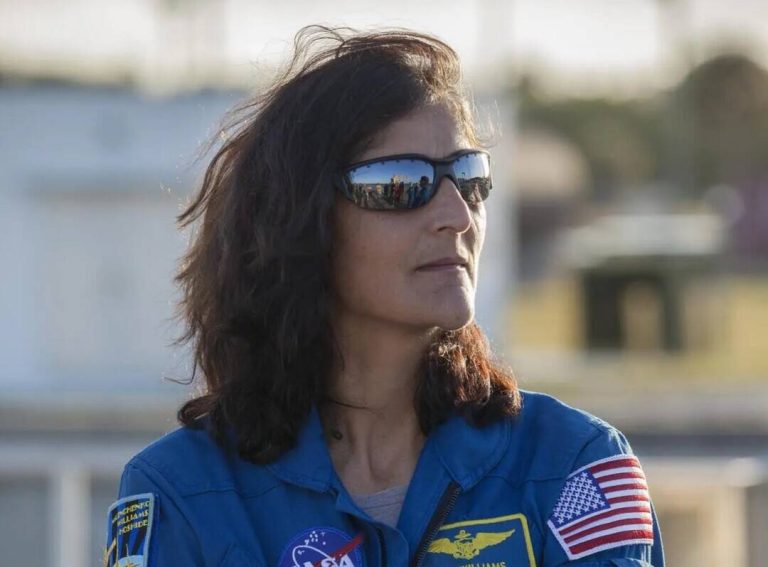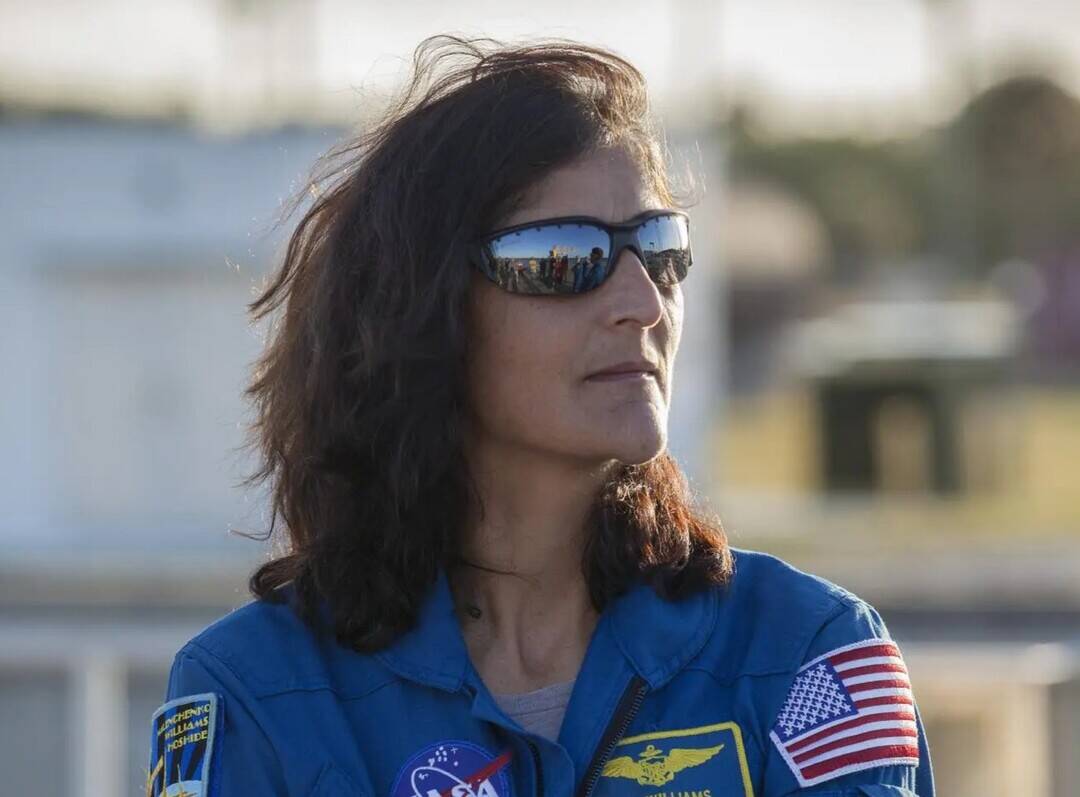
Astronaut Sunita Williams, who was stuck in space for 9 months, retires
After an illustrious career spanning 27 years, NASA astronaut Sunita Williams has announced her retirement from the agency, effective December 27, 2025. Williams, a veteran of three missions aboard the International Space Station, has accumulated an impressive 608 days in space, making her one of the most experienced astronauts in the history of space exploration.
Born on September 19, 1965, in Euclid, Ohio, Williams grew up with a passion for science and mathematics. She graduated from the United States Naval Academy in 1987 with a degree in physics and was commissioned as an officer in the United States Navy. Williams’ early career in the Navy involved serving as a test pilot and flying various aircraft, including the F-14 Tomcat and the F/A-18 Hornet.
In 1998, Williams was selected by NASA as an astronaut candidate, and she began her training at the Johnson Space Center in Houston, Texas. Her first mission to space was in 2006, when she flew aboard the Space Shuttle Discovery to the International Space Station (ISS). During her 195-day stay on the ISS, Williams performed multiple spacewalks and conducted scientific experiments.
Williams’ subsequent missions to the ISS were equally successful. In 2012, she commanded the ISS Expedition 33 crew, and in 2022, she flew aboard the Boeing Starliner spacecraft on a mission to the ISS. However, during her 2022 mission, Williams and her crewmate, astronaut Butch Wilmore, encountered unexpected propulsion issues with the Starliner spacecraft. The malfunction forced them to extend their stay in space for nine months, from 2024 to 2025, while awaiting repairs and a safe return to Earth.
The experience of being stuck in space for an extended period was undoubtedly challenging for Williams and her crewmate. The physical and mental strain of living in a confined environment for such a long time can be overwhelming. However, Williams’ training, discipline, and resilience helped her cope with the situation. In an interview, she reflected on the experience, saying, “It was a difficult time, but we worked together as a team to overcome the challenges. We had to adapt to a new routine and find ways to stay occupied and engaged during the extended period.”
Throughout her career, Williams has been recognized for her outstanding contributions to space exploration. She has received numerous awards, including the NASA Distinguished Service Medal, the NASA Exceptional Service Medal, and the Navy Commendation Medal. Williams has also been an inspiration to many, particularly women and girls, who aspire to pursue careers in science, technology, engineering, and mathematics (STEM).
As Williams retires from NASA, she leaves behind a legacy of dedication, hard work, and passion for space exploration. Her experiences and achievements will continue to inspire future generations of astronauts and scientists. In a statement, NASA Administrator Bill Nelson praised Williams’ contributions, saying, “Sunita Williams is a true pioneer and an inspiration to us all. Her dedication to the pursuit of scientific knowledge and her commitment to the NASA mission have been exemplary. We will miss her, but we are also grateful for the countless contributions she has made to our agency.”
Williams’ retirement marks the end of an era, but it also signals a new beginning. As she embarks on a new chapter in her life, Williams will undoubtedly continue to inspire and motivate others to pursue their dreams, whether in space exploration or other fields. Her remarkable story is a testament to the power of human determination and the importance of pursuing one’s passions.
In conclusion, Sunita Williams’ retirement from NASA is a significant milestone in the history of space exploration. Her remarkable career, marked by numerous achievements and challenges, has inspired countless people around the world. As we bid farewell to this exceptional astronaut, we honor her legacy and look forward to the next generation of space explorers who will follow in her footsteps.
About the Author