Ancient Chinese text helps to know more about Earth’s rotation
The study of Earth’s rotation has been a subject of interest for scientists and astronomers for centuries. Understanding the rotation of our planet is crucial for various fields, including astronomy, geology, and climate science. Recently, a team of researchers has made a groundbreaking discovery that sheds new light on Earth’s rotation speed, thanks to an ancient Chinese text that describes a solar eclipse that occurred in 709 BCE. The findings, published in The Astrophysical Journal Letters, provide new insights into the Earth’s rotation and its variation over time.
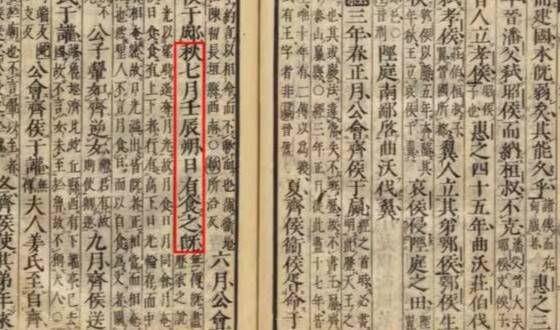
The ancient Chinese text, which describes a solar eclipse that took place on April 21, 709 BCE, was studied by researchers who were interested in understanding the Earth’s rotation during that time period. The text, which is part of the Chinese historical records, provides a detailed description of the eclipse, including the time and location where it was observed. The researchers used this information to calculate how the Sun would have appeared from the city of Qufu, which is located in the Shandong province of China.
Using advanced computer simulations, the researchers were able to recreate the solar eclipse as it would have appeared from Qufu city. They found that the total eclipse would not have been visible from Qufu, which is surprising given that the city is located near the path of totality. The researchers concluded that Qufu must have been located about eight kilometers off the path of totality, which means that the Earth’s rotation must have been faster 2,700 years ago than it is today.
The discovery is significant because it provides new data on the Earth’s rotation speed, which is essential for understanding the planet’s climate, geology, and astronomical phenomena. The Earth’s rotation is not constant and has varied over time due to various factors, including the gravitational pull of the Moon and the Sun, and the movement of the Earth’s core. The new findings suggest that the Earth’s rotation has slowed down over the past 2,700 years, which is consistent with previous studies that have shown a decrease in the Earth’s rotation speed over the past few centuries.
The study also highlights the importance of ancient texts in understanding the Earth’s history and the value of interdisciplinary research that combines astronomy, history, and geology. The ancient Chinese text that was studied by the researchers is a testament to the advanced knowledge and observational skills of ancient Chinese astronomers, who were able to record and describe celestial events with great accuracy.
The discovery also has implications for our understanding of the Earth’s climate and geology. The Earth’s rotation plays a crucial role in shaping the planet’s climate, with faster rotation leading to more extreme weather patterns and slower rotation leading to more moderate climate conditions. The new findings suggest that the Earth’s climate may have been more extreme in the past, which could have had significant impacts on the environment and human societies.
In conclusion, the study of ancient Chinese texts has provided new insights into the Earth’s rotation and its variation over time. The discovery that the Earth’s rotation has slowed down over the past 2,700 years is significant and has implications for our understanding of the planet’s climate, geology, and astronomical phenomena. The study highlights the importance of interdisciplinary research that combines astronomy, history, and geology, and demonstrates the value of ancient texts in understanding the Earth’s history.
The use of ancient texts to study the Earth’s rotation is not new, but the recent discovery is one of the most significant and accurate to date. The study demonstrates the potential of ancient texts to provide new insights into the Earth’s history and highlights the importance of preserving and studying these texts for future generations.
As scientists continue to study the Earth’s rotation and its variation over time, the new findings will provide a valuable contribution to our understanding of the planet’s history and evolution. The discovery is a testament to the power of interdisciplinary research and the importance of combining different fields of study to gain a deeper understanding of the world around us.
The study of the Earth’s rotation is an ongoing field of research, and new discoveries are continually being made. The recent findings will likely spark further research and debate, and will provide a new perspective on the Earth’s history and evolution.
In the end, the discovery that the Earth’s rotation has slowed down over the past 2,700 years is a significant one, and highlights the importance of continued research into the Earth’s history and evolution. As scientists continue to study the Earth’s rotation and its variation over time, we can expect to gain a deeper understanding of the planet’s climate, geology, and astronomical phenomena, and to uncover new insights into the Earth’s history and evolution.
About the Author