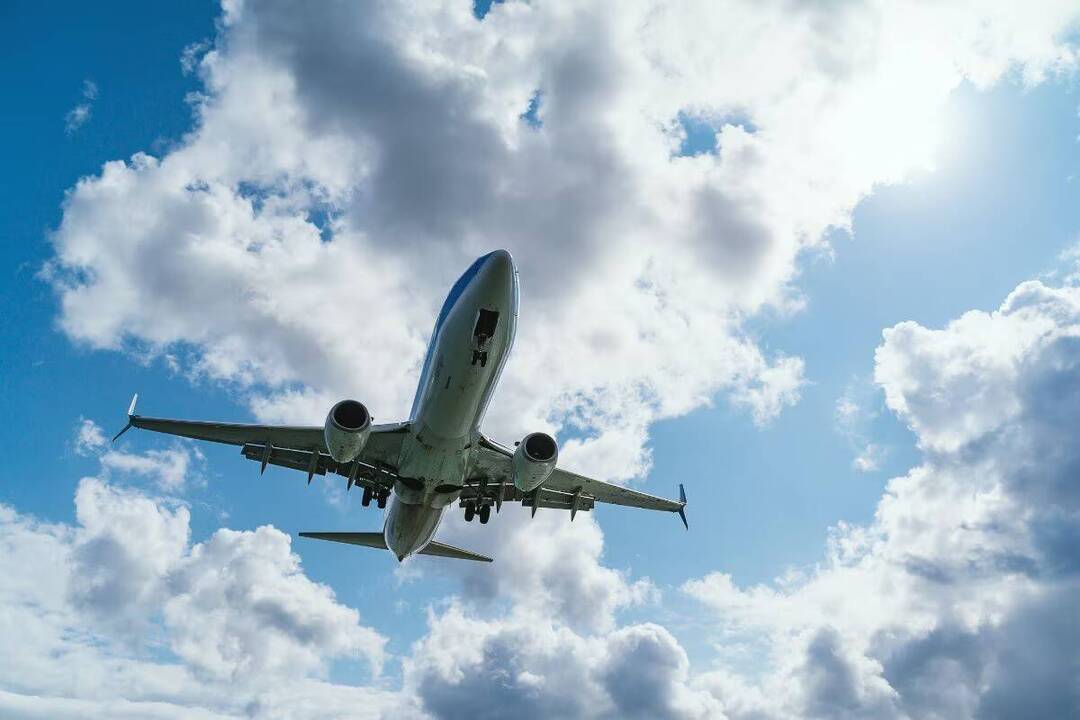
Air travel exposes passengers to hidden pollution: Study
As the world becomes increasingly interconnected, air travel has become a staple of modern life. With millions of people taking to the skies every day, it’s easy to overlook the potential health risks associated with flying. However, a recent study has shed light on a disturbing trend: air travel exposes passengers to unexpectedly high levels of ultrafine particles and black carbon. The study, which measured pollution levels on 16 European flights, found that passengers are exposed to hidden pollution throughout their journey, from boarding to landing.
The research, which was conducted by a team of scientists, used specialized equipment to measure the levels of ultrafine particles and black carbon on flights. Ultrafine particles are tiny particles that are less than 0.1 micrometers in diameter, while black carbon is a type of pollutant that is produced by the combustion of fossil fuels. Both of these pollutants are known to have negative health effects, including respiratory problems and cardiovascular disease.
The study found that pollution levels were highest during certain phases of the flight, including boarding, taxiing, and descent. During these phases, passengers were exposed to levels of ultrafine particles and black carbon that were significantly higher than those found in urban areas. In fact, the levels of pollution during these phases were comparable to those found in heavily polluted cities.
One of the most surprising findings of the study was the high levels of pollution during boarding. This is a phase of the flight that is often overlooked, but it appears to be a time when passengers are exposed to significant amounts of pollutants. The study found that the levels of ultrafine particles and black carbon were highest during boarding, likely due to the fact that the plane is still on the ground and the engines are still running.
The levels of pollution ease somewhat during cruising altitude, when the plane is flying at a high altitude and the engines are burning cleaner. However, the levels of pollution rise again during descent, when the plane is preparing to land. This is likely due to the fact that the plane is flying at a lower altitude and the engines are producing more pollutants.
But the impact of air travel on pollution doesn’t stop at the airport. The study found that the pollutants produced by air travel can spread kilometers beyond the airport, affecting nearby neighborhoods. In fact, the levels of ultrafine particles and black carbon found in these neighborhoods were comparable to those found in busy urban areas. This means that people living near airports are exposed to significant amounts of pollutants, even if they don’t fly themselves.
The study’s findings have significant implications for public health. The World Health Organization (WHO) estimates that air pollution is responsible for millions of deaths worldwide each year. The fact that air travel is exposing passengers and nearby residents to high levels of pollutants is a serious concern, and one that needs to be addressed.
So what can be done to reduce the levels of pollution produced by air travel? One solution is to use cleaner fuels, such as electric or hybrid engines. Another solution is to improve the efficiency of air travel, by reducing the amount of time that planes spend on the ground and in the air. Airlines can also take steps to reduce their environmental impact, such as using more efficient engines and reducing waste.
In conclusion, the study’s findings highlight the need for greater awareness and action on the issue of air travel pollution. As the demand for air travel continues to grow, it’s essential that we take steps to reduce the negative impacts of flying on public health and the environment. By using cleaner fuels, improving efficiency, and reducing waste, we can make air travel a healthier and more sustainable mode of transportation.
The study’s findings are a wake-up call for the aviation industry, and a reminder that the health and environmental impacts of air travel are not just limited to the airport. As we move forward, it’s essential that we prioritize the health and well-being of passengers and nearby residents, and take steps to reduce the levels of pollution produced by air travel.
For more information on this study, you can visit the news source at https://www.newsbytesapp.com/news/science/air-travel-exposes-passengers-and-neighbors-to-hidden-pollution/tldr
News source: https://www.newsbytesapp.com/news/science/air-travel-exposes-passengers-and-neighbors-to-hidden-pollution/tldr
About the Author