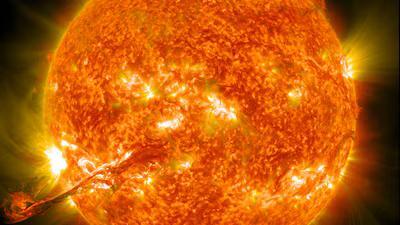
Aditya-L1 set to observe Sun’s maximum in 2026
The Sun, the star at the center of our solar system, is a dynamic and ever-changing entity. Its activity has a significant impact on the Earth’s magnetic field, atmosphere, and climate. The Sun’s activity follows an 11-year cycle, with periods of high and low activity. The peak phase of this cycle is known as the solar maximum, and it is expected to occur in 2026. India’s first dedicated solar observatory, Aditya-L1, is all set to closely monitor the Sun during this period, providing valuable insights into space weather.
The Aditya-L1 mission, launched by the Indian Space Research Organisation (ISRO), is designed to study the Sun’s corona, chromosphere, and photosphere. The spacecraft is equipped with a range of instruments, including a coronagraph, a solar wind monitor, and a magnetometer, which will allow scientists to study the Sun’s magnetic field, solar wind, and coronal mass ejections. The data collected by Aditya-L1 will help scientists to better understand the Sun’s behavior and its impact on the Earth’s magnetic field and atmosphere.
The solar maximum, expected to occur in 2026, is a critical phase in the Sun’s 11-year cycle. During this period, the Sun’s magnetic poles flip, shifting it from a quiet to an intense activity phase. This leads to an increase in solar storms, coronal mass ejections, and rapid changes in the magnetic field. These events can have a significant impact on the Earth’s magnetic field, causing geomagnetic storms, aurorae, and disruptions to communication and navigation systems.
The Aditya-L1 mission is well-positioned to observe the Sun’s maximum activity in 2026. The spacecraft will be able to monitor the Sun’s corona, chromosphere, and photosphere in unprecedented detail, providing valuable insights into the Sun’s behavior during this critical phase. The data collected by Aditya-L1 will help scientists to better understand the causes of solar storms, coronal mass ejections, and other space weather phenomena.
One of the key objectives of the Aditya-L1 mission is to study the Sun’s coronal heating problem. The corona, the outer atmosphere of the Sun, is millions of degrees hotter than the surface, and scientists are still unsure why this is the case. The Aditya-L1 spacecraft is equipped with a range of instruments that will allow scientists to study the corona in unprecedented detail, providing new insights into this long-standing problem.
The Aditya-L1 mission will also provide valuable insights into the Sun’s magnetic field and its impact on the Earth’s magnetic field. The spacecraft is equipped with a magnetometer that will allow scientists to study the Sun’s magnetic field in unprecedented detail. This data will help scientists to better understand the causes of geomagnetic storms, aurorae, and other space weather phenomena.
In addition to its scientific objectives, the Aditya-L1 mission is also expected to have a significant impact on our understanding of space weather. Space weather refers to the dynamic and variable conditions in the space environment, including the Sun’s magnetic field, solar wind, and coronal mass ejections. These events can have a significant impact on the Earth’s magnetic field, atmosphere, and climate, and can cause disruptions to communication and navigation systems.
The Aditya-L1 mission is a significant step forward in India’s space program, and demonstrates the country’s growing capabilities in space exploration. The mission is a testament to the expertise and ingenuity of Indian scientists and engineers, and is expected to provide valuable insights into the Sun’s behavior and its impact on the Earth’s magnetic field and atmosphere.
In conclusion, the Aditya-L1 mission is set to observe the Sun’s maximum activity in 2026, providing valuable insights into space weather and the Sun’s behavior. The spacecraft is equipped with a range of instruments that will allow scientists to study the Sun’s corona, chromosphere, and photosphere in unprecedented detail, and will provide new insights into the causes of solar storms, coronal mass ejections, and other space weather phenomena. The Aditya-L1 mission is a significant step forward in India’s space program, and is expected to have a lasting impact on our understanding of the Sun and its impact on the Earth.
About the Author