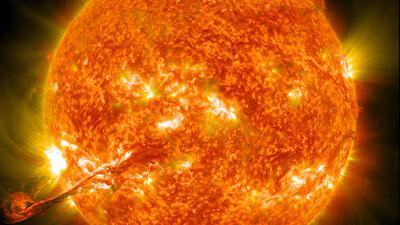
Aditya-L1 set to observe Sun’s maximum in 2026
The Sun, the star at the center of our solar system, is a dynamic and ever-changing entity. Its activity has a profound impact on the space weather, which in turn affects the Earth’s magnetic field, atmosphere, and even our daily lives. To better understand the Sun’s behavior, India has launched its first dedicated solar observatory, Aditya-L1, which is set to observe the Sun’s maximum activity in 2026. This peak phase in the Sun’s 11-year cycle is expected to bring about heightened solar storms, frequent coronal mass ejections, and rapid magnetic activity changes, offering valuable insights into space weather.
The Sun’s 11-year cycle is characterized by periods of high and low activity, with the maximum phase occurring when the magnetic poles flip, shifting the Sun from a quiet to an intense activity phase. During this period, the Sun’s magnetic field becomes more complex, leading to an increase in solar flares, coronal mass ejections, and other explosive events. These events can have a significant impact on the Earth’s magnetic field, causing geomagnetic storms that can disrupt communication and navigation systems, as well as affect the power grid and other technological infrastructure.
Aditya-L1, which was launched in September 2022, is designed to study the Sun’s corona, the outer atmosphere that extends millions of kilometers into space. The observatory is equipped with a range of instruments, including a coronagraph, a solar wind monitor, and a magnetometer, which will allow scientists to study the Sun’s magnetic field, solar wind, and coronal mass ejections in unprecedented detail. By monitoring the Sun’s activity during the maximum phase, scientists hope to gain a better understanding of the underlying mechanisms that drive the Sun’s behavior and how it affects the space weather.
One of the key objectives of the Aditya-L1 mission is to study the Sun’s coronal heating problem, which refers to the fact that the corona is much hotter than the Sun’s surface. This phenomenon is not yet fully understood and is thought to be related to the Sun’s magnetic field and the release of energy through solar flares and coronal mass ejections. By studying the Sun’s corona during the maximum phase, scientists hope to gain new insights into the coronal heating problem and how it affects the space weather.
Another important aspect of the Aditya-L1 mission is the study of coronal mass ejections, which are large clouds of plasma that are ejected from the Sun’s corona during explosive events. These ejections can interact with the Earth’s magnetic field, causing geomagnetic storms that can have a significant impact on our technological infrastructure. By monitoring the Sun’s coronal mass ejections during the maximum phase, scientists hope to better understand the mechanisms that drive these events and how they affect the space weather.
The Aditya-L1 mission is also expected to provide valuable insights into the Sun’s magnetic field, which plays a crucial role in shaping the space weather. The observatory’s magnetometer will allow scientists to study the Sun’s magnetic field in unprecedented detail, providing new insights into the mechanisms that drive the Sun’s behavior. By monitoring the Sun’s magnetic field during the maximum phase, scientists hope to better understand how it affects the space weather and how it can be used to predict future solar activity.
In addition to its scientific objectives, the Aditya-L1 mission is also expected to have a significant impact on our daily lives. By providing early warnings of solar storms and coronal mass ejections, the observatory can help protect our technological infrastructure from the effects of space weather. This can include warning satellite operators of potential disruptions to their systems, as well as providing alerts to power grid operators of potential disruptions to the electrical supply.
In conclusion, the Aditya-L1 mission is set to play a crucial role in our understanding of the Sun’s behavior and its impact on the space weather. By monitoring the Sun’s activity during the maximum phase in 2026, scientists hope to gain new insights into the underlying mechanisms that drive the Sun’s behavior and how it affects the space weather. The mission is expected to provide valuable insights into the Sun’s coronal heating problem, coronal mass ejections, and magnetic field, and is expected to have a significant impact on our daily lives by providing early warnings of solar storms and coronal mass ejections.
As we look forward to the Sun’s maximum phase in 2026, the Aditya-L1 mission is poised to play a leading role in our understanding of the Sun’s behavior and its impact on the space weather. With its state-of-the-art instruments and advanced technology, the observatory is expected to provide unprecedented insights into the Sun’s corona, magnetic field, and solar wind, and is expected to make significant contributions to the field of solar physics.
About the Author