Aditya-L1 set to observe Sun’s maximum in 2026
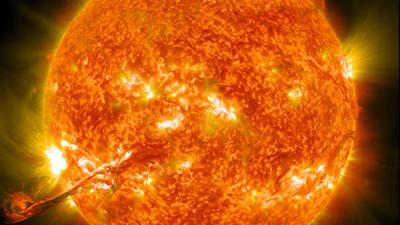
The year 2026 is expected to be a significant one for space weather enthusiasts and scientists alike, as the Sun is set to reach its solar maximum. This peak phase in the Sun’s 11-year cycle is characterized by heightened solar storms, frequent coronal mass ejections, and rapid magnetic activity changes. To closely monitor this event, India’s first dedicated solar observatory, Aditya-L1, is all set to play a crucial role. In this blog post, we will delve into the details of the Aditya-L1 mission, the significance of the Sun’s solar maximum, and what scientists expect to learn from this event.
What is the Sun’s solar maximum?
The Sun’s solar maximum is the peak phase of its 11-year solar cycle, also known as the Schwabe cycle. During this phase, the Sun’s magnetic field is at its strongest, leading to an increase in solar activity. This includes a rise in the number of sunspots, solar flares, and coronal mass ejections (CMEs). The solar maximum is characterized by a flip of the Sun’s magnetic poles, shifting the Sun from a quiet phase to an intense activity phase.
Aditya-L1: India’s first dedicated solar observatory
Aditya-L1 is India’s first dedicated solar observatory, designed to study the Sun’s corona, chromosphere, and photosphere. The spacecraft is equipped with a range of instruments, including a coronagraph, a solar wind monitor, and a magnetometer. Aditya-L1 is set to be launched into a halo orbit around the L1 (Lagrange point 1), a gravitationally stable location between the Earth and the Sun. From this vantage point, Aditya-L1 will have a continuous view of the Sun, allowing it to monitor the Sun’s activity around the clock.
What can we expect from the Sun’s solar maximum in 2026?
As the Sun approaches its solar maximum in 2026, scientists expect a significant increase in solar activity. This includes:
- Heightened solar storms: Solar storms are intense releases of energy from the Sun’s magnetic field, which can cause geomagnetic storms on Earth. These storms can disrupt communication systems, power grids, and navigation systems.
- Frequent coronal mass ejections: CMEs are massive clouds of plasma that are ejected from the Sun’s corona. These ejections can cause geomagnetic storms and disrupt the Earth’s magnetic field.
- Rapid magnetic activity changes: The Sun’s magnetic field is expected to undergo rapid changes during the solar maximum, leading to an increase in solar flares and CMEs.
What will Aditya-L1 observe during the Sun’s solar maximum?
Aditya-L1 is designed to study the Sun’s corona, chromosphere, and photosphere during the solar maximum. The spacecraft will observe the Sun’s magnetic field, solar wind, and coronal mass ejections in unprecedented detail. The data collected by Aditya-L1 will help scientists to better understand the Sun’s solar cycle and the impact of solar activity on the Earth’s magnetic field and upper atmosphere.
Significance of the Aditya-L1 mission
The Aditya-L1 mission is significant for several reasons:
- Improved space weather forecasting: The data collected by Aditya-L1 will help scientists to better understand the Sun’s solar cycle and the impact of solar activity on the Earth’s magnetic field and upper atmosphere. This will enable improved space weather forecasting, which is critical for protecting communication systems, power grids, and navigation systems.
- Advancements in solar physics: The Aditya-L1 mission will provide valuable insights into the Sun’s solar cycle, magnetic field, and coronal dynamics. This will help scientists to better understand the underlying mechanisms that drive the Sun’s activity.
- Enhanced collaboration: The Aditya-L1 mission is an international collaboration, with scientists from around the world contributing to the mission. This will foster greater collaboration and cooperation among scientists, leading to a better understanding of the Sun and its impact on the Earth.
Conclusion
In conclusion, the Aditya-L1 mission is set to play a crucial role in observing the Sun’s solar maximum in 2026. The spacecraft will provide valuable insights into the Sun’s magnetic field, solar wind, and coronal mass ejections, helping scientists to better understand the Sun’s solar cycle and the impact of solar activity on the Earth’s magnetic field and upper atmosphere. As we approach the Sun’s solar maximum, the Aditya-L1 mission will be at the forefront of space weather research, providing critical data and insights that will help us to better protect our communication systems, power grids, and navigation systems.
About the Author