Aditya-L1 set to observe Sun’s maximum in 2026
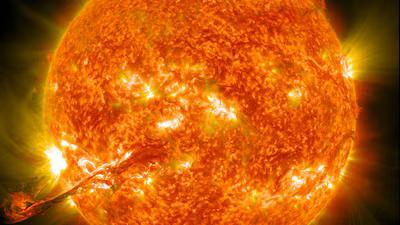
The year 2026 is expected to be a pivotal moment in the study of the Sun, as it reaches its solar maximum, a peak phase in its 11-year cycle. This period is characterized by heightened solar storms, frequent coronal mass ejections, and rapid magnetic activity changes. To closely monitor this phenomenon, India’s first dedicated solar observatory, Aditya-L1, is all set to play a crucial role. The Aditya-L1 mission, launched by the Indian Space Research Organisation (ISRO), aims to provide valuable insights into space weather, which can have significant implications for our planet.
The Sun’s 11-year cycle, also known as the Schwabe cycle, is a periodic fluctuation in the Sun’s activity, marked by changes in its magnetic field, sunspot formation, and radiation emission. During the solar maximum, the Sun’s magnetic poles flip, shifting from a quiet to an intense activity phase. This transition is accompanied by an increase in solar flares, coronal mass ejections (CMEs), and other intense magnetic activity. These events can have a significant impact on the Earth’s magnetic field, causing geomagnetic storms that can disrupt communication systems, power grids, and even satellite operations.
The Aditya-L1 observatory, named after the Sun (Aditya in Sanskrit), is designed to study the Sun’s corona, the outer atmosphere of the Sun, which is visible during a total solar eclipse. The observatory is equipped with a suite of instruments, including a coronagraph, a solar wind monitor, and a magnetometer, to study the Sun’s magnetic field, solar wind, and coronal heating. By monitoring the Sun’s activity during the solar maximum, scientists expect to gain a deeper understanding of the underlying mechanisms that drive these events.
One of the primary objectives of the Aditya-L1 mission is to study the Sun’s coronal heating, which is still not well understood. The corona, which is millions of degrees hotter than the Sun’s surface, is a region of intense magnetic activity, with complex interactions between the magnetic field, plasma, and radiation. By observing the Sun’s corona during the solar maximum, scientists hope to shed light on the mechanisms that heat the corona and drive the solar wind.
The Aditya-L1 observatory will also monitor the Sun’s magnetic field, which is a key driver of solar activity. The magnetic field plays a crucial role in shaping the Sun’s corona, controlling the formation of sunspots, and influencing the solar wind. By studying the magnetic field during the solar maximum, scientists can gain insights into the mechanisms that drive the Sun’s activity and predict space weather events.
The data collected by Aditya-L1 will be invaluable for scientists studying space weather, which can have significant implications for our planet. Space weather events, such as geomagnetic storms, can disrupt communication systems, power grids, and even satellite operations. By predicting these events, scientists can provide early warnings, enabling authorities to take necessary precautions to mitigate the impact of these events.
The Aditya-L1 mission is a significant milestone in India’s space program, marking the country’s entry into the field of solar physics. The mission is a collaboration between ISRO and various research institutions, including the Indian Institute of Astrophysics, the Tata Institute of Fundamental Research, and the Physical Research Laboratory. The mission is expected to provide a wealth of data, which will be analyzed by scientists in India and around the world, advancing our understanding of the Sun and its impact on our planet.
In conclusion, the Aditya-L1 observatory is all set to play a crucial role in monitoring the Sun’s solar maximum in 2026. The mission is expected to provide valuable insights into space weather, coronal heating, and the Sun’s magnetic field, advancing our understanding of the Sun and its impact on our planet. As the Sun reaches its peak activity phase, scientists around the world will be eagerly awaiting the data from Aditya-L1, which will help us better understand the complex and dynamic nature of our star.
About the Author