Aditya-L1 set to observe Sun’s maximum in 2026
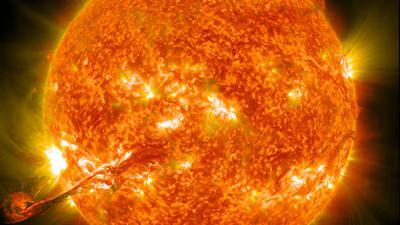
The Sun, the star at the center of our solar system, is a massive ball of hot, glowing gas. Its activity has a significant impact on the Earth’s magnetic field, atmosphere, and climate. The Sun’s activity follows an 11-year cycle, with periods of high and low activity. The high activity period is known as the solar maximum, while the low activity period is known as the solar minimum. In 2026, the Sun is expected to reach its solar maximum, and India’s first dedicated solar observatory, Aditya-L1, will be ready to closely monitor this event.
The Aditya-L1 mission is a significant milestone in India’s space program, as it will provide valuable insights into the Sun’s behavior and its impact on the Earth’s magnetic field and atmosphere. The solar maximum is a critical phase in the Sun’s 11-year cycle, during which the magnetic poles flip, shifting the Sun from a quiet to an intense activity phase. This phase is characterized by heightened solar storms, frequent coronal mass ejections, and rapid magnetic activity changes.
The Aditya-L1 observatory is equipped with a range of sophisticated instruments designed to study the Sun’s corona, chromosphere, and photosphere. The observatory will provide high-resolution images and spectrographic data of the Sun, allowing scientists to study its magnetic field, plasma dynamics, and radiation patterns. The data collected by Aditya-L1 will be used to improve our understanding of the Sun’s behavior and its impact on the Earth’s magnetic field, atmosphere, and climate.
The solar maximum is a critical period for space weather forecasting, as it can have a significant impact on the Earth’s magnetic field, atmosphere, and communication systems. During this period, the Sun’s magnetic field is at its strongest, and the frequency of coronal mass ejections and solar flares increases. These events can cause geomagnetic storms, which can disrupt communication systems, power grids, and navigation systems.
The Aditya-L1 mission will play a crucial role in monitoring the Sun’s activity during the solar maximum. The observatory will provide real-time data on the Sun’s magnetic field, coronal mass ejections, and solar flares, allowing scientists to predict space weather events and provide early warnings to stakeholders. This will enable the mitigation of the impact of space weather events on critical infrastructure, such as power grids, communication systems, and navigation systems.
The Aditya-L1 mission is also expected to provide valuable insights into the Sun’s internal dynamics and its impact on the Earth’s climate. The observatory will study the Sun’s radiation patterns, including ultraviolet and X-ray radiation, which can have a significant impact on the Earth’s atmosphere and climate. The data collected by Aditya-L1 will be used to improve our understanding of the Sun’s role in shaping the Earth’s climate and to develop more accurate climate models.
In addition to its scientific objectives, the Aditya-L1 mission is also expected to have significant technological and economic benefits. The mission will demonstrate India’s capabilities in space technology and provide opportunities for collaboration with international space agencies. The data collected by Aditya-L1 will be made available to the scientific community, providing opportunities for research and development in the field of space weather and solar physics.
In conclusion, the Aditya-L1 mission is a significant milestone in India’s space program, and its observations of the Sun’s solar maximum in 2026 will provide valuable insights into the Sun’s behavior and its impact on the Earth’s magnetic field, atmosphere, and climate. The mission will demonstrate India’s capabilities in space technology and provide opportunities for collaboration with international space agencies. As we look forward to the Aditya-L1 mission, we can expect significant advances in our understanding of the Sun and its role in shaping our planet’s climate and space weather.
About the Author