Aditya-L1 set to observe Sun’s maximum in 2026
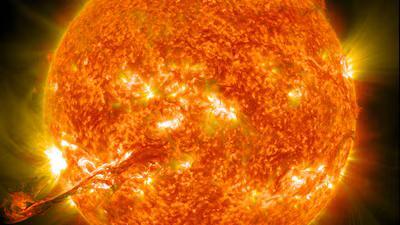
The Sun, the star at the center of our solar system, is a dynamic and ever-changing celestial body. Its activity has a significant impact on the Earth’s magnetic field, atmosphere, and climate. The Sun’s activity follows an 11-year cycle, with periods of high and low activity. The high activity period, known as the solar maximum, is characterized by an increase in sunspots, solar flares, and coronal mass ejections. In 2026, the Sun is expected to reach its solar maximum, and India’s first dedicated solar observatory, Aditya-L1, is all set to closely monitor this event.
Aditya-L1, launched by the Indian Space Research Organisation (ISRO), is designed to study the Sun’s corona, the outer atmosphere of the Sun. The observatory is equipped with a range of instruments, including a coronagraph, a solar wind monitor, and a magnetometer, which will provide valuable insights into the Sun’s magnetic field, solar wind, and coronal activity. The mission aims to understand the dynamics of the Sun’s corona, the acceleration of the solar wind, and the origin of coronal mass ejections.
The solar maximum in 2026 is expected to be a significant event, with scientists predicting heightened solar storms, frequent coronal mass ejections, and rapid changes in the Sun’s magnetic activity. These events can have a significant impact on the Earth’s magnetic field, causing geomagnetic storms, which can disrupt communication and navigation systems, as well as affect the power grid. The solar maximum can also lead to spectacular displays of the aurora borealis, or northern lights, at lower latitudes.
The Aditya-L1 mission will provide scientists with a unique opportunity to study the Sun’s corona and magnetic field during the solar maximum. The observatory’s instruments will provide high-resolution images and data on the Sun’s corona, solar wind, and magnetic field, which will help scientists to better understand the dynamics of the Sun’s corona and the impact of solar activity on the Earth’s magnetic field.
One of the key objectives of the Aditya-L1 mission is to study the Sun’s coronal mass ejections, which are large-scale expulsions of plasma and magnetic field from the Sun’s corona. These events can have a significant impact on the Earth’s magnetic field, causing geomagnetic storms and disrupting communication and navigation systems. The Aditya-L1 observatory will provide scientists with valuable insights into the origin and evolution of coronal mass ejections, which will help to improve our understanding of space weather and its impact on the Earth.
The Aditya-L1 mission will also provide scientists with an opportunity to study the Sun’s magnetic field during the solar maximum. The Sun’s magnetic field plays a crucial role in shaping the Sun’s corona and driving solar activity. The Aditya-L1 observatory’s magnetometer will provide high-resolution data on the Sun’s magnetic field, which will help scientists to better understand the dynamics of the Sun’s magnetic field and its impact on the Earth’s magnetic field.
In addition to its scientific objectives, the Aditya-L1 mission will also provide valuable insights into space weather and its impact on the Earth. Space weather refers to the dynamic and variable conditions in the space environment, including the Sun’s magnetic field, solar wind, and coronal mass ejections. The Aditya-L1 observatory will provide scientists with real-time data on space weather, which will help to improve our understanding of the impact of space weather on the Earth’s magnetic field, communication and navigation systems, and the power grid.
In conclusion, the Aditya-L1 mission is a significant step forward in our understanding of the Sun and its impact on the Earth. The observatory’s instruments will provide valuable insights into the Sun’s corona, magnetic field, and solar wind, which will help scientists to better understand the dynamics of the Sun’s corona and the impact of solar activity on the Earth. As the Sun reaches its solar maximum in 2026, the Aditya-L1 observatory will be at the forefront of scientific research, providing scientists with a unique opportunity to study the Sun’s corona and magnetic field during this significant event.
The Aditya-L1 mission is a testament to India’s growing capabilities in space research and its commitment to advancing our understanding of the universe. The mission will provide valuable insights into the Sun’s corona and magnetic field, which will help to improve our understanding of space weather and its impact on the Earth. As we look forward to the solar maximum in 2026, the Aditya-L1 mission is poised to play a significant role in advancing our understanding of the Sun and its impact on the Earth.
About the Author