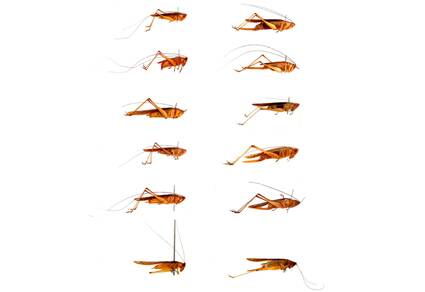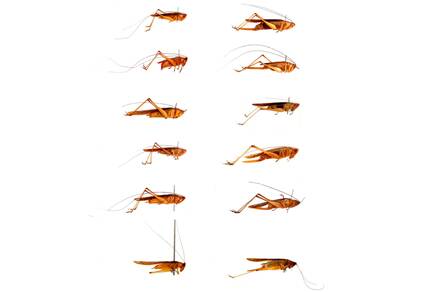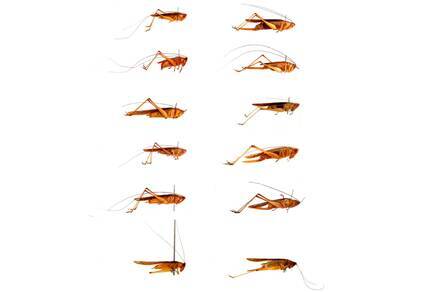
3 new species of ‘musical’ katydids discovered in Kashmir
The picturesque meadows of Kashmir, known for their breathtaking beauty and diverse flora, have now revealed a new secret. Researchers surveying the region have made a groundbreaking discovery of three new species of “musical” meadow katydids, insects in the genus Conocephalus, previously unrecorded in the area. The finding has sent ripples of excitement in the scientific community, shedding new light on the region’s rich biodiversity.
The discovery was made by a team of researchers who conducted an exhaustive survey of the meadows in Kashmir. The team spent countless hours observing, collecting, and studying the katydid species in the region. After detailed studies, the team identified three new species, which were named C usmanii, C nagariensis, and C ganderbali. The discovery not only highlights the region’s rich biodiversity but also emphasizes the need for further research and conservation efforts.
Katydid, also known as bush crickets, are insects that belong to the family Tettigoniidae. They are known for their distinctive sound-producing abilities, which they use to communicate with other katydids. The males of the species produce a musical sound by rubbing their wings together, a process called stridulation. This unique sound-producing ability has earned them the nickname “musical” katydids.
The newly discovered species, C usmanii, C nagariensis, and C ganderbali, are characterized by their distinctive morphological features and unique sound-producing patterns. The team used advanced techniques, including molecular analysis and bioacoustics, to study the species and confirm their new status.
In addition to the three new species, the team also recorded several other known katydid species in the region that were not previously documented there. One such species is C longipennis, a katydid species known for its long wings and distinctive sound-producing pattern. The discovery of these species highlights the region’s rich biodiversity and emphasizes the need for further research and conservation efforts.
The discovery of the new katydid species in Kashmir has significant implications for our understanding of the region’s ecosystem. The katydid species play a crucial role in the ecosystem, serving as both predators and prey for other animals. They are also important indicators of environmental health, as changes in their population can signal broader ecosystem changes.
The discovery also highlights the importance of conservation efforts in the region. The meadows of Kashmir are facing numerous threats, including habitat destruction, climate change, and human activities such as overgrazing and agriculture. These threats can have a devastating impact on the region’s biodiversity, including the katydid species.
The research team has emphasized the need for further research and conservation efforts in the region. They have called for the protection of the meadows and the preservation of the katydid habitats. They have also emphasized the need for sustainable land-use practices and the promotion of eco-tourism in the region.
In conclusion, the discovery of the three new species of “musical” katydids in Kashmir is a significant finding that highlights the region’s rich biodiversity. The discovery emphasizes the need for further research and conservation efforts in the region, including the protection of the meadows and the preservation of the katydid habitats. As we continue to explore and understand the natural world, discoveries like these remind us of the importance of preserving our planet’s precious biodiversity.
The full study can be accessed at the following link: https://mapress.com/zt/article/view/zootaxa.5737.4.4
News Source: https://mapress.com/zt/article/view/zootaxa.5737.4.4
About the Author