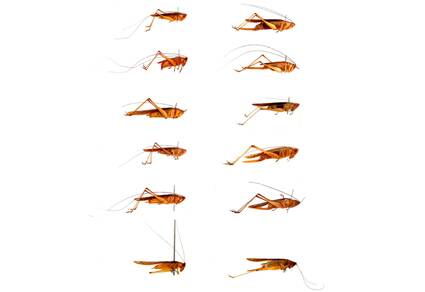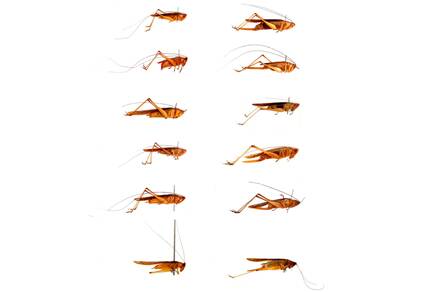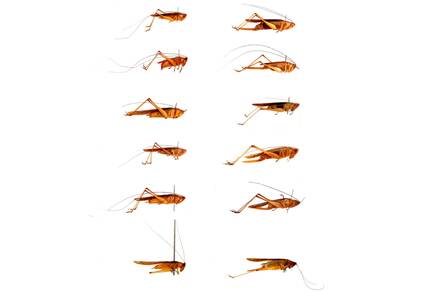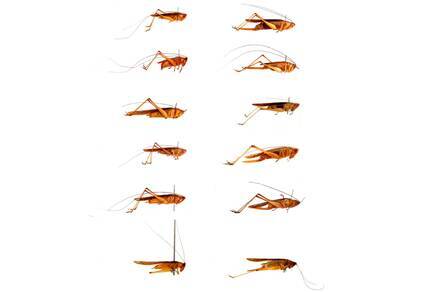
3 new species of ‘musical’ katydids discovered in Kashmir
The meadows of Kashmir, known for their breathtaking beauty and diverse wildlife, have recently revealed a hidden secret. A team of researchers, surveying the region’s meadows, has discovered three new species of “musical” meadow katydids, previously unrecorded in the area. These fascinating insects, belonging to the genus Conocephalus, have been named C usmanii, C nagariensis, and C ganderbali after detailed studies. The discovery not only highlights the region’s rich biodiversity but also underscores the importance of continued exploration and documentation of the natural world.
The genus Conocephalus, commonly known as meadow katydids, is a group of insects renowned for their musical abilities. Males of these species produce distinctive songs using their wings, which serve as a means of communication and mating. The songs, often described as a series of chirps or trills, are unique to each species and play a crucial role in the katydids’ social behavior. The discovery of three new species in Kashmir adds to the existing knowledge of these “musical” insects and provides new insights into their evolution, behavior, and ecology.
The research team, consisting of entomologists and wildlife experts, conducted an extensive survey of the meadows in Kashmir to document the region’s katydid fauna. The survey involved collecting and analyzing specimens from various locations, including meadows, grasslands, and wetlands. The team used a combination of traditional methods, such as netting and trapping, and modern techniques, such as acoustic recording and analysis, to identify and study the katydid species.
The three new species, C usmanii, C nagariensis, and C ganderbali, were identified based on their distinct morphological and acoustic characteristics. C usmanii, for example, is characterized by its striking green coloration and unique song pattern, which consists of a series of high-pitched chirps. C nagariensis, on the other hand, has a more subdued coloration and produces a low-frequency hum, while C ganderbali is distinguished by its vibrant yellow color and complex song structure.
In addition to the three new species, the research team also recorded several known katydid species in the region that were not previously documented there. One such species is C longipennis, a widespread meadow katydid known for its distinctive long wings and melodious song. The presence of C longipennis in Kashmir highlights the region’s connectivity with other parts of the country and the potential for species exchange and migration.
The discovery of these new species and the documentation of existing ones have significant implications for conservation and management of the region’s biodiversity. The meadows of Kashmir, which are home to a wide range of flora and fauna, are facing increasing threats from human activities such as agriculture, urbanization, and climate change. The loss of these habitats could have devastating consequences for the region’s ecosystem, including the decline or extinction of unique species like the “musical” katydids.
The research team’s findings also underscore the importance of continued exploration and documentation of the natural world. Despite significant advances in technology and scientific knowledge, much of the world’s biodiversity remains unexplored and undocumented. The discovery of new species, such as the three “musical” katydids in Kashmir, highlights the need for sustained efforts to explore and understand the natural world.
In conclusion, the discovery of three new species of “musical” katydids in Kashmir is a significant finding that highlights the region’s rich biodiversity and the importance of continued exploration and documentation of the natural world. The research team’s work not only adds to our knowledge of these fascinating insects but also underscores the need for conservation and management of the region’s ecosystems. As we continue to explore and understand the natural world, we may uncover even more secrets and surprises, like the “musical” katydids of Kashmir.
News Source: https://mapress.com/zt/article/view/zootaxa.5737.4.4
About the Author