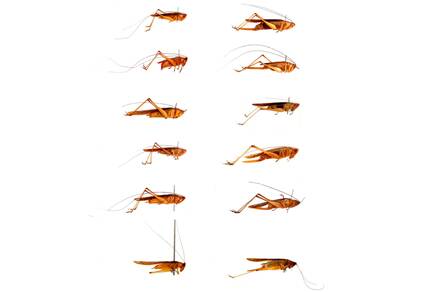
3 new species of ‘musical’ katydids discovered in Kashmir
In a groundbreaking discovery, researchers surveying meadows in Kashmir have identified three new species of “musical” meadow katydids, previously unrecorded in the region. The insects, belonging to the genus Conocephalus, are known for their unique ability to produce musical sounds, which play a crucial role in their mating and territorial behaviors. The discovery not only sheds light on the rich biodiversity of the region but also highlights the importance of continued exploration and documentation of the natural world.
The research team, comprised of experts in entomology and taxonomy, conducted an extensive survey of the meadows in Kashmir, resulting in the discovery of the three new species. After detailed studies, the species were named C usmanii, C nagariensis, and C ganderbali, in recognition of their unique characteristics and the regions in which they were found. The discovery of these new species has significant implications for our understanding of the evolution and diversity of katydids in the region.
The genus Conocephalus, to which these new species belong, is a group of insects commonly known as meadow katydids or long-horned grasshoppers. These insects are found in a wide range of habitats, including meadows, forests, and grasslands, and are known for their distinctive long antennae and vibrant coloration. The musical sounds produced by these insects are a result of a complex process involving the rubbing of their wings against their hind legs, creating a unique melody that is used for communication and mating.
The discovery of C usmanii, C nagariensis, and C ganderbali is not only significant due to their unique characteristics but also because of the regions in which they were found. Kashmir, a region in the Indian subcontinent, is known for its rich biodiversity, with a wide range of flora and fauna found nowhere else in the world. The discovery of these new species highlights the importance of continued exploration and documentation of the region’s natural resources, which are facing increasing threats from habitat destruction, climate change, and human activities.
In addition to the discovery of the three new species, the research team also recorded several other known katydid species in the region that were not previously documented there. One such species, C longipennis, is a widely distributed katydid found in various parts of the world, but its presence in Kashmir was not previously recorded. The discovery of this species, along with the three new species, highlights the importance of continued research and documentation of the region’s biodiversity.
The discovery of these new species of “musical” katydids has significant implications for our understanding of the evolution and diversity of insects in the region. The unique characteristics of these insects, including their ability to produce musical sounds, make them an important area of study for entomologists and taxonomists. Further research is needed to fully understand the behavior, ecology, and conservation status of these species, which will be essential for developing effective conservation strategies to protect these unique insects and their habitats.
In conclusion, the discovery of three new species of “musical” katydids in Kashmir is a significant finding that highlights the importance of continued exploration and documentation of the natural world. The unique characteristics of these insects, including their ability to produce musical sounds, make them an important area of study for entomologists and taxonomists. Further research is needed to fully understand the behavior, ecology, and conservation status of these species, which will be essential for developing effective conservation strategies to protect these unique insects and their habitats.
The discovery of these new species is a testament to the rich biodiversity of the region and the importance of continued research and documentation of the natural world. As we continue to face the challenges of habitat destruction, climate change, and human activities, it is essential that we prioritize the conservation of our natural resources and work to protect the unique and fascinating creatures that call our planet home.
The full research paper on this discovery can be found at https://mapress.com/zt/article/view/zootaxa.5737.4.4, which provides a detailed account of the discovery, including the characteristics of the new species and their habitats.
News Source: https://mapress.com/zt/article/view/zootaxa.5737.4.4
About the Author