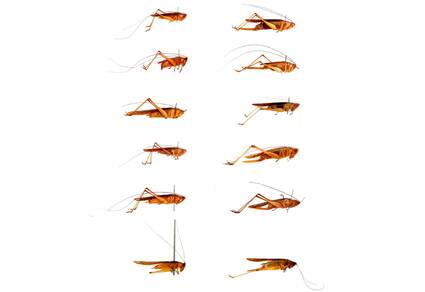
3 new species of ‘musical’ katydids discovered in Kashmir
The meadows of Kashmir, known for their breathtaking beauty and diverse wildlife, have yielded a new discovery that is music to the ears of entomologists and nature enthusiasts alike. Researchers surveying the region have identified three new species of “musical” meadow katydids, belonging to the genus Conocephalus. These insects, previously unrecorded in Kashmir, have been named C usmanii, C nagariensis, and C ganderbali after detailed studies. This remarkable finding not only expands our knowledge of the region’s insect fauna but also highlights the importance of continued exploration and documentation of the natural world.
The discovery was made by a team of researchers who conducted an extensive survey of the meadows in Kashmir, a region nestled in the Himalayan foothills. The team’s efforts were rewarded with the identification of three new species of katydids, which are characterized by their distinctive musical calls. The genus Conocephalus, to which these new species belong, is known for its “musical” members, with males producing a wide range of sounds to attract females and defend territories.
The three new species, C usmanii, C nagariensis, and C ganderbali, were named after careful study and analysis of their morphology, behavior, and ecological habits. C usmanii, for example, is named after the renowned Pakistani entomologist, Dr. Muhammad Usman, who has made significant contributions to the field of insect taxonomy. C nagariensis, on the other hand, is named after the Nagari village in Kashmir, where the species was first discovered. The third species, C ganderbali, is named after the Ganderbal district in Kashmir, which is home to a diverse range of insect species.
In addition to the three new species, the research team also recorded several known katydid species in the region that were not previously documented there. One such species is C longipennis, a katydid with a distinctive long-winged morphology. The presence of this species in Kashmir highlights the region’s importance as a hub for insect diversity and underscores the need for continued exploration and documentation of the region’s fauna.
The discovery of these new species of katydids in Kashmir is significant not only for its contribution to our understanding of the region’s insect fauna but also for its implications for conservation efforts. Katydids, like many other insects, play a vital role in maintaining ecosystem balance and health. They serve as important pollinators, seed dispersers, and food sources for other animals, and their loss could have cascading effects on the entire ecosystem.
The research team’s findings also highlight the importance of collaborative efforts in scientific research. The discovery of the new katydid species was made possible through the collaboration of researchers from different institutions and countries, demonstrating the power of international cooperation in advancing our knowledge of the natural world.
In conclusion, the discovery of three new species of “musical” katydids in Kashmir is a significant finding that underscores the importance of continued exploration and documentation of the natural world. The identification of C usmanii, C nagariensis, and C ganderbali expands our knowledge of the region’s insect fauna and highlights the region’s importance as a hub for biodiversity. As we continue to face the challenges of climate change, habitat destruction, and species extinction, discoveries like these remind us of the importance of preserving and protecting our natural heritage for future generations.
For more information on this discovery, please visit the original research article at https://mapress.com/zt/article/view/zootaxa.5737.4.4
News Source: https://mapress.com/zt/article/view/zootaxa.5737.4.4
About the Author