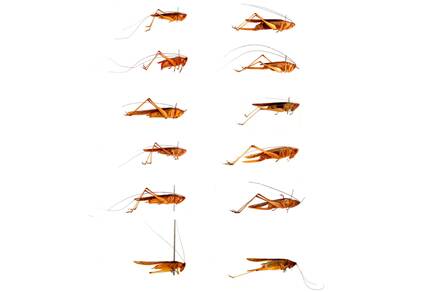
3 new species of ‘musical’ katydids discovered in Kashmir
The enchanting meadows of Kashmir have long been a source of fascination for naturalists and researchers alike. The region’s unique biodiversity has yielded many exciting discoveries, and the latest addition to this list is the identification of three new species of “musical” meadow katydids. These insects, belonging to the genus Conocephalus, have been found to possess distinctive musical characteristics, earning them the nickname “singing insects.” The discovery was made by a team of researchers who conducted an extensive survey of the region’s meadows, unearthing not only the new species but also shedding light on the previously unrecorded presence of other known katydid species.
The three new species, named C usmanii, C nagariensis, and C ganderbali, were identified after detailed studies of their morphological characteristics, behavior, and habitat preferences. The team’s findings have significant implications for our understanding of the region’s biodiversity and highlight the importance of continued exploration and research in the area. The discovery of these new species also underscores the vast and largely unexplored natural heritage of Kashmir, which remains a treasure trove of scientific wonders waiting to be uncovered.
The genus Conocephalus, to which these new species belong, is a group of insects commonly known as meadow katydids or long-winged coneheads. These insects are characterized by their elongated bodies, long antennae, and distinctive wing patterns. They are found in a wide range of habitats, including meadows, grasslands, and forests, and are known for their unique mating behaviors, which involve the production of complex songs. These songs, often described as musical or melodic, play a crucial role in the insects’ mating rituals and are used by males to attract females and establish territorial boundaries.
The discovery of C usmanii, C nagariensis, and C ganderbali in Kashmir’s meadows has significant implications for our understanding of the region’s ecological dynamics. The presence of these new species suggests that the region’s biodiversity is more complex and diverse than previously thought, with many species still awaiting discovery. The team’s research also highlights the importance of continued exploration and conservation efforts in the area, as many of these species may be facing threats to their survival due to habitat destruction, climate change, and other human activities.
In addition to the three new species, the research team also recorded several other known katydid species in the region that were not previously documented there. One such species, C longipennis, was found to be widely distributed across the meadows of Kashmir, with its presence previously unrecorded in the area. This finding highlights the need for more extensive and systematic surveys of the region’s biodiversity, as many species may be present but remain undocumented due to lack of research or inadequate sampling.
The discovery of these new species and the documentation of previously unrecorded katydid species in Kashmir’s meadows have significant implications for conservation efforts in the region. The identification of these species and their habitats provides valuable insights into the ecological dynamics of the area and highlights the need for targeted conservation strategies to protect these unique and fascinating insects. As the world grapples with the challenges of biodiversity loss and ecosystem degradation, the discovery of new species and the documentation of previously unrecorded species serve as a reminder of the importance of continued research and conservation efforts.
The research team’s findings have been published in a recent issue of the scientific journal Zootaxa, providing a detailed account of the discovery and documentation of the new species. The study provides a comprehensive overview of the morphological characteristics, behavior, and habitat preferences of the new species, as well as their distribution and abundance in the region. The publication of this research serves as a testament to the power of scientific inquiry and the importance of continued exploration and discovery in the natural world.
In conclusion, the discovery of three new species of “musical” meadow katydids in Kashmir’s meadows is a significant finding that highlights the region’s unique biodiversity and the importance of continued research and conservation efforts. The identification of C usmanii, C nagariensis, and C ganderbali, as well as the documentation of previously unrecorded katydid species, serves as a reminder of the vast and largely unexplored natural heritage of Kashmir, waiting to be uncovered and protected. As we continue to explore and learn more about the natural world, we are reminded of the importance of preserving our planet’s biodiversity and the need for sustained conservation efforts to protect these unique and fascinating species.
News source: https://mapress.com/zt/article/view/zootaxa.5737.4.4
About the Author