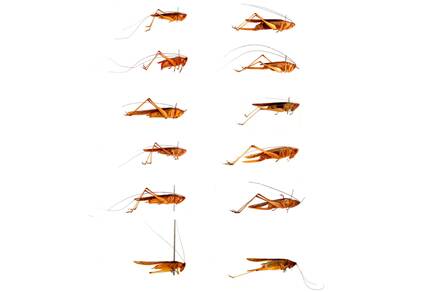
3 new species of ‘musical’ katydids discovered in Kashmir
The natural world is full of wonders, and the latest discovery in the meadows of Kashmir is a testament to the incredible diversity of life on our planet. Researchers surveying the region have stumbled upon three new species of “musical” meadow katydids, insects in the genus Conocephalus, which were previously unrecorded in the area. The discovery not only sheds light on the unique characteristics of these insects but also highlights the importance of continued exploration and documentation of the natural world.
The team of researchers, who conducted the survey, were thrilled to discover the three new species, which have been named C usmanii, C nagariensis, and C ganderbali after detailed studies. The names of the species are derived from the local geography and culture of the region, reflecting the unique characteristics of each species. The discovery of these new species is significant, as it not only adds to our knowledge of the insect world but also highlights the importance of preserving the natural habitats of these creatures.
The genus Conocephalus, to which these new species belong, is commonly known as meadow katydids or long-winged katydids. These insects are known for their distinctive musical calls, which they use to communicate with each other. The calls are often described as a series of chirps or trills, and are an essential part of the katydids’ mating and territorial behaviors. The musical nature of these insects has fascinated scientists and naturalists for centuries, and the discovery of new species in this genus is a significant addition to our understanding of these fascinating creatures.
The researchers who conducted the survey used a combination of field observations and laboratory analysis to identify the new species. They spent countless hours in the meadows of Kashmir, observing the behavior and habitats of the katydids, and collecting specimens for further study. The team then used advanced techniques such as DNA sequencing and morphological analysis to confirm the identity of the new species.
In addition to the three new species, the research team also recorded several other known katydid species in the region that were not previously documented there. One such species is C longipennis, a common meadow katydid found in many parts of the world. The presence of this species in Kashmir highlights the importance of continued exploration and documentation of the natural world, as even in well-studied regions, there may still be much to discover.
The discovery of these new species of katydids in Kashmir is not only significant from a scientific perspective but also has important implications for conservation. The meadows of Kashmir are a unique and fragile ecosystem, and the presence of these insects is an important indicator of the health and biodiversity of the region. As the world grapples with the challenges of climate change, habitat destruction, and species extinction, the discovery of new species serves as a reminder of the importance of preserving our natural heritage.
The research team’s findings have been published in a scientific paper, which provides a detailed description of the new species and their characteristics. The paper also highlights the importance of continued exploration and documentation of the natural world, and the need for conservation efforts to protect these unique and fascinating creatures.
In conclusion, the discovery of three new species of “musical” meadow katydids in Kashmir is a significant addition to our knowledge of the natural world. The unique characteristics of these insects, including their distinctive musical calls, make them a fascinating subject of study. The research team’s findings highlight the importance of continued exploration and documentation of the natural world, and the need for conservation efforts to protect these incredible creatures. As we continue to explore and learn more about the natural world, we are reminded of the importance of preserving our planet’s biodiversity and the incredible wonders that it holds.
For more information on this discovery, please visit: https://mapress.com/zt/article/view/zootaxa.5737.4.4
News Source: https://mapress.com/zt/article/view/zootaxa.5737.4.4
About the Author