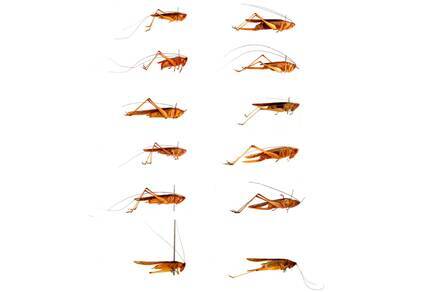
3 new species of ‘musical’ katydids discovered in Kashmir
The meadows of Kashmir, known for their breathtaking beauty and diverse wildlife, have yielded a fascinating discovery for entomologists. A team of researchers surveying the region has identified three new species of “musical” meadow katydids, belonging to the genus Conocephalus. These insects, previously unrecorded in Kashmir, have been named C usmanii, C nagariensis, and C ganderbali after detailed studies. The finding not only expands our knowledge of the region’s insect fauna but also highlights the importance of continued exploration and documentation of the natural world.
The genus Conocephalus, commonly referred to as meadow katydids, is known for the musical sounds produced by males, which are used for mating and territorial purposes. These sounds, often described as singing, are a unique characteristic of the genus and play a crucial role in the insects’ behavior and ecology. The discovery of three new species in Kashmir underscores the region’s significance as a hotspot for biodiversity, with many areas still unexplored and awaiting scientific attention.
The research team, comprising experts in entomology and ecology, conducted an extensive survey of meadows in Kashmir to document the region’s katydid fauna. The survey involved collecting and analyzing specimens, as well as recording the insects’ behavior, habitat, and distribution. The team’s efforts were rewarded with the discovery of the three new species, which were identified based on their distinct morphological and acoustic characteristics.
The new species, C usmanii, C nagariensis, and C ganderbali, are distinguished from other known species of Conocephalus by their unique combinations of physical features and song patterns. C usmanii, for example, is characterized by its striking green coloration and distinctive song, which consists of a series of high-pitched chirps. C nagariensis, on the other hand, is recognized by its brownish-gray color and a song that features a repetitive sequence of low-pitched whistles. C ganderbali, the third new species, is marked by its pale green color and a song that includes a series of rapid, high-pitched trills.
In addition to the three new species, the research team also recorded several known katydid species in the region that were not previously documented there. One such species, C longipennis, is a widespread and common meadow katydid found in many parts of the world. Its presence in Kashmir highlights the region’s connectivity to other areas and the potential for species exchange and dispersal.
The discovery of the three new species of Conocephalus in Kashmir has significant implications for our understanding of the region’s biodiversity and ecosystem dynamics. The finding also underscores the importance of continued exploration and documentation of the natural world, particularly in areas that are still underrepresented in scientific literature. As scientists, it is essential to recognize the value of basic research and the need to support initiatives that aim to expand our knowledge of the world’s biodiversity.
The research team’s findings have been published in a scientific journal, providing a detailed account of the discovery and the characteristics of the new species. The study serves as a valuable resource for entomologists, ecologists, and conservation biologists, offering new insights into the biology and ecology of meadow katydids and their role in shaping ecosystem processes.
In conclusion, the discovery of three new species of “musical” meadow katydids in Kashmir is a significant finding that highlights the region’s importance as a biodiversity hotspot. The research team’s efforts demonstrate the value of basic research and the need to continue exploring and documenting the natural world. As we move forward, it is essential to recognize the importance of preserving and protecting our planet’s biodiversity, including the fascinating and often overlooked world of insects.
For more information on this discovery, please visit: https://mapress.com/zt/article/view/zootaxa.5737.4.4
News Source: https://mapress.com/zt/article/view/zootaxa.5737.4.4
About the Author