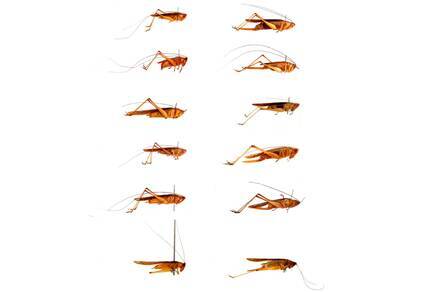
3 new species of ‘musical’ katydids discovered in Kashmir
In a groundbreaking discovery, a team of researchers has identified three new species of “musical” meadow katydids in the picturesque region of Kashmir. The insects, belonging to the genus Conocephalus, were previously unrecorded in the area, and their discovery has shed new light on the biodiversity of the region. The new species have been named C usmanii, C nagariensis, and C ganderbali, after detailed studies and analysis.
The discovery was made by a team of researchers who conducted an extensive survey of the meadows in Kashmir. The region, known for its stunning natural beauty, is home to a wide range of flora and fauna. The team’s findings have not only added to the existing knowledge of katydid species but also highlighted the importance of preserving and protecting the region’s unique ecosystem.
Katydid, also known as bush crickets, are insects that are known for their distinctive musical sounds. They produce these sounds by rubbing their wings together, a process called stridulation. The sounds produced by katydids are often used for communication, mating, and warning off potential predators. The genus Conocephalus, to which the newly discovered species belong, is a group of katydids that are commonly found in meadows and grasslands.
The three new species discovered in Kashmir, C usmanii, C nagariensis, and C ganderbali, are unique in their characteristics and habits. C usmanii, for example, is distinguished by its distinctive song pattern, which is different from other known species of Conocephalus. C nagariensis, on the other hand, has a unique wing shape and coloration that sets it apart from other katydids. C ganderbali, the third new species, has a distinctive habitat preference, with a tendency to inhabit areas with dense vegetation.
In addition to the three new species, the research team also recorded several other known katydid species in the region that were not previously documented there. One such species is C longipennis, a katydid known for its long wings and distinctive song pattern. The presence of these species in Kashmir highlights the region’s rich biodiversity and the need for further research and conservation efforts.
The discovery of the three new species of katydids in Kashmir is significant not only for the field of entomology but also for the conservation of the region’s ecosystem. The findings of the research team highlight the importance of preserving and protecting the natural habitats of these insects, as well as the need for further research into the unique characteristics and habits of these species.
The research team’s findings have been published in a scientific journal, providing a detailed account of the discovery and the characteristics of the new species. The study provides valuable insights into the biodiversity of the region and highlights the need for further research and conservation efforts.
In conclusion, the discovery of the three new species of “musical” katydids in Kashmir is a significant finding that sheds new light on the biodiversity of the region. The unique characteristics and habits of these species make them an important area of study, and their conservation is essential for preserving the region’s ecosystem. Further research and conservation efforts are needed to protect these species and their habitats, and to ensure the long-term preservation of the region’s unique biodiversity.
The discovery of the new species is a testament to the importance of scientific research and exploration. It highlights the need for continued funding and support for scientific research, as well as the importance of preserving and protecting our natural world. As we continue to learn more about the natural world, we are reminded of the beauty and complexity of the world around us, and the need to protect it for future generations.
The research team’s findings are a significant contribution to the field of entomology, and their discovery of the three new species of katydids in Kashmir is a major breakthrough. The study provides a detailed account of the discovery and the characteristics of the new species, and highlights the need for further research and conservation efforts.
The discovery of the new species is also a reminder of the importance of preserving and protecting our natural world. The unique characteristics and habits of these species make them an important area of study, and their conservation is essential for preserving the region’s ecosystem. Further research and conservation efforts are needed to protect these species and their habitats, and to ensure the long-term preservation of the region’s unique biodiversity.
In the end, the discovery of the three new species of “musical” katydids in Kashmir is a significant finding that sheds new light on the biodiversity of the region. The unique characteristics and habits of these species make them an important area of study, and their conservation is essential for preserving the region’s ecosystem. As we continue to learn more about the natural world, we are reminded of the beauty and complexity of the world around us, and the need to protect it for future generations.
News Source: https://mapress.com/zt/article/view/zootaxa.5737.4.4
About the Author