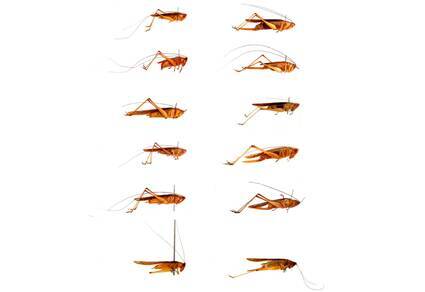
3 new species of ‘musical’ katydids discovered in Kashmir
In a groundbreaking discovery, researchers surveying meadows in Kashmir have identified three new species of “musical” meadow katydids, previously unrecorded in the region. The insects, belonging to the genus Conocephalus, are known for their distinctive songs, which they use to communicate with other katydids. The discovery not only sheds light on the diverse insect life in Kashmir but also highlights the importance of continued exploration and documentation of the region’s unique biodiversity.
The research team, comprised of experts in entomology, conducted extensive surveys of meadows in Kashmir to identify and document the katydid species present in the area. Through meticulous observations and detailed studies, they were able to distinguish three new species, which were subsequently named C usmanii, C nagariensis, and C ganderbali. These names reflect the local geography and cultural heritage of the region, with “usmanii” and “ganderbali” referencing specific locations in Kashmir, and “nagariensis” derived from the local language.
The discovery of these new species is significant, as it highlights the rich biodiversity of Kashmir’s meadows, which are often characterized by unique combinations of flora and fauna. The region’s diverse landscape, which includes alpine meadows, forests, and grasslands, provides a habitat for a wide range of insect species, many of which remain undocumented. The identification of C usmanii, C nagariensis, and C ganderbali underscores the importance of continued exploration and research in the region, as it is likely that many more species remain to be discovered.
In addition to the three new species, the research team also recorded several other known katydid species in the region that were not previously documented there. One such species, C longipennis, is a widely distributed katydid that is found in various parts of the world. The presence of this species in Kashmir highlights the region’s connectivity to other parts of the globe, and underscores the need for continued monitoring and documentation of insect populations.
The genus Conocephalus, to which the newly discovered species belong, is a diverse group of katydids that are found in various parts of the world. These insects are known for their distinctive songs, which they use to communicate with other katydids. The songs, which are often complex and melodic, play a crucial role in mating and territorial behavior, and are an important aspect of katydid biology. The discovery of new species within this genus not only expands our understanding of katydid diversity but also provides new insights into the evolution and ecology of these fascinating insects.
The research team’s findings have significant implications for our understanding of the biodiversity of Kashmir’s meadows. The discovery of new species highlights the importance of continued exploration and documentation of the region’s unique flora and fauna. Moreover, the presence of these species in the region underscores the need for conservation efforts to protect the habitat and ecosystem of these insects. As the region’s biodiversity continues to face threats from human activities such as deforestation, urbanization, and climate change, it is essential that we take steps to preserve the natural habitats of these unique species.
The discovery of C usmanii, C nagariensis, and C ganderbali is a testament to the importance of scientific research and exploration. The identification of these new species not only expands our knowledge of the natural world but also highlights the beauty and complexity of the ecosystems that surround us. As we continue to explore and document the biodiversity of our planet, we are reminded of the importance of preserving the natural world for future generations.
In conclusion, the discovery of three new species of “musical” meadow katydids in Kashmir is a significant finding that highlights the region’s unique biodiversity. The identification of C usmanii, C nagariensis, and C ganderbali, as well as the recording of other known katydid species, underscores the importance of continued exploration and documentation of the region’s flora and fauna. As we move forward, it is essential that we prioritize conservation efforts to protect the habitat and ecosystem of these incredible insects, and work to preserve the natural beauty of Kashmir’s meadows for generations to come.
News Source: https://mapress.com/zt/article/view/zootaxa.5737.4.4
About the Author