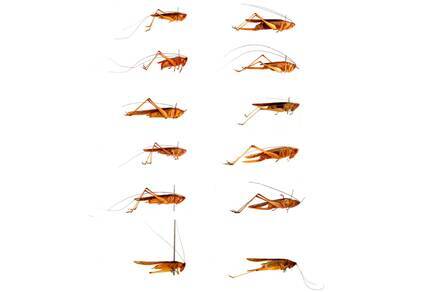
3 new species of ‘musical’ katydids discovered in Kashmir
In a groundbreaking discovery, researchers surveying the lush meadows of Kashmir have identified three new species of “musical” meadow katydids, previously unrecorded in the region. The team’s findings, published in a recent study, shed new light on the diverse and fascinating world of insects in the genus Conocephalus. The discovery not only highlights the unique characteristics of these new species but also underscores the importance of continued exploration and documentation of the natural world.
The research team, comprised of entomologists and biologists, conducted an exhaustive survey of the meadows in Kashmir, a region known for its breathtaking natural beauty and rich biodiversity. The team’s efforts were rewarded with the discovery of three new species of katydids, which were named C usmanii, C nagariensis, and C ganderbali after detailed studies. These new species are characterized by their distinctive physical features and unique “musical” traits, which set them apart from other known species of katydids.
The genus Conocephalus, to which these new species belong, is a group of insects commonly known as meadow katydids or long-horned grasshoppers. These insects are renowned for their remarkable ability to produce complex songs, which play a crucial role in their mating and territorial behaviors. The “musical” nature of these katydids is a result of their unique stridulatory organs, which enable them to produce a wide range of sounds, from simple chirps to complex melodies.
The discovery of C usmanii, C nagariensis, and C ganderbali is significant not only because it expands our knowledge of the Conocephalus genus but also because it highlights the region’s rich entomological diversity. Kashmir, with its unique geography and climate, is home to a wide range of flora and fauna, many of which remain unexplored and undocumented. The discovery of these new species underscores the importance of continued research and exploration in the region, which can lead to a better understanding of the complex ecosystems and biodiversity of the area.
In addition to the three new species, the research team also recorded several other known katydid species in the region that were not previously documented there. One such species is C longipennis, a katydid known for its distinctive long wings and impressive jumping ability. The presence of this species in Kashmir highlights the region’s connectivity to other parts of the world and underscores the need for further research into the migration patterns and dispersal mechanisms of these insects.
The discovery of these new species and the documentation of other known species in the region have significant implications for our understanding of the natural world. It highlights the importance of continued exploration and research, particularly in regions that are often overlooked or under-studied. The findings of this study also underscore the need for conservation efforts to protect these unique and fascinating insects, as well as their habitats, from the impacts of human activity and climate change.
In conclusion, the discovery of three new species of “musical” katydids in Kashmir is a significant finding that expands our knowledge of the Conocephalus genus and highlights the region’s rich entomological diversity. The study’s findings have important implications for our understanding of the natural world and underscore the need for continued research and conservation efforts to protect these unique and fascinating insects. As we continue to explore and learn more about the natural world, we are reminded of the importance of preserving and protecting the diverse range of species that inhabit our planet.
For more information on this study, please visit: https://mapress.com/zt/article/view/zootaxa.5737.4.4
News Source: https://mapress.com/zt/article/view/zootaxa.5737.4.4
About the Author