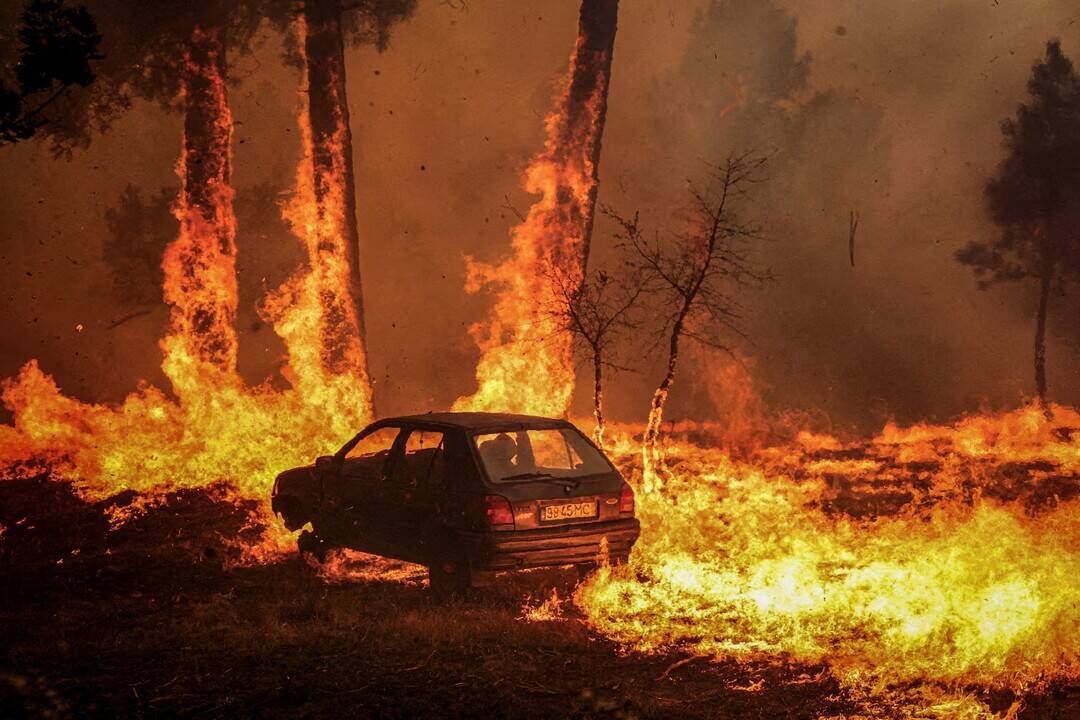
2025 set to be the 2nd or 3rd-hottest year ever: Scientists
The world is bracing for another scorching year as scientists predict that 2025 will be the second or third-warmest year on record. This forecast comes from the European Union’s Copernicus Climate Change Service (C3S), which has been closely monitoring global temperatures. The prediction is alarming, to say the least, and highlights the accelerating rate of climate change.
According to the C3S, this year is likely to be surpassed only by 2024 in terms of global temperatures. The average global temperature for 2025 is expected to exceed 1.5 degrees Celsius above the 1850-1900 pre-industrial period. This milestone is significant, as it indicates that the world is rapidly approaching the threshold of catastrophic climate change.
The C3S report also notes that 2025 will likely mark the end of the first three-year period in which the average global temperature has exceeded 1.5 degrees Celsius above the pre-industrial period. This is a stark reminder that climate change is not just a future threat, but a present reality that is already having devastating impacts on communities around the world.
The consequences of rising global temperatures are far-reaching and varied. From more frequent and intense heatwaves to devastating droughts and floods, the effects of climate change are being felt in every corner of the globe. The World Health Organization (WHO) estimates that between 2030 and 2050, climate change will cause approximately 250,000 additional deaths per year, mainly due to malnutrition, malaria, diarrhea, and heat stress.
The economic impacts of climate change are also significant. A report by the International Monetary Fund (IMF) estimates that climate change could reduce global economic output by up to 7% by 2100. This is equivalent to a loss of approximately $7 trillion in economic output, which is roughly the size of the entire US economy.
The science behind climate change is clear: human activities, particularly the burning of fossil fuels and deforestation, are releasing large amounts of greenhouse gases, such as carbon dioxide and methane, into the atmosphere. These gases trap heat and contribute to the warming of the planet.
The good news is that there are many steps that can be taken to reduce greenhouse gas emissions and mitigate the effects of climate change. Transitioning to renewable energy sources, such as solar and wind power, can significantly reduce carbon emissions. Increasing energy efficiency, protecting and reforestation of forests, and promoting sustainable land use practices are also critical strategies for reducing emissions.
Governments, businesses, and individuals all have a role to play in addressing climate change. The European Union, for example, has set a target of reducing its greenhouse gas emissions by at least 55% by 2030 compared to 1990 levels. The EU has also implemented a range of policies to support the transition to a low-carbon economy, including a carbon pricing mechanism and investments in clean energy technologies.
In conclusion, the prediction that 2025 will be the second or third-warmest year on record is a stark reminder of the urgent need to address climate change. The science is clear, and the consequences of inaction are severe. It is imperative that we take immediate and collective action to reduce greenhouse gas emissions and transition to a low-carbon economy. The future of our planet depends on it.
The European Union’s Copernicus Climate Change Service (C3S) will continue to monitor global temperatures and provide updates on the state of the climate. As we look to the future, it is essential that we prioritize climate action and work together to mitigate the effects of climate change.
About the Author