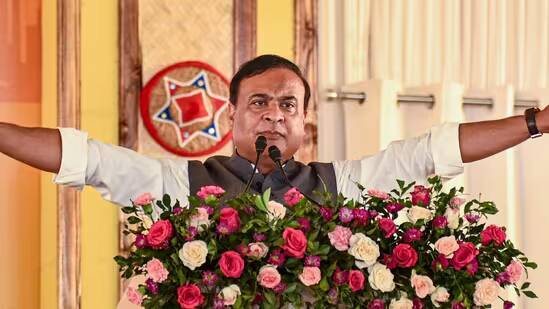
Would disown my son if he had Pakistan links: Assam CM
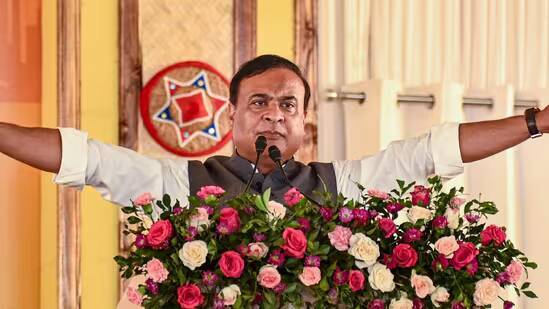
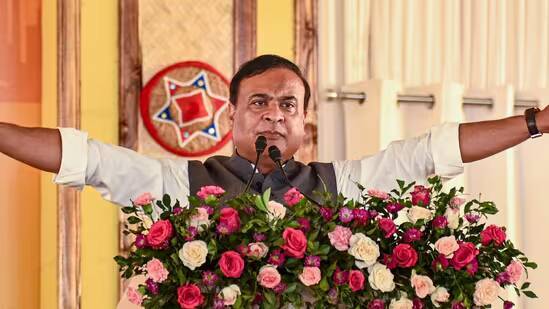
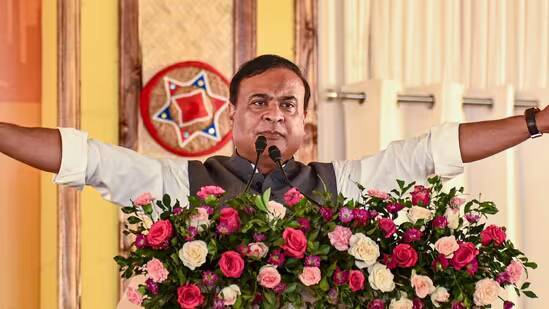
In a shocking statement, Assam Chief Minister Himanta Biswa Sarma has declared that he would disown his own son if he had any ties with Pakistan. This bold claim has sparked a heated debate in the country, with many questioning the extremity of his stance. The statement was made in an apparent reference to Congress MP Gaurav Gogoi’s wife, Elizabeth, who has been alleged to have links with Pakistan.
The Assam CM’s statement has been seen as a reflection of the intense patriotism and nationalism that has been on the rise in the country. Sarma’s words have been perceived as a testament to his unwavering commitment to the nation and his willingness to make personal sacrifices for the sake of the country. However, others have criticized his statement, labeling it as an exaggeration and an attempt to score political points.
Sarma’s statement has also raised questions about the role of family ties and personal relationships in the context of national loyalty. He asked whether a Congress leader, whose wife has links with Pakistan, would have the courage to disown her. This question has sparked a debate about the extent to which personal relationships should be compromised for the sake of national loyalty.
The Assam CM’s statement is also significant in the context of the current geopolitical climate. India’s relations with Pakistan have been strained for decades, and the two countries have been engaged in a bitter rivalry. The issue of nationalism and loyalty to the country has become a highly emotive and sensitive topic, with many Indians demanding unwavering loyalty to the nation.
Sarma’s statement has also been seen as a reflection of the growing trend of hyper-nationalism in the country. Many Indians have become increasingly vocal about their patriotism, and there is a growing expectation that citizens should demonstrate their loyalty to the nation at all times. This trend has been fueled by the rise of social media, which has created a platform for people to express their nationalist sentiments and criticize those who are perceived as being disloyal.
However, critics have argued that Sarma’s statement is an example of this hyper-nationalism gone too far. They argue that the Assam CM’s willingness to disown his own son is an extreme and unreasonable stance, and that it sets a dangerous precedent. They argue that family ties and personal relationships should not be compromised for the sake of national loyalty, and that there are more nuanced and balanced ways to demonstrate one’s patriotism.
In addition, Sarma’s statement has also been criticized for its potential to create a divisive and polarized atmosphere. By implying that anyone with links to Pakistan is somehow less Indian, Sarma’s statement has been seen as an attempt to create a sense of “us versus them” mentality. This can lead to a breakdown in social cohesion and create an atmosphere of mistrust and suspicion.
The Assam CM’s statement has also raised questions about the role of politicians in shaping public discourse. As leaders, politicians have a responsibility to promote unity and social cohesion, rather than creating divisions and fueling hatred. Sarma’s statement has been seen as a failure of leadership, and an example of how politicians can often prioritize short-term political gains over long-term social cohesion.
In conclusion, the Assam CM’s statement has sparked a heated debate about nationalism, loyalty, and personal relationships. While some have praised Sarma’s commitment to the nation, others have criticized his statement as an exaggeration and an attempt to score political points. As the country continues to grapple with the complexities of nationalism and loyalty, it is essential to promote a nuanced and balanced approach that recognizes the complexity of human relationships and the need for social cohesion.
As Sarma himself said, “If one becomes Pakistani…how can I have relation with them?” This statement highlights the depth of feeling on this issue, and the need for a more nuanced and balanced approach. Ultimately, the question of whether to disown a family member for their ties to Pakistan is a complex and personal one, and should not be used as a political tool to score points.
About the Author