Would Disown My Son if He Had Pakistan Links: Assam CM
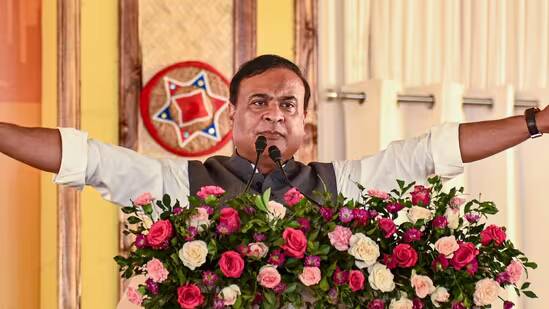
In a shocking statement, Assam Chief Minister Himanta Biswa Sarma has declared that he would disown his own son if he had any ties with Pakistan. This statement has sent ripples across the nation, with many questioning the implications of such a stance. The statement was made during a public gathering, where Sarma was addressing a crowd of supporters. While making an apparent reference to Congress MP Gaurav Gogoi’s wife, Elizabeth, Sarma asked whether a Congress leader whose wife has links with Pakistan would have the courage to disown her.
The statement has sparked a heated debate, with many arguing that it is unfair to question someone’s loyalty to their country based on their personal relationships. Others have praised Sarma for taking a strong stance against Pakistan, which has been accused of sponsoring terrorism in India. However, the question remains whether such a stance is justified, and what implications it could have for individuals who have family ties with Pakistan.
Sarma’s statement is not just a personal opinion, but also a reflection of the current geopolitical climate in India. The country has been at odds with Pakistan for decades, with tensions escalating in recent years. The dispute over Kashmir, cross-border terrorism, and other issues have created a sense of mistrust and hostility between the two nations. In this context, Sarma’s statement can be seen as a reflection of the widespread sentiment among Indians that Pakistan is a threat to their national security.
However, the question remains whether it is fair to judge an individual’s loyalty to their country based on their personal relationships. Many Indians have family ties with Pakistan, and it is not uncommon for individuals to have relatives or friends across the border. Does this mean that they are any less loyal to their country? The answer is clearly no. An individual’s loyalty to their country is not determined by their personal relationships, but by their actions and commitment to the nation.
Furthermore, Sarma’s statement raises questions about the implications of disowning someone based on their ties with Pakistan. If an individual has a family member or friend who is a Pakistani citizen, does that mean that they should be disowned? What about individuals who have married someone from Pakistan, or have business ties with the country? The implications of such a stance are far-reaching, and could have serious consequences for individuals who have legitimate ties with Pakistan.
It is also worth noting that Sarma’s statement is not just about Pakistan, but also about the Congress party. By making a reference to Gaurav Gogoi’s wife, Sarma is trying to score a political point against the opposition party. This is not the first time that Sarma has made a controversial statement, and it is likely that this statement will be seen as a political stunt rather than a genuine expression of concern about national security.
In conclusion, Assam CM Himanta Biswa Sarma’s statement that he would disown his son if he had ties with Pakistan has sparked a heated debate about loyalty, national security, and personal relationships. While the statement reflects the widespread sentiment among Indians that Pakistan is a threat to their national security, it also raises questions about the implications of disowning someone based on their ties with Pakistan. It is essential to consider the complexities of the issue and not jump to conclusions based on emotions or political motivations.
As Sarma himself said, “If one becomes Pakistani…how can I have relation with them?” This statement highlights the deep-seated mistrust and hostility that many Indians feel towards Pakistan. However, it is essential to separate this sentiment from the issue of personal relationships and loyalty to one’s country. An individual’s loyalty to their country is not determined by their personal relationships, but by their actions and commitment to the nation.
Ultimately, the issue of national security and loyalty is complex and multifaceted. While it is essential to take a strong stance against terrorism and threats to national security, it is also important to consider the implications of our words and actions. We must be careful not to create a climate of fear and mistrust, where individuals are judged based on their personal relationships rather than their actions.
About the Author