Would disown my son if he had Pakistan links: Assam CM
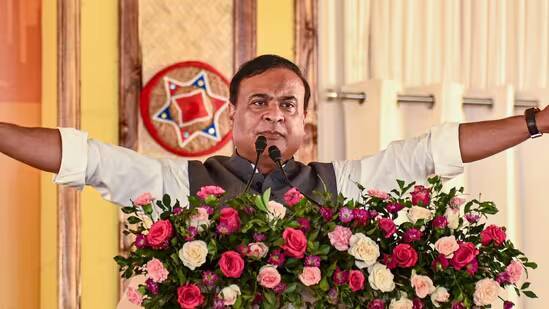
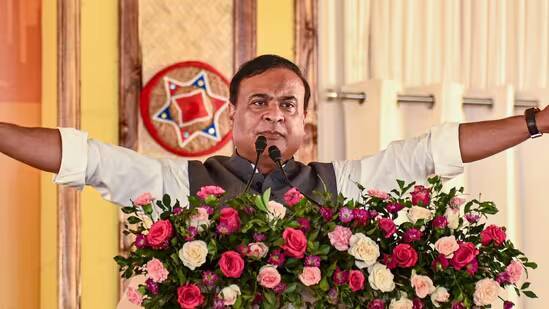
In a shocking statement, Assam Chief Minister Himanta Biswa Sarma has said that he would disown his son if he had any ties with Pakistan. This statement comes as a surprise to many, and it has sparked a debate about the relationship between India and Pakistan. The statement was made in reference to Congress MP Gaurav Gogoi’s wife, Elizabeth, who allegedly has links with Pakistan.
The Assam CM’s statement has raised many eyebrows, and it has been seen as a bold claim. He asked whether a Congress leader, whose wife has links with Pakistan, would have the courage to disown her. This statement is seen as a challenge to the Congress party and its leaders, who have been accused of having ties with Pakistan in the past.
Sarma’s statement is significant, as it highlights the sensitive nature of the relationship between India and Pakistan. The two countries have been at odds for decades, and any mention of Pakistan is often met with skepticism and mistrust. The Assam CM’s statement reflects this sentiment, and it shows that he is willing to take a strong stance on the issue.
The statement has also sparked a debate about the role of politicians and their personal lives. While politicians are expected to maintain a certain level of dignity and decorum, their personal lives are often subject to scrutiny. In this case, Sarma’s statement has raised questions about the relationship between politicians and their family members, and whether they should be held accountable for their actions.
Sarma’s statement has been seen as a reflection of the current political climate in India. The ruling Bharatiya Janata Party (BJP) has been accused of using nationalism as a tool to garner support and discredit its opponents. The Assam CM’s statement can be seen as a part of this larger narrative, where politicians are using anti-Pakistan sentiment to further their own interests.
However, it is also important to consider the potential consequences of such statements. By saying that he would disown his son if he had ties with Pakistan, Sarma is sending a strong message that any relationship with Pakistan is unacceptable. This can have serious implications, particularly for individuals who have family members or friends in Pakistan.
The statement has also been criticized for being divisive and polarizing. By making a statement that is so strongly anti-Pakistan, Sarma is creating a sense of Us vs. Them, where anyone who has ties with Pakistan is seen as an enemy. This can lead to further polarization and division, particularly in a country where there are already many fault lines.
In conclusion, the Assam CM’s statement is a significant one, and it reflects the complex and sensitive nature of the relationship between India and Pakistan. While it is understandable that politicians want to take a strong stance on issues related to national security, it is also important to consider the potential consequences of such statements. By saying that he would disown his son if he had ties with Pakistan, Sarma is sending a strong message, but it is also one that can have serious implications.
As the debate around this issue continues, it is essential to consider the nuances and complexities of the relationship between India and Pakistan. Rather than making statements that are divisive and polarizing, politicians should focus on finding ways to build bridges and promote understanding between the two countries.
The statement has also raised questions about the role of politicians in shaping public opinion and discourse. While politicians have a significant influence on public opinion, they also have a responsibility to promote tolerance, understanding, and inclusivity. By making statements that are strongly anti-Pakistan, politicians like Sarma are perpetuating a narrative that is divisive and exclusionary.
Ultimately, the Assam CM’s statement is a reflection of the complex and often fraught relationship between India and Pakistan. While it is understandable that politicians want to take a strong stance on issues related to national security, it is also essential to consider the potential consequences of such statements. By promoting a narrative that is inclusive, tolerant, and respectful of all individuals, regardless of their nationality or background, we can work towards building a more harmonious and peaceful world.
About the Author