Would disown my son if he had Pakistan links: Assam CM
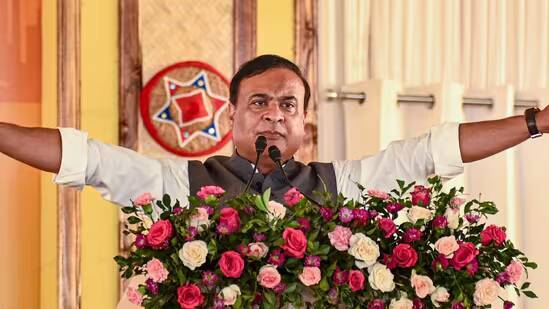
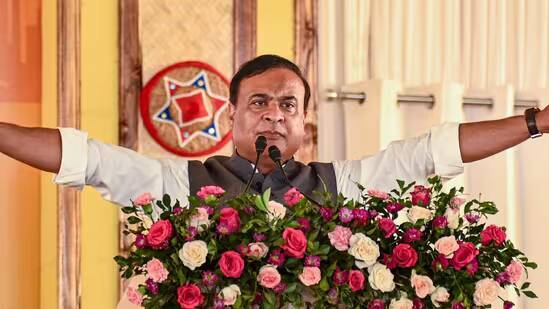
In a recent statement, Assam Chief Minister Himanta Biswa Sarma made a bold claim that has sent shockwaves throughout the nation. He declared that he would disown his own son if he were to have any ties with Pakistan. This statement was made in an apparent reference to Congress MP Gaurav Gogoi’s wife, Elizabeth, who has been alleged to have links with Pakistan. The Assam CM’s statement has sparked a heated debate, with many questioning the validity and motivations behind his claim.
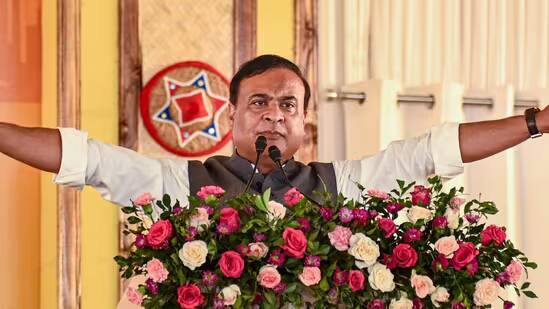
During a public address, Sarma asked whether a Congress leader, whose wife has links with Pakistan, would have the courage to disown her. He further added, “If one becomes Pakistani…how can I have relation with them?” This statement has been seen as a thinly veiled attack on Gogoi and his wife, with many interpreting it as a attempt to politicize the issue of national loyalty. The Assam CM’s words have been met with a mixture of shock, outrage, and curiosity, with many wondering what prompted him to make such a statement.
It is worth noting that the relationship between India and Pakistan has always been complex and sensitive. The two nations have a long history of conflict and tension, with many Indians viewing Pakistan as a rival nation. In this context, any perceived links with Pakistan can be seen as a betrayal of national loyalty. However, the question remains whether it is fair to disown someone solely based on their associations or ties with another country.
Sarma’s statement has also raised questions about the role of family and personal relationships in politics. As a public figure, the Assam CM’s words carry significant weight, and his statement has been seen as a reflection of his personal values and beliefs. However, it is also important to consider the potential consequences of such a statement, particularly for those who may be affected by it.
In recent years, there has been a growing trend of politicians using nationalism and patriotism as a means of garnering support and legitimacy. This can be seen in the way that politicians often use rhetoric and symbolism to emphasize their commitment to the nation and its values. However, this approach can also be problematic, as it can create a culture of intolerance and exclusion.
The issue of national loyalty and patriotism is a complex and multifaceted one, and it is not always easy to define what it means to be a loyal citizen. While it is understandable that politicians may want to emphasize their commitment to the nation, it is also important to consider the potential consequences of their words and actions. In this case, Sarma’s statement has been seen as a divisive and inflammatory, and it remains to be seen how it will be received by the public.
As the debate surrounding Sarma’s statement continues to unfold, it is clear that the issue of national loyalty and patriotism will remain a contentious one. While some may see the Assam CM’s words as a genuine expression of his values and beliefs, others will view them as a cynical attempt to politicize the issue. Ultimately, it is up to the public to decide what they think about Sarma’s statement, and how they believe it reflects on his character and leadership.
In conclusion, the Assam CM’s statement has sparked a heated debate about national loyalty and patriotism, and it remains to be seen how it will be received by the public. While some may see it as a bold and principled stance, others will view it as a divisive and inflammatory statement. As the nation continues to grapple with the complexities of nationalism and patriotism, it is clear that this issue will remain a contentious one for years to come.
About the Author