Would disown my son if he had Pakistan links: Assam CM
In a shocking statement, Assam Chief Minister Himanta Biswa Sarma has revealed that he would disown his own son if he had any ties with Pakistan. This bold claim has sparked a heated debate across the nation, with many questioning the reasoning behind such a statement. The comments were made in an apparent reference to Congress MP Gaurav Gogoi’s wife, Elizabeth, who allegedly has links with Pakistan.
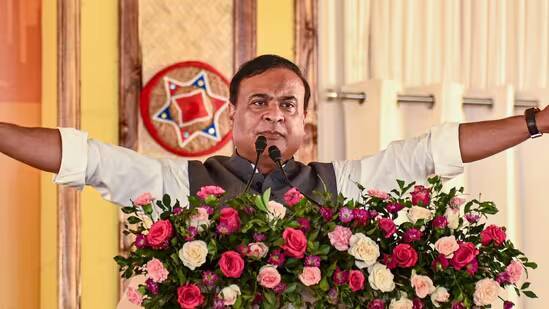
During a public address, Sarma asked whether a Congress leader, whose wife has connections with Pakistan, would have the courage to disown her. He further emphasized, “If one becomes Pakistani…how can I have relation with them?” This statement has raised eyebrows, as it implies that having ties with Pakistan is a betrayal of one’s own country. The Assam CM’s words have been met with both criticism and support, with some hailing his patriotism and others condemning his statement as extreme.
The context behind Sarma’s statement is crucial in understanding the motivations behind his words. The reference to Gaurav Gogoi’s wife, Elizabeth, is significant, as it highlights the perceived connections between some Indian politicians and Pakistan. The Congress MP has not publicly commented on the matter, but it is likely that the issue will be raised in future political debates.
The question of patriotism and loyalty to one’s country is a complex one. While it is natural for citizens to feel a strong sense of allegiance to their nation, the idea of disowning a family member due to their ties with another country is a drastic measure. Sarma’s statement has sparked a discussion about the limits of patriotism and the importance of maintaining relationships with those who may hold different beliefs or affiliations.
In recent years, India-Pakistan relations have been strained, to say the least. The two nations have a long history of conflict, and tensions between them remain high. The Assam CM’s statement can be seen as a reflection of this animosity, with many Indians viewing Pakistan as a rival nation. However, it is essential to consider the human aspect of such statements, as they can have a profound impact on individuals and families.
Sarma’s claim has also raised questions about the definition of patriotism. Is it merely a matter of loyalty to one’s country, or does it involve a deeper understanding of the complexities of international relations? The Assam CM’s statement implies that having ties with Pakistan is a betrayal of India, but this oversimplifies the issue. In reality, relationships between individuals from different countries can be nuanced and multifaceted.
Furthermore, the idea of disowning a family member due to their ties with another country is a drastic measure that can have severe consequences. It can lead to the breakdown of relationships, emotional trauma, and even social isolation. While Sarma’s statement may have been intended to convey his strong sense of patriotism, it is essential to consider the potential impact on individuals and families.
In conclusion, the Assam CM’s statement has sparked a heated debate about patriotism, loyalty, and the complexities of international relations. While it is natural for citizens to feel a strong sense of allegiance to their nation, the idea of disowning a family member due to their ties with another country is a drastic measure that requires careful consideration. As the discussion continues, it is essential to prioritize empathy, understanding, and nuance in our evaluation of such complex issues.
About the Author