Would disown my son if he had Pakistan links: Assam CM
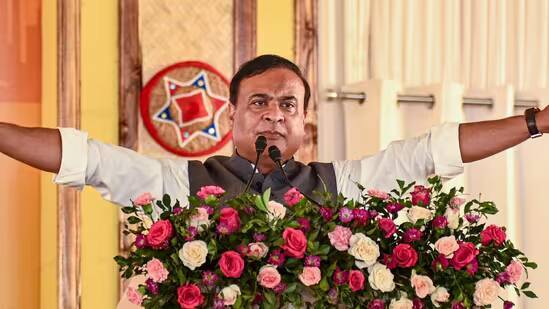
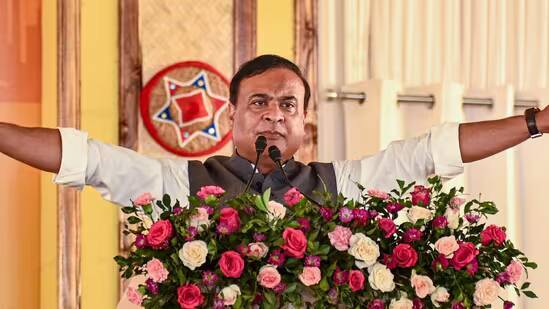
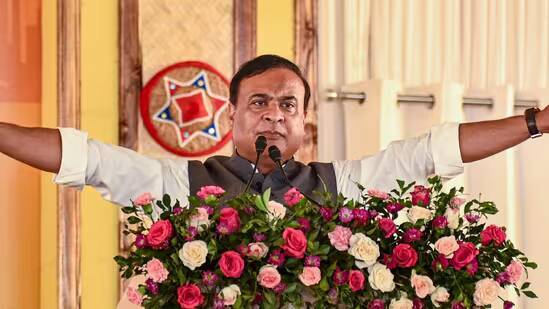
In a recent statement, Assam Chief Minister Himanta Biswa Sarma sparked controversy by claiming that he would disown his own son if he had any ties with Pakistan. This statement was made in an apparent reference to Congress MP Gaurav Gogoi’s wife, Elizabeth, who has been reported to have links with Pakistan. The Assam CM’s comment has raised eyebrows and ignited a heated debate about loyalty, nationality, and the complexities of personal relationships.
During a public address, Sarma posed a question to the Congress leader, asking whether he would have the courage to disown his wife if she had ties with Pakistan. The Assam CM’s statement was unequivocal, leaving no room for ambiguity. “If one becomes Pakistani…how can I have relation with them?” he asked, emphasizing the gravity of the situation. This statement has been perceived as a challenge to the Congress leader, questioning his loyalty to the nation and his ability to make tough decisions when it comes to personal relationships.
The context of this statement is crucial in understanding the motivations behind Sarma’s words. The Assam CM has been a vocal critic of the Congress party and its leaders, often accusing them of being soft on national security issues. By making this statement, Sarma is attempting to draw a line between loyalty to the nation and personal relationships. He is implying that having ties with Pakistan is a betrayal of the nation’s trust and that anyone who engages in such activities should be disowned.
However, this statement has also raised questions about the Assam CM’s own moral compass. Is it right to disown a family member simply because of their associations or actions? Does this not go against the principles of family values and loyalty that are deeply ingrained in Indian culture? Critics argue that Sarma’s statement is a simplistic and emotive response to a complex issue, one that ignores the nuances of human relationships and the complexities of international diplomacy.
Moreover, this statement has also sparked a debate about the role of politicians in shaping public discourse. Should politicians be making such statements, which can be perceived as divisive and inflammatory? Do they not have a responsibility to promote unity and understanding, rather than fuelling hatred and intolerance? The answer to these questions is not straightforward, and it is clear that Sarma’s statement has touched a raw nerve in Indian politics.
In recent years, the issue of nationalism and loyalty to the nation has become a highly polarized and emotive issue in India. The BJP government has been accused of promoting a brand of nationalism that is exclusionary and divisive, one that seeks to define loyalty to the nation in narrow and rigid terms. Sarma’s statement can be seen as a reflection of this trend, one that prioritizes loyalty to the nation over personal relationships and family values.
However, it is also important to recognize that the issue of Pakistan is a sensitive one in India, particularly in the context of terrorism and national security. Many Indians view Pakistan as a hostile nation that has sponsored terrorism and violence in India, and there is a deep-seated mistrust of Pakistan and its intentions. In this context, Sarma’s statement can be seen as a reflection of the widespread sentiment among Indians that Pakistan is a nation that cannot be trusted.
In conclusion, the Assam CM’s statement has sparked a heated debate about loyalty, nationality, and personal relationships. While it is understandable that Sarma wants to emphasize the importance of loyalty to the nation, his statement has raised questions about the complexities of human relationships and the nuances of international diplomacy. As the debate continues to rage on, it is clear that Sarma’s statement has touched a raw nerve in Indian politics, one that will continue to shape public discourse in the days to come.
About the Author