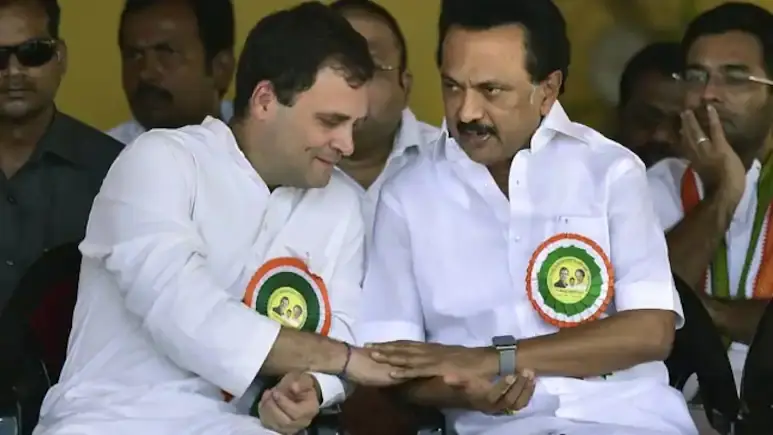
When did allies start dictating us: Congress MP over ‘TN debt’ post row
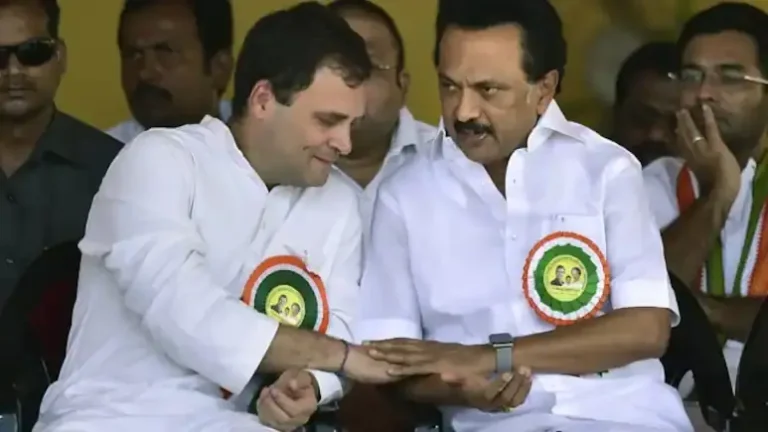
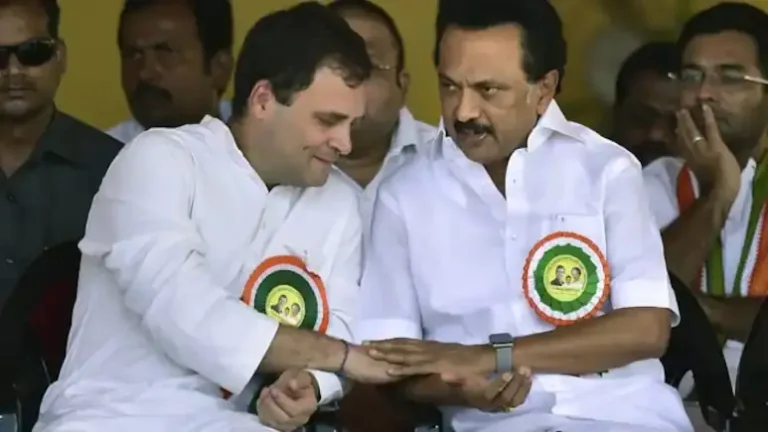
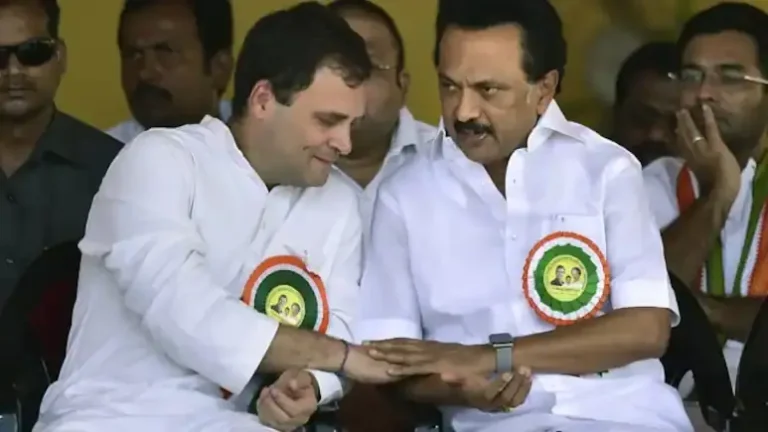
The Indian National Developmental Inclusive Alliance (I.N.D.I.A) bloc, a coalition of opposition parties, has been at the forefront of various issues concerning the nation. However, a recent row has erupted between the Congress party and its alliance partners over a comment made by Congress leader Praveen Chakravarty. The controversy began when Chakravarty compared the debt levels of Tamil Nadu and Uttar Pradesh, stating that Tamil Nadu has the highest outstanding debt among all states. This statement did not sit well with the alliance partners, who demanded that the Congress party take action against Chakravarty.
Reacting to the demands, Congress MP Manickam Tagore questioned the authority of the alliance partners, asking, “When did alliance partners start dictating to Congress how it should handle its internal matters?” This response highlights the tension between the Congress party and its allies, with the party asserting its independence in handling internal issues. The row has sparked a debate about the dynamics of coalition politics in India and the limits of alliance partners’ influence on each other’s internal affairs.
The comment made by Chakravarty was seemingly innocuous, as it was based on factual data about the debt levels of various states. However, the context and timing of the statement appeared to be problematic, as it was perceived as an attack on the Tamil Nadu government, which is currently ruled by an ally of the Congress party. The I.N.D.I.A bloc parties saw this as an opportunity to criticize the Congress party and its leader, demanding that action be taken against Chakravarty.
The demand for action against Chakravarty has been met with resistance from the Congress party, which sees this as an attempt to interfere with its internal matters. The party has asserted that it will not be dictated to by its alliance partners, and that it has the right to handle its internal affairs as it sees fit. This stance has been supported by various Congress leaders, who argue that the party’s internal matters should not be subject to external influence or pressure.
The row over Chakravarty’s comment has also sparked a debate about the role of social media in politics. The comment was made on a social media platform, and it quickly went viral, sparking a controversy that might not have occurred otherwise. This highlights the power of social media in shaping public discourse and the potential risks of using these platforms for political communication.
In recent years, social media has become an essential tool for politicians to connect with their constituents and share their views on various issues. However, the use of social media also carries the risk of being misinterpreted or taken out of context. The Chakravarty controversy is a case in point, as a seemingly innocuous comment was blown out of proportion and sparked a major row.
The I.N.D.I.A bloc parties have been critical of the Congress party’s handling of the issue, arguing that the party should have taken action against Chakravarty for his comment. However, the Congress party has maintained that it will not be swayed by external pressure and will handle its internal matters as it sees fit. This has led to a stalemate, with neither side willing to back down.
The controversy has also raised questions about the future of coalition politics in India. The I.N.D.I.A bloc is a coalition of various opposition parties, and the Congress party is a key member of this alliance. However, the row over Chakravarty’s comment has highlighted the tensions and differences within the alliance. This has sparked concerns about the stability and effectiveness of coalition governments, which rely on the cooperation and coordination of various parties.
In conclusion, the row over Chakravarty’s comment on Tamil Nadu’s debt levels has sparked a major controversy, with the Congress party and its allies at loggerheads. The issue has raised questions about the dynamics of coalition politics, the role of social media in politics, and the limits of alliance partners’ influence on each other’s internal affairs. As the controversy continues to unfold, it remains to be seen how the Congress party and its allies will navigate this challenging situation.
The Congress party’s assertion of its independence in handling internal matters is a significant development, as it highlights the party’s commitment to maintaining its autonomy and decision-making authority. However, this stance has also sparked concerns about the potential impact on the alliance, with some arguing that it could lead to further tensions and instability.
Ultimately, the resolution of this controversy will depend on the ability of the Congress party and its allies to find common ground and work together to address their differences. This will require a willingness to engage in constructive dialogue and a commitment to maintaining the stability and cohesion of the alliance. As the situation continues to evolve, it is essential to monitor developments closely and assess the potential implications for Indian politics.
News Source: https://www.ndtv.com/india-news/when-did-allies-congress-leader-snaps-over-tamil-nadu-debt-post-row-10139488/amp/1
About the Author