When did allies start dictating us: Congress MP over ‘TN debt’ post row
The Indian National Developmental Inclusive Alliance (I.N.D.I.A) bloc, a coalition of opposition parties, has been at the center of a recent controversy involving Congress leader Praveen Chakravarty. The row erupted after Chakravarty made a statement comparing the debt levels of Tamil Nadu and the BJP-ruled state of Uttar Pradesh. According to Chakravarty, Tamil Nadu has the highest outstanding debt among all states, a claim that has sparked a heated debate among politicians and citizens alike.
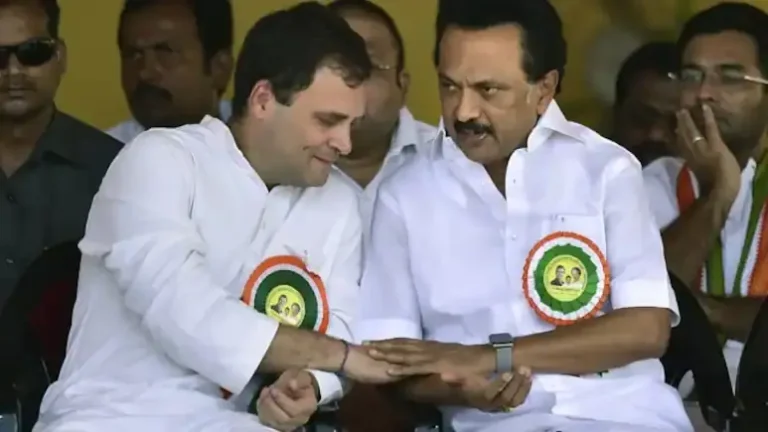
Reacting to the demand by I.N.D.I.A bloc parties to take action against Chakravarty, Congress MP Manickam Tagore retorted, “When did alliance partners start dictating to Congress how it should handle its internal matters?” This statement highlights the tension between the Congress party and its allies, with the former asserting its independence and autonomy in handling internal issues.
The controversy began when Chakravarty, in a social media post, stated that Tamil Nadu has the highest outstanding debt among all states. This claim was met with criticism from various quarters, with some accusing Chakravarty of misrepresenting facts and others defending his right to express his opinions. The I.N.D.I.A bloc, which includes parties such as the DMK, the Trinamool Congress, and the Nationalist Congress Party, among others, demanded that the Congress party take action against Chakravarty for his statement.
However, the Congress party has refused to yield to these demands, with Manickam Tagore’s statement being a clear indication of the party’s stance. The Congress party’s assertion of its independence and autonomy in handling internal matters is a significant development, as it highlights the complexities of coalition politics in India. The I.N.D.I.A bloc, as a coalition of opposition parties, is expected to present a united front against the ruling BJP, but the current controversy suggests that there may be differences within the bloc on how to handle certain issues.
The debate over Tamil Nadu’s debt levels is not just a matter of economic statistics; it has significant political implications. The state of Tamil Nadu has been a stronghold of the DMK and other regional parties, and any criticism of the state’s economic management is likely to be met with resistance from these parties. Chakravarty’s statement, therefore, can be seen as a challenge to the dominant political narrative in Tamil Nadu, which has traditionally been shaped by regional parties.
Moreover, the controversy highlights the challenges of coalition politics in India, where parties with different ideologies and interests are forced to work together to achieve common goals. The I.N.D.I.A bloc, as a coalition of opposition parties, is expected to present a united front against the ruling BJP, but the current controversy suggests that there may be differences within the bloc on how to handle certain issues.
In conclusion, the row over Praveen Chakravarty’s statement on Tamil Nadu’s debt levels has sparked a heated debate among politicians and citizens alike. The controversy highlights the complexities of coalition politics in India, where parties with different ideologies and interests are forced to work together to achieve common goals. The Congress party’s assertion of its independence and autonomy in handling internal matters is a significant development, as it suggests that the party is unwilling to yield to pressure from its allies on certain issues.
As the debate over Tamil Nadu’s debt levels continues, it is essential to consider the broader implications of this controversy. The management of public finances is a critical aspect of governance, and any discussion of debt levels must be informed by a nuanced understanding of the underlying economic and political factors. Rather than engaging in political mudslinging, parties must work together to develop a comprehensive approach to managing public finances and promoting economic growth.
Ultimately, the controversy over Praveen Chakravarty’s statement is a reminder that coalition politics in India is complex and multifaceted. As parties with different ideologies and interests work together to achieve common goals, they must also navigate the challenges of internal disagreements and conflicting priorities. By engaging in open and honest dialogue, parties can work towards developing a more nuanced understanding of the issues at hand and finding common ground on which to move forward.
About the Author