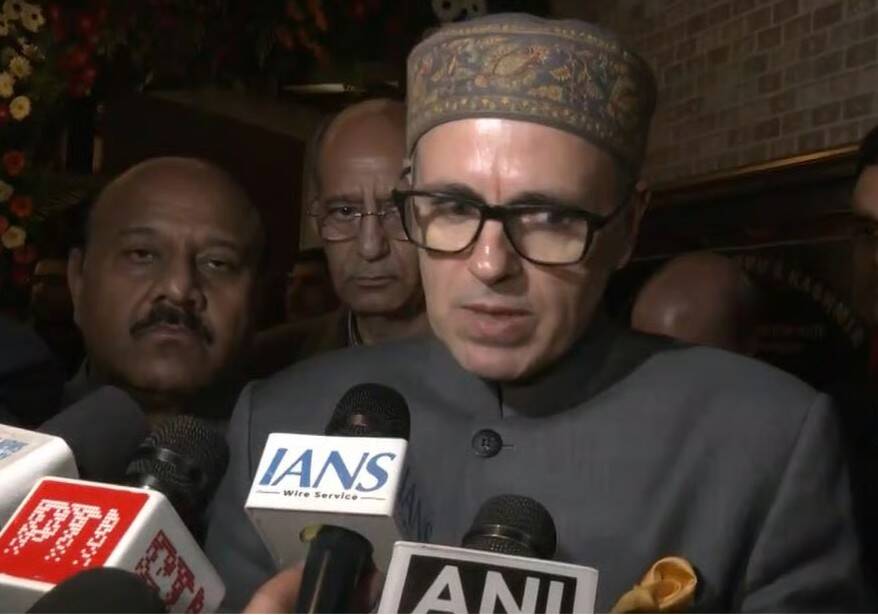
What is fault of poor player? J&K CM on Mustafizur controversy
The Indian Premier League (IPL) has been at the center of controversy in recent days, with the latest issue surrounding the removal of Bangladesh cricketer Mustafizur Rahman from the Kolkata Knight Riders (KKR) team. The decision was made after the Board of Control for Cricket in India (BCCI) directed KKR to release the player. However, this move has not gone down well with everyone, including Jammu and Kashmir Chief Minister Omar Abdullah, who has questioned the removal of Mustafizur Rahman.
Abdullah took to social media to express his disappointment and frustration with the decision, asking “What is the fault of that poor player?” He argued that dropping a Bangladeshi player from an IPL franchise would not help improve the condition of minorities in the neighboring country. The J&K CM’s comments have sparked a debate on the issue, with many people agreeing with his views.
The controversy surrounding Mustafizur Rahman’s removal from KKR began when the BCCI directed the team to release the player. The reason behind this decision is not entirely clear, but it is believed to be related to the current geopolitical tensions between India and Bangladesh. The relationship between the two countries has been strained in recent months, with issues such as border disputes and minority rights causing tension.
However, many people, including Omar Abdullah, believe that targeting a cricketer like Mustafizur Rahman is not the solution to these problems. The J&K CM argued that the player is simply trying to make a living and pursue his passion for cricket, and that he should not be punished for the actions of his government. Abdullah’s comments have been widely shared and appreciated on social media, with many people praising him for speaking out against the decision.
The removal of Mustafizur Rahman from KKR has also raised questions about the role of politics in sports. The IPL is a popular and highly watched tournament, with teams featuring players from all over the world. However, the decision to drop a player based on his nationality or the actions of his government sets a worrying precedent. It suggests that players can be targeted and punished for factors that are beyond their control, which is unfair and unjust.
Furthermore, the decision to drop Mustafizur Rahman from KKR may also have implications for the future of cricket in the region. The IPL is a highly competitive tournament, and teams rely on players from all over the world to compete at the highest level. If players are targeted and removed from teams based on their nationality or the actions of their government, it could lead to a decline in the quality of the tournament and a loss of interest from fans.
In addition, the controversy surrounding Mustafizur Rahman’s removal from KKR has also highlighted the issue of minority rights in Bangladesh. The country has faced criticism in recent months for its treatment of minority groups, including Hindus and other religious minorities. The J&K CM’s comments suggest that dropping a Bangladeshi player from an IPL franchise is not the solution to these problems, and that a more nuanced and thoughtful approach is needed to address these issues.
In conclusion, the controversy surrounding Mustafizur Rahman’s removal from KKR is a complex and multifaceted issue. While the decision may have been made with the best of intentions, it has raised questions about the role of politics in sports and the treatment of players from certain countries. The comments from J&K CM Omar Abdullah have added a new dimension to the debate, highlighting the need for a more thoughtful and nuanced approach to addressing the issues at hand.
As the IPL continues to be a highly popular and highly watched tournament, it is essential that teams and players are not targeted and punished for factors that are beyond their control. The decision to drop Mustafizur Rahman from KKR may have been made with the intention of sending a message to the Bangladesh government, but it is the player who has ultimately suffered. As Abdullah asked, “What is the fault of that poor player?” It is a question that deserves an answer, and one that highlights the need for a more thoughtful and compassionate approach to addressing the complex issues at hand.
About the Author