What is fault of poor player? J&K CM on Mustafizur controversy
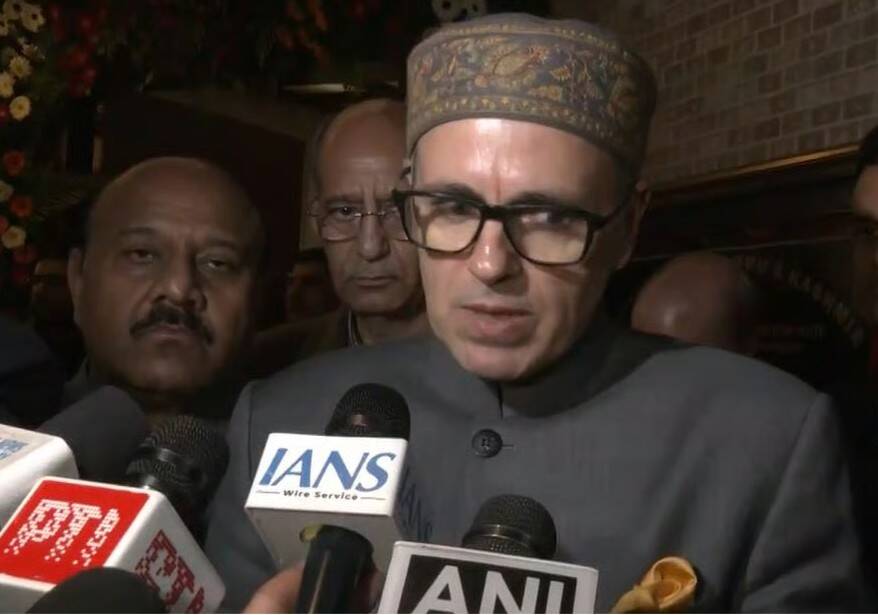
The Indian Premier League (IPL) has been at the center of controversy recently, with the Board of Control for Cricket in India (BCCI) directing the Kolkata Knight Riders (KKR) to release Bangladesh cricketer Mustafizur Rahman. The move has sparked widespread debate, with many questioning the reasoning behind the decision. Jammu and Kashmir Chief Minister Omar Abdullah has now weighed in on the issue, asking a pertinent question: “What is the fault of that poor player?”
The controversy surrounding Mustafizur’s removal from the KKR squad began when the BCCI intervened, citing concerns over the player’s participation in the IPL. The move was seen as a response to the current geopolitical tensions between India and Bangladesh, with many speculating that the decision was motivated by a desire to send a message to the neighboring country. However, Omar Abdullah has argued that dropping a Bangladeshi player from an IPL franchise would not help improve the condition of minorities in the neighboring country.
Abdullah’s comments highlight the complexities of the issue, which go beyond mere cricketing concerns. The IPL is a platform that brings together players from around the world, promoting unity and cooperation through sport. By targeting a player from a specific country, the BCCI’s decision has been seen as a politicization of the game. Abdullah’s question – “What is the fault of that poor player?” – gets to the heart of the matter, emphasizing the unfairness of penalizing an individual for circumstances beyond their control.
The Mustafizur controversy has also raised questions about the role of sports in promoting diplomacy and international relations. While sports can be a powerful tool for building bridges between nations, they can also be used as a means of exerting pressure or making a political point. In this case, the BCCI’s decision has been seen as a reflection of the current tensions between India and Bangladesh, with many arguing that the move is unlikely to achieve its intended goals.
Furthermore, the controversy has sparked a wider debate about the treatment of foreign players in the IPL. With many international cricketers participating in the tournament, the Mustafizur incident has raised concerns about the potential for political interference in the sport. If players from certain countries are targeted or penalized for reasons beyond their control, it could have a chilling effect on the participation of international players in the IPL.
Omar Abdullah’s comments have been seen as a voice of reason in the midst of the controversy. By questioning the fairness of the decision and highlighting the potential consequences, he has drawn attention to the need for a more nuanced approach to the issue. Rather than targeting individual players, Abdullah has argued that the focus should be on addressing the underlying concerns and promoting greater understanding and cooperation between nations.
In conclusion, the Mustafizur controversy has highlighted the complex and often fraught relationship between sports and politics. While the BCCI’s decision has been seen as a response to geopolitical tensions, it has also raised questions about the fairness and wisdom of targeting individual players. Omar Abdullah’s comments have added a new dimension to the debate, emphasizing the need for a more nuanced approach that takes into account the potential consequences of such actions. As the IPL continues to grow and evolve, it is essential that the tournament remains a platform for promoting unity and cooperation, rather than a tool for political point-scoring.
News source: https://www.freepressjournal.in/amp/india/what-is-players-fault-jk-cm-omar-abdullah-slams-mustafizurs-ipl-removal
About the Author