Threat to Regional Stability: Somalia Prez on Israel Recognising Somaliland
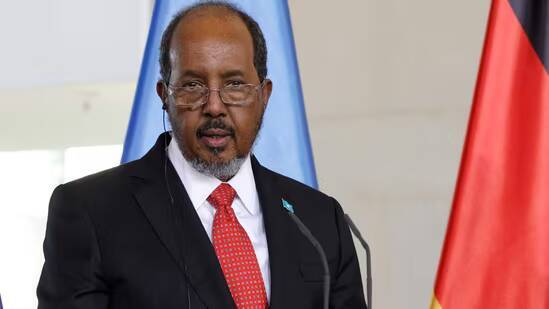
The recent move by Israel to recognize Somaliland as a sovereign state has sent shockwaves across the globe, with Somali President Hassan Sheikh Mohamud condemning the decision as a “threat to security and stability of the world and the region.” In an emergency parliamentary session, Mohamud expressed his strong opposition to Israel’s recognition, stating that it is “tantamount to blunt aggression against the sovereignty, independence, territorial integrity, and the unity of the people of Somali Republic.”
This development has significant implications for regional stability, as it has the potential to exacerbate existing tensions between Somalia and Somaliland. The two territories have been at odds for decades, with Somaliland declaring independence from Somalia in 1991. However, the international community has not recognized Somaliland as a sovereign state, and it is still considered to be a part of Somalia by the United Nations and most countries.
Israel’s recognition of Somaliland marks a significant shift in the country’s foreign policy, as it becomes the first nation to acknowledge Somaliland’s sovereignty. This move is likely to be seen as a strategic play by Israel, which has been seeking to expand its influence in the region. However, it is also likely to be met with resistance from Somalia and other countries in the region, who may view it as an attempt to undermine regional stability.
The Somali President’s strong reaction to Israel’s recognition of Somaliland is not surprising, given the historical context of the conflict between the two territories. Somalia has long considered Somaliland to be a part of its territory, and has refused to recognize its independence. The Somali government has also been critical of countries that have provided support to Somaliland, viewing it as an attempt to undermine its sovereignty.
The implications of Israel’s recognition of Somaliland are far-reaching, and have the potential to destabilize the entire region. The move is likely to be seen as a provocation by Somalia, which may respond by increasing its military presence in the region. This could lead to an escalation of tensions between the two territories, and potentially even conflict.
Furthermore, Israel’s recognition of Somaliland may also have implications for the wider region. The Horn of Africa is already a volatile region, with several countries facing significant security challenges. The recognition of Somaliland by Israel may embolden other separatist movements in the region, potentially leading to further instability.
In addition to the regional implications, Israel’s recognition of Somaliland also raises questions about the role of international law in recognizing sovereign states. The United Nations has a long-established principle of recognizing the sovereignty and territorial integrity of states, and Israel’s move may be seen as a challenge to this principle.
The international community has been quick to respond to Israel’s recognition of Somaliland, with several countries expressing their opposition to the move. The African Union has also weighed in, stating that it will not recognize Somaliland as a sovereign state. The European Union has also expressed its concern about the move, stating that it may destabilize the region.
In conclusion, Israel’s recognition of Somaliland is a significant development that has the potential to destabilize the entire region. The move has been met with strong opposition from Somalia and other countries in the region, and has raised questions about the role of international law in recognizing sovereign states. As the situation continues to unfold, it is likely that the international community will be watching closely to see how events develop.
The recognition of Somaliland by Israel is a complex issue, with significant implications for regional stability. It is likely to be a major challenge for the international community, as it seeks to balance the competing interests of different countries and territories. Ultimately, the goal must be to promote stability and security in the region, and to prevent the escalation of tensions between Somalia and Somaliland.
As the situation continues to evolve, it is essential that the international community remains engaged and committed to finding a peaceful resolution to the conflict. This will require careful diplomacy and a deep understanding of the complex historical and cultural context of the region. It will also require a commitment to upholding international law and promoting the principles of sovereignty and territorial integrity.
In the end, the recognition of Somaliland by Israel is a threat to regional stability, and it is essential that the international community takes a strong stance against it. The Somali President’s condemnation of the move is a clear indication of the strong feelings that exist in the region, and it is essential that the international community listens to these concerns and works to promote a peaceful resolution to the conflict.
About the Author