Threat to Regional Stability: Somalia Prez on Israel Recognising Somaliland
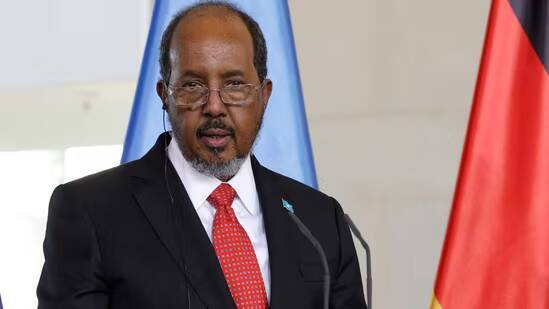
The recent move by Israel to recognize Somaliland as a sovereign state has sent shockwaves across the globe, with many countries and international organizations expressing concern over the implications of this decision. At the forefront of this opposition is Somalia, which has long considered Somaliland to be a part of its territory. In a strongly worded statement, Somalia President Hassan Sheikh Mohamud condemned Israel’s recognition of Somaliland, calling it a “threat to security and stability of the world and the region.”
Speaking at an emergency parliamentary session, Mohamud emphasized that Israel’s decision was “tantamount to blunt aggression against the sovereignty, independence, territorial integrity, and the unity of the people of Somali Republic.” These words reflect the deep-seated concerns of the Somali government and people, who fear that Israel’s recognition of Somaliland could lead to a fragmentation of their country and undermine the fragile peace that has been achieved in recent years.
Somaliland, a self-declared state in the Horn of Africa, has been seeking international recognition since it declared independence from Somalia in 1991. Despite its efforts, the international community has largely refused to recognize Somaliland as a sovereign state, instead maintaining that it is a part of Somalia. Israel’s decision to recognize Somaliland, therefore, marks a significant shift in the diplomatic landscape of the region.
As the first country to recognize Somaliland, Israel has sparked a heated debate about the implications of this move. While Somaliland has welcomed Israel’s recognition, many other countries have expressed reservations about the decision. The African Union, for example, has long maintained that Somaliland is a part of Somalia, and has encouraged the two sides to engage in dialogue to resolve their differences.
The Somali government, meanwhile, has vowed to take all necessary measures to protect its territorial integrity and sovereignty. In his address to the parliament, Mohamud emphasized that Somalia would not compromise on its territorial integrity and would work to maintain the unity of its people. These words reflect the determination of the Somali government to resist any attempts to fragment the country or undermine its sovereignty.
The international community, too, has a critical role to play in resolving this crisis. The United Nations, in particular, has a responsibility to promote peace and stability in the region. By engaging with both Somalia and Somaliland, the UN can help to facilitate a dialogue between the two sides and encourage them to work towards a peaceful resolution of their differences.
As the situation continues to unfold, it is clear that Israel’s recognition of Somaliland poses a significant threat to regional stability. The move has the potential to exacerbate existing tensions between Somalia and Somaliland, and could even lead to conflict. It is, therefore, essential that the international community takes a proactive approach to resolving this crisis, and works to promote peace and stability in the region.
In conclusion, the recognition of Somaliland by Israel is a highly contentious issue that has far-reaching implications for regional stability. As Somalia President Hassan Sheikh Mohamud has emphasized, this move is a threat to the security and stability of the world and the region. It is essential that the international community takes a nuanced approach to this issue, and works to promote a peaceful resolution of the differences between Somalia and Somaliland.
As the situation continues to evolve, it is likely that we will see a range of responses from countries and international organizations. Some may choose to follow Israel’s lead and recognize Somaliland, while others may maintain their existing positions and refuse to recognize the self-declared state. Whatever the outcome, it is clear that the recognition of Somaliland by Israel has marked a significant turning point in the history of the region, and will have far-reaching implications for regional stability and security.
In the coming weeks and months, it will be essential to monitor the situation closely, and to work towards a peaceful resolution of the differences between Somalia and Somaliland. This will require a concerted effort from the international community, as well as a willingness to engage in dialogue and diplomacy. By working together, we can promote peace and stability in the region, and help to build a brighter future for the people of Somalia and Somaliland.
About the Author