Threat to Regional Stability: Somalia Prez on Israel Recognising Somaliland
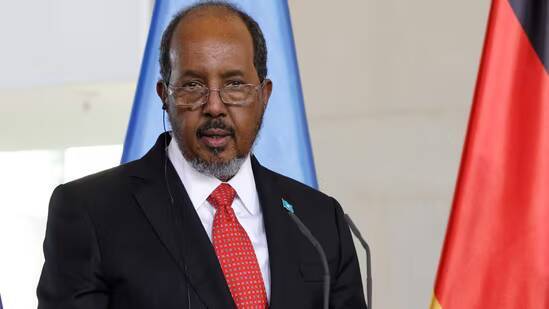
The recent move by Israel to recognize Somaliland as a sovereign state has sent shockwaves across the international community, with Somalia’s President Hassan Sheikh Mohamud strongly condemning the decision. In an emergency parliamentary session, Mohamud expressed his deep concerns, stating that Israel’s recognition of Somaliland “is a threat to security and stability of the world and the region.” He further emphasized that this move is “tantamount to blunt aggression against the sovereignty, independence, territorial integrity, and the unity of the people of Somali Republic.”
Somaliland, a self-declared state in East Africa, has been seeking international recognition for decades. However, its claims to statehood have been met with skepticism by the global community, with the exception of Israel. As the first country to recognize Somaliland, Israel’s decision has significant implications for regional stability and the future of the Horn of Africa.
Mohamud’s strong reaction to Israel’s recognition of Somaliland is not surprising, given the complex history between Somalia and Somaliland. Somaliland declared its independence from Somalia in 1991, following a brutal civil war that ravaged the region. Since then, Somaliland has maintained a fragile peace, with its own government, military, and institutions. However, Somalia has consistently refused to recognize Somaliland’s independence, claiming that it is an integral part of the Somali Republic.
The international community has largely supported Somalia’s position, with the United Nations and the African Union recognizing Somalia’s sovereignty over the disputed territory. However, Israel’s decision to recognize Somaliland has thrown a spanner in the works, potentially destabilizing the fragile balance of power in the region.
The implications of Israel’s recognition of Somaliland are far-reaching. For starters, it could embolden other self-declared states in the region to seek recognition, potentially leading to a proliferation of breakaway territories. This could have a destabilizing effect on the region, as neighboring countries may feel compelled to respond to these new developments.
Furthermore, Israel’s recognition of Somaliland could also have significant economic implications. Somaliland has been seeking to develop its natural resources, including oil and gas reserves, which could become a major source of revenue for the self-declared state. However, this could also lead to a scramble for resources, as other countries may seek to exploit Somaliland’s natural wealth.
The regional dynamics of the Horn of Africa are already complex, with multiple countries vying for influence and resources. The recognition of Somaliland by Israel has added a new layer of complexity to the region, potentially threatening the fragile stability that has been achieved in recent years.
In addition to the regional implications, Israel’s recognition of Somaliland also raises questions about the role of external powers in the region. Israel’s move has been seen as a strategic play to gain influence in the Horn of Africa, which is a critical location for global trade and security. However, this could also lead to a new era of great power competition in the region, as other countries seek to counter Israel’s move.
In conclusion, the recognition of Somaliland by Israel is a significant development that has far-reaching implications for regional stability and the future of the Horn of Africa. Somalia’s President Hassan Sheikh Mohamud has rightly expressed his concerns about the potential threats to security and stability in the region. As the international community navigates this complex situation, it is essential to prioritize dialogue and diplomacy to prevent the escalation of tensions.
The recognition of Somaliland by Israel is a wake-up call for the international community to re-examine its approach to the region. It is essential to engage in constructive dialogue with all stakeholders, including Somalia, Somaliland, and other regional players, to find a peaceful and sustainable solution to the conflict.
As the situation continues to unfold, it is crucial to prioritize the principles of sovereignty, territorial integrity, and self-determination. The international community must work together to prevent the exploitation of the region’s natural resources and to promote economic development that benefits all parties.
In the end, the recognition of Somaliland by Israel is a complex issue that requires a nuanced and multifaceted approach. As the region navigates this challenging situation, it is essential to prioritize stability, security, and cooperation to prevent the escalation of tensions and to promote a peaceful and prosperous future for all.
About the Author